Insights

Estepona has transformed into a highly desirable town on the Costa del Sol, blending Andalusian charm with modern amenities. Once offering a price advantage over Marbella, it now commands higher property values due to significant regeneration. This guide explores its distinct districts, recent improvements, current costs, and what to consider when buying.
Key Takeaways
For about ten years, the standard advice on Estepona was that it was Marbella without the price tag. That advice was correct, it made a lot of buyers a lot of money, and it is now out of date.
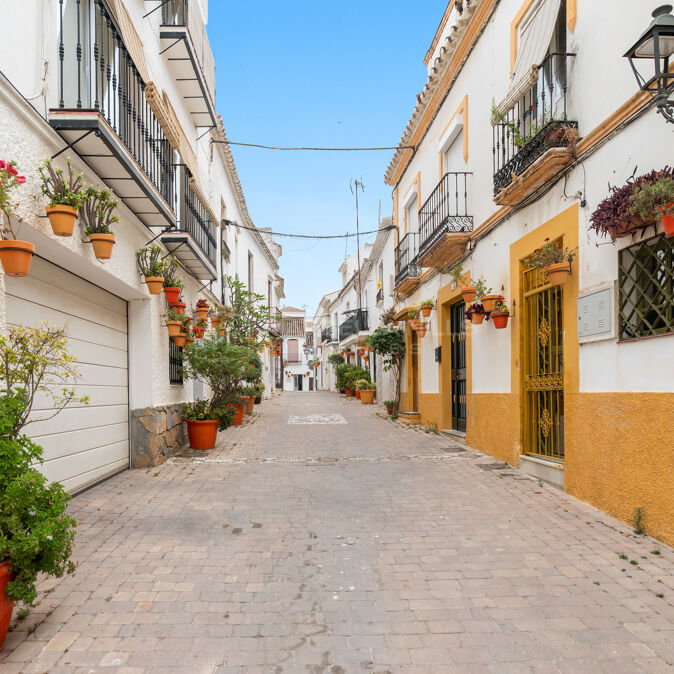
What happened in between is one of the more remarkable pieces of municipal reinvention in southern Spain. A working Andalusian town with a fishing port and a slightly tired centre systematically rebuilt itself into something people travel to see. Streets were closed to traffic and filled with plants. Blank building gables became large-scale murals. A botanical collection went up in the middle of town. The seafront road became a pedestrian boulevard. None of this was cosmetic in effect: it changed who wanted to live there.
The property market noticed. Estepona has been among the fastest-growing municipalities in Málaga province by population, it has absorbed more new development than anywhere else on this stretch of coast, and its prices have risen accordingly. The result is a town that deserves its reputation and no longer offers the discount that made that reputation.
That is not an argument against buying here. It is an argument for buying here with current information rather than with received wisdom that is a decade out of date. This guide covers what Estepona actually is, what the regeneration delivered, what things now cost, how the new-build market works, and where the genuine value has moved to.

This is the single most useful thing to understand before searching, and almost every listing obscures it.
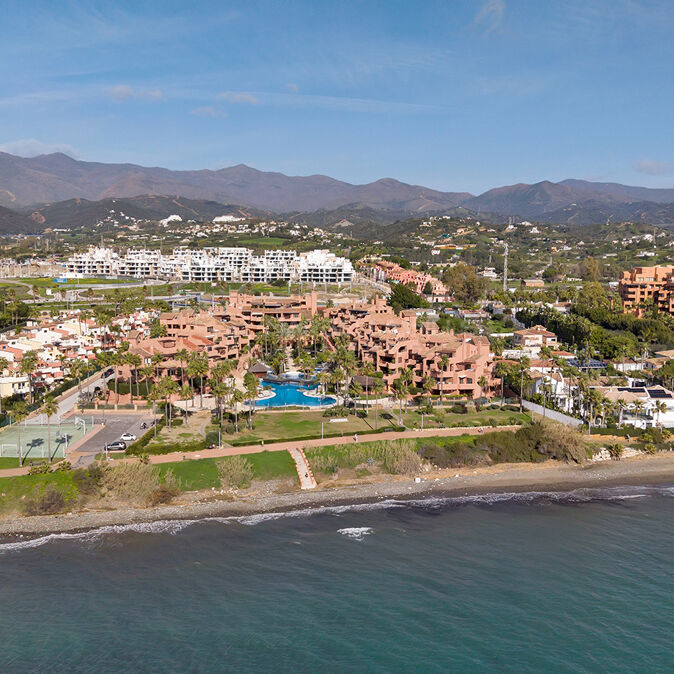
The municipality runs roughly 21 kilometres along the coast and inland into the hills. A property advertised as "Estepona" could be in any of the following, and they have very little in common.
The old town. The whitewashed historic core: pedestrianised, flower-filled, walkable, genuinely Spanish. Small properties, mostly apartments and townhouses in older buildings, some beautifully renovated. You can live here without a car.
The port and the seafront. Around the marina, the fishing port and the promenade. A mix of older blocks and newer development, with an active bar and restaurant scene and immediate beach access.
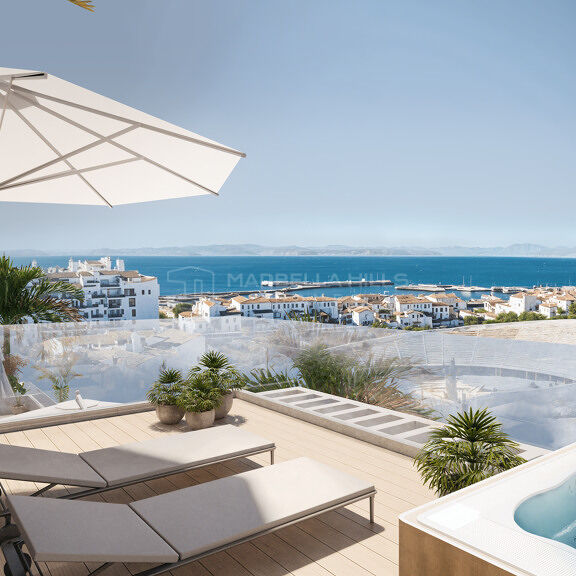
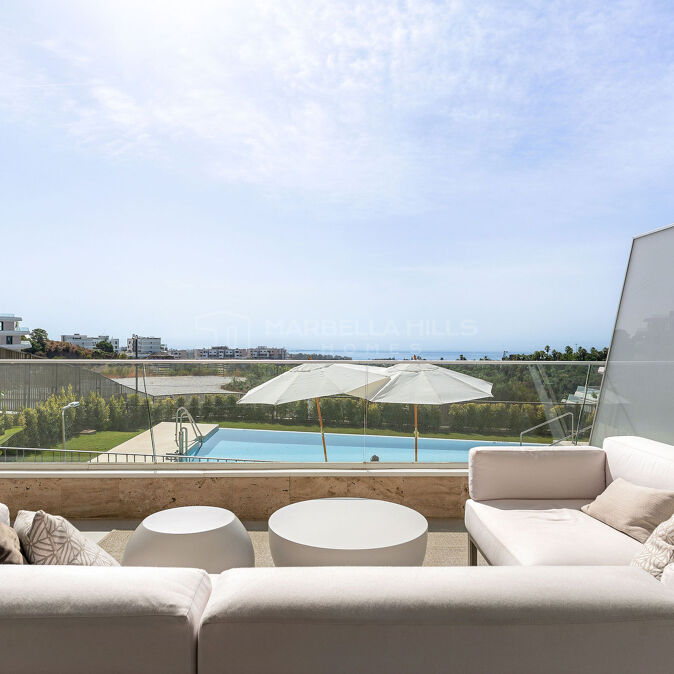
Las Mesas and the town's upper edge. The high ground behind the centre, which has become one of the town's most active development areas, with contemporary apartment schemes that combine marina views with a walk into the centre.
The New Golden Mile. Confusingly, this is mostly in Estepona municipality but sits at the Marbella end of it, running from Cancelada and Bel Air towards San Pedro. Buyers here are typically choosing proximity to Puerto Banús rather than to Estepona town, which is fifteen minutes the other way.
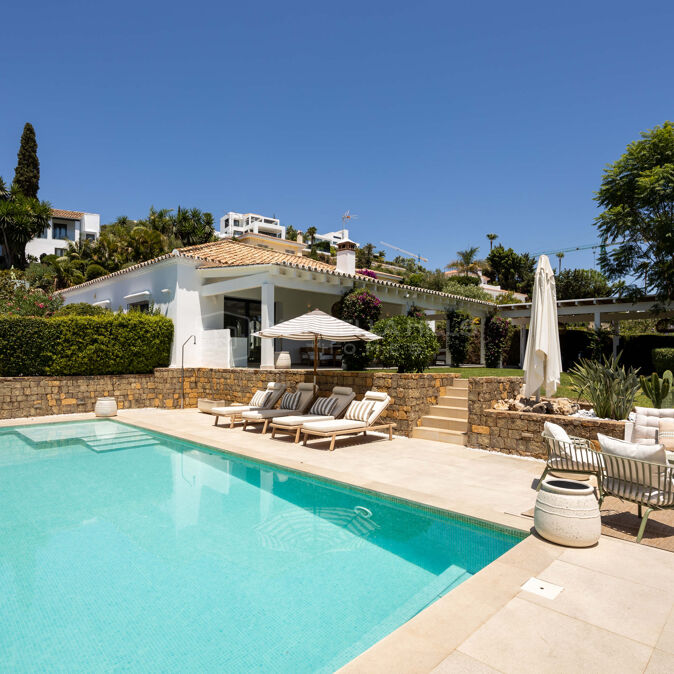
El Paraíso, Atalaya and Benamara. Established golf and residential areas inland of the coast road at the eastern end, with mature villa plots, golf courses and international schools nearby. Quieter and more settled than the coastal strip.
The western golf corridor. Around Estepona Golf, Valle Romano, Azata and La Resina, heading towards Casares. Larger plots, more space per euro, more driving.
The far west and Selwo. Towards Casares Costa and Manilva, where prices soften noticeably and the sense of being in Estepona at all begins to fade.
The practical consequence is that "we're looking in Estepona" is not a search brief. Ask instead: do you want to walk to a Spanish town centre, be near Puerto Banús, be on a golf course, or be on the beach? Those are four different postcodes and four different budgets.

The transformation gets described in vague terms by most agency copy. The specifics are more persuasive.
More than 130 streets in and around the old town were remodelled and pedestrianised, amounting to roughly 18 kilometres of car-free or car-restricted streets, planted with thousands of trees and flowering plants in the town's now-signature coloured pots. Streets are colour-coordinated, maintained by municipal gardeners, and supported by expanded council plant nurseries and a gardening apprenticeship scheme. The nickname, the Garden of the Costa del Sol, was earned rather than invented by a marketing agency.
Alongside it, an open-air mural route: more than 60 large-scale artworks on building facades across the town, mapped by the tourist office and now a recognised attraction in its own right. In the centre, the Orchidarium, a triple-domed glasshouse rising to around 30 metres, holding over 1,300 orchid varieties among several thousand plants, and billed as the largest collection of its kind in Europe.
On the coast, the former seafront road became the Bulevar Marítimo, a pedestrian boulevard running alongside the promenade. The municipality is among the province's leading examples of the Senda Litoral coastal path project, with well over 90 percent of its 21 kilometres of shoreline now connected by walkway.
Add to that the civic infrastructure delivered over the same period: a theatre, an athletics stadium, exhibition grounds, a new town hall, a municipal parking network, the El Carmen viewpoint. And private investment has followed public: the town's private hospital recently completed a €16 million expansion taking it to 59 hospitalisation and intensive care beds, with a dedicated paediatric emergency service and an emergency department expanded from seven treatment bays to thirteen.
For a buyer, the hospital detail matters more than the murals. Murals attract visitors. Hospitals, schools and employment attract residents, and residents are what make a coastal town function in February.
Here is the part most articles about Estepona still get wrong.
Average asking prices across the municipality now sit in the region of €4,300 per square metre, having risen roughly 11 to 12 percent year on year. Within the town, the centre commands the highest average of the municipality's districts, at close to €4,800 per square metre, while the western and outlying districts sit several hundred euros below that. Across 2024 the municipal average rose by around 16 percent in a single year.
At the top of the market, the gap is wider still. Prime new-build in the strongest locations now runs between €6,000 and €8,000 per square metre, with the best schemes reaching around €7,000 as a working benchmark. That is a different market from the municipal average, and it is aimed at international buyers accustomed to branded, serviced, resort-style development.
Two conclusions follow.
First, Estepona is no longer a discount play. It is one of the three or four most expensive municipalities in Málaga province, behind Marbella but ahead of most of the rest of the coast. Anyone still selling it as the cheap alternative is working from an old script.
Second, the value that remains is specific rather than general. It sits in particular streets, particular older buildings with renovation potential, and particular positions that the new-build wave has not reached. Finding it requires knowing which of the seven Esteponas you are in and what the comparable resale next door actually traded at, not a broad conviction that the town is undervalued. It was. It is now correctly priced, which is a different proposition and still a perfectly good one.
Estepona has absorbed more new development than any comparable stretch of this coast, and for many buyers here the choice between new build and resale is the central decision. It is worth understanding how differently the two behave.
The tax treatment is different, and materially so. A resale purchase in Andalucía attracts transfer tax at 7 percent. A new-build purchase from a developer attracts VAT at 10 percent plus stamp duty, giving a higher combined figure. On a €700,000 purchase that difference is real money, and it is frequently omitted from the comparison a buyer makes between an off-plan unit and an equivalent resale.
Payment structure and protection. Off-plan purchases involve staged payments during construction. Spanish law requires developers to guarantee buyer payments, and confirming that those guarantees are properly in place is one of the essential jobs your lawyer performs. This is not a formality.
Timelines slip. Delivery dates in marketing material are targets. Build programmes on this coast have been affected by construction cost inflation and labour availability in recent years, and a stated completion year should be treated as an estimate. If your purchase is tied to a school year or a sale at home, build in margin.
Completion competition. This is the risk least discussed. When a large scheme completes, a proportion of buyers resell immediately, and the market briefly contains a number of near-identical units competing with each other and with the developer's remaining stock. If you are buying off-plan partly as an investment, understand what else completes in the same area in the same window.
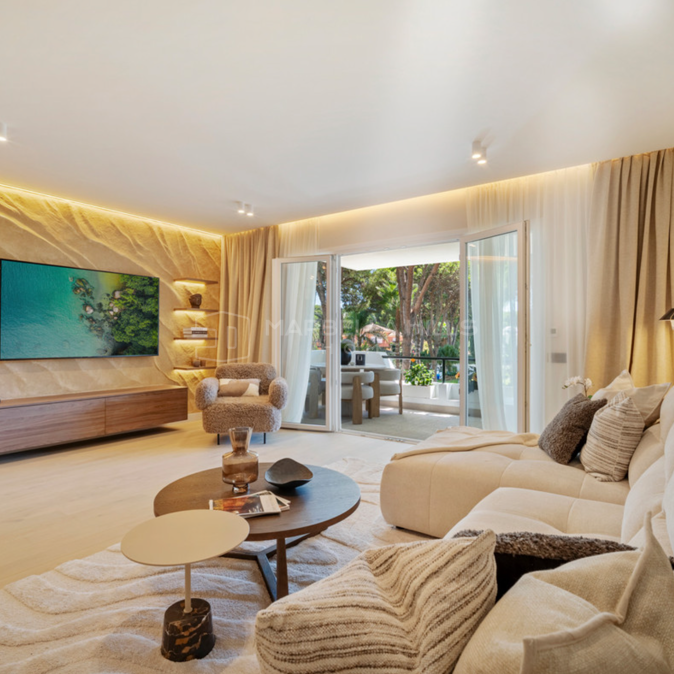
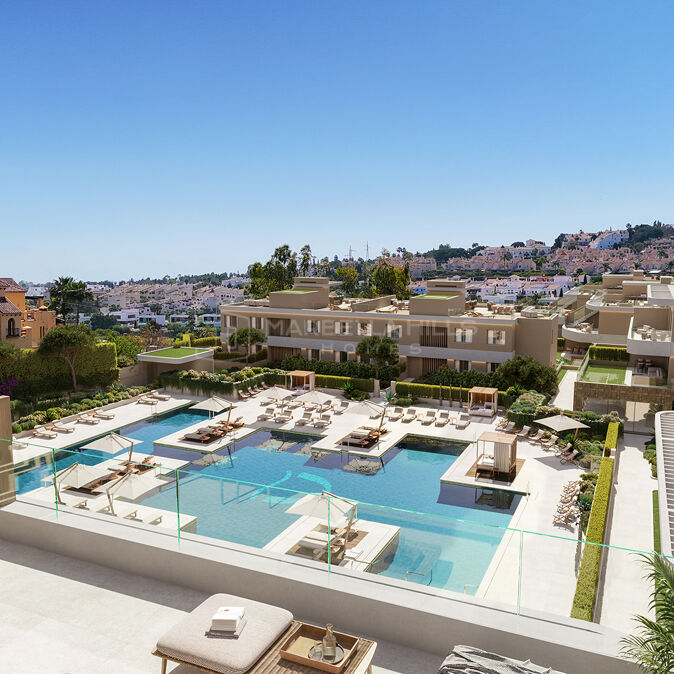
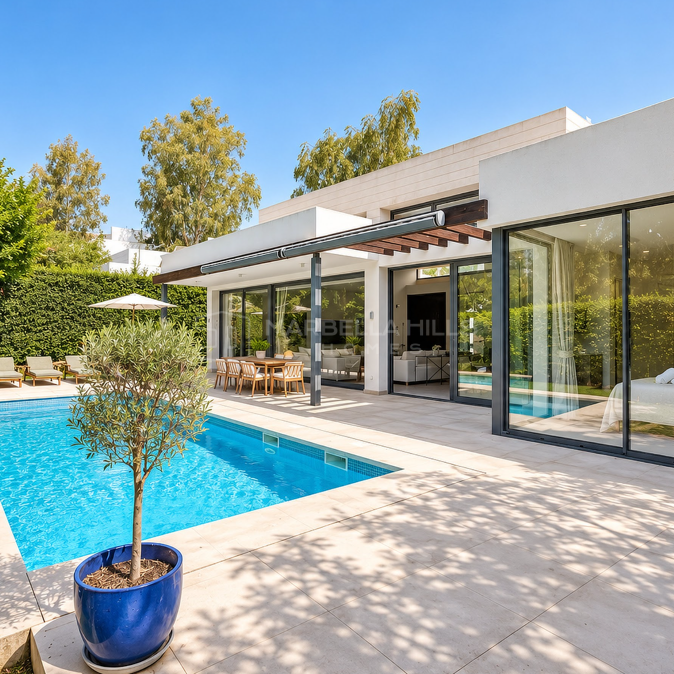
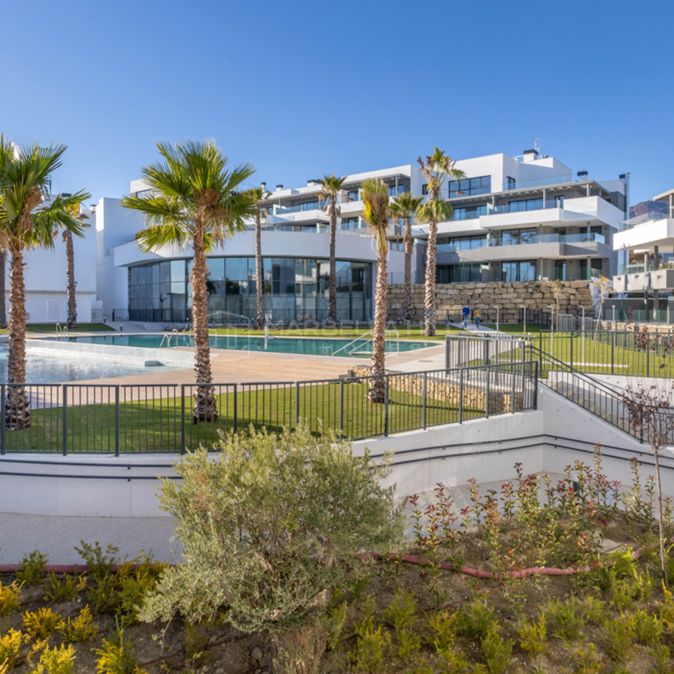
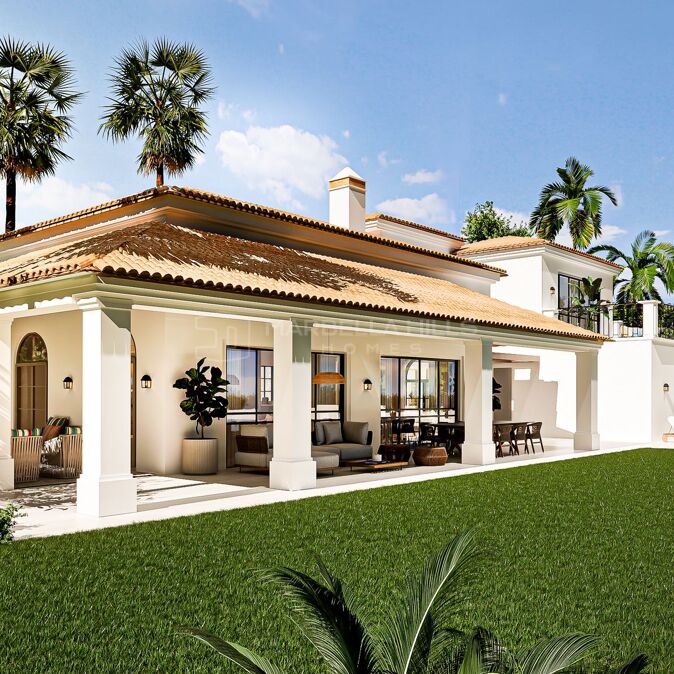
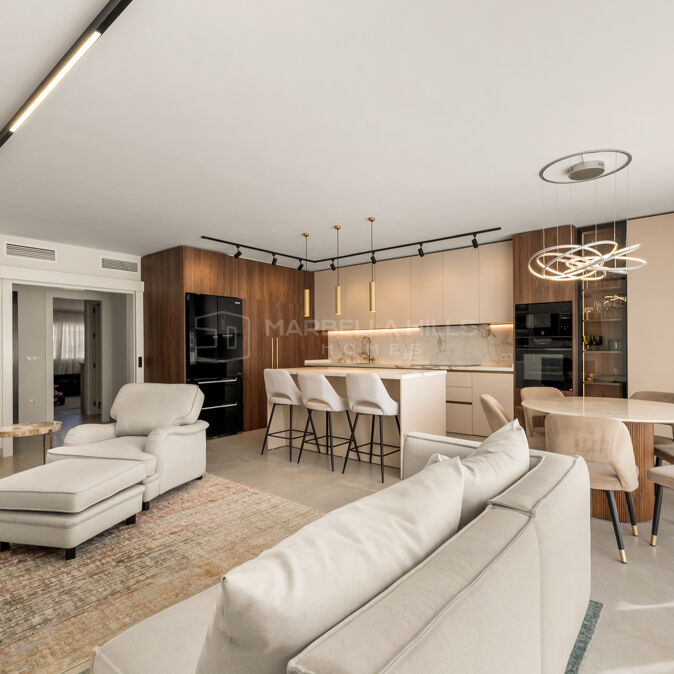
Against that, the case for new build here is strong. Contemporary specification, energy performance, warranties, no renovation, and amenity packages that older stock cannot match. In a town where a great deal of the resale stock dates from the 1980s and 1990s, that counts for a lot.
The reverse case, for resale, is that established buildings come with mature gardens, known communities, existing community accounts you can read, and prices that have not been set by a developer marketing to a global buyer pool. The best value in Estepona today is more often found in a well-positioned older property with renovation potential than in a launch-priced apartment.
The town's real distinction is not architectural. It is that it works in winter.
Estepona has a substantial permanent population, one of the fastest growth rates in the province, and an unemployment rate that has been among Andalucía's lowest in recent years. The consequence is a town with a functioning economy rather than a seasonal one: shops that stay open, restaurants with local customers in January, a Saturday market, schools, and a civic life that includes people who are not on holiday.
For anyone considering the Costa del Sol as a permanent home rather than a summer one, this matters more than almost anything else. Large parts of this coast are quiet to the point of desolate between November and March. Estepona is not one of them.
Practically: the private hospital and the public health centre cover most needs, with major hospitals in Marbella and Málaga; international and Spanish schools are within reach, with several concentrated around the Atalaya and El Paraíso area at the eastern end; Málaga airport is around 50 to 70 minutes depending on where in the municipality you are and what the AP-7 is doing; and Gibraltar airport is roughly 40 to 45 minutes west, which is a genuine and underrated advantage for UK-based owners.

Traffic. The A-7 coast road runs through the municipality and is the only continuous route along it. In summer, and at school and rush hours year-round, it can be slow. The AP-7 toll motorway relieves this at a price. If you are looking at the western end and working or schooling at the eastern end, drive the route before you commit.
Construction. The town's success has brought sustained building activity. A quiet plot next to your terrace may not stay quiet. Check the planning position on adjoining land, particularly for anything with a view over undeveloped ground.
Supply. The volume of new development is an advantage for buyers with choice and a headwind for owners reselling into a market where the newest product is always someone else's. This argues for buying positions that new build cannot replicate: the old town, the seafront, mature plots.
Distance. From the western end of the municipality, Marbella is a real journey, not a hop. Buyers who want to be near Puerto Banús and Marbella should be honest about that and look at the eastern end, where prices reflect it.
Against Marbella, you get more space per euro, a more Spanish town, and a considerably better-maintained public realm, at the cost of prestige, some services, and distance from the Golden Mile. The price gap has narrowed sharply and is now much smaller than the reputational gap.
Against Benahavís, the trade is coast versus countryside. Benahavís offers mountain settings, larger plots and privacy; Estepona offers the sea, a town, and walkability. Different buyers entirely.
Against Casares and Manilva to the west, Estepona is more expensive and better served. The far west offers meaningfully lower prices and correspondingly fewer amenities. As the western end of Estepona has risen, more buyers have crossed that boundary, and for value-focused purchasers it deserves a look.
Against Fuengirola and the eastern coast, Estepona is quieter, greener and more upmarket, and further from Málaga. Commuters to the city should think carefully.
Yes, but much less so than its reputation suggests. Municipal averages sit below Marbella's, though Estepona ranks among the most expensive municipalities in Málaga province and prime new-build here overlaps with Marbella pricing.
Municipal averages are around €4,300 per square metre, with the town centre closer to €4,800 and outlying districts lower. Prime new-build runs roughly €6,000 to €8,000 per square metre. Prices have been rising at around 11 to 12 percent year on year.
It is one of the better options on this coast for exactly that. It has a large permanent population, low unemployment by regional standards, a private hospital, schools and a town centre that functions in winter rather than closing.
Málaga is roughly 50 to 70 minutes depending on the district and traffic. Gibraltar is around 40 to 45 minutes to the west, which suits UK-based owners well.
Mostly yes, administratively, though it sits at the Marbella end of the municipality and functions as a Marbella-adjacent location. Buyers there are usually choosing proximity to Puerto Banús rather than to Estepona town.
New build offers specification, warranties and amenities; resale offers mature settings, readable community accounts and pricing not set by a developer's launch. Note that the tax treatment differs, with resale attracting transfer tax and new build attracting VAT plus stamp duty. Compare on total cost.
Pedestrianised, whitewashed and heavily planted, with more than 130 remodelled streets and over 60 large-scale murals. It is one of the few places on the coast where you can live without a car and be surrounded by a working Spanish town rather than a resort.
Estepona did something unusual: it improved deliberately, and it improved the public realm rather than just the private one. Anyone can build luxury apartments. Very few Spanish coastal towns have pedestrianised 130 streets, planted them properly, and then maintained them for a decade. That is why the place feels different from its neighbours, and why the effect has proved durable rather than faddish.
The consequence is that the arbitrage is gone. Buying here in 2015 meant buying an improving town at an unimproved price. Buying here now means buying an improved town at an improved price, which is a fair transaction rather than a bargain. The buyers who will do well from here are the ones buying for use rather than for a rerating: people who want a real town, a walkable centre, a functioning winter, and the sea.
Where we would be careful is the assumption that any new development in the municipality is automatically a good purchase because Estepona has been a good story. The story is now widely known and comprehensively priced in. Position within Estepona matters far more today than the decision to buy in Estepona at all.

The best question to bring to this market is not whether Estepona is a good bet. It is which Estepona, and at what price relative to what sold next door.
The old town and the seafront offer something that cannot be built again. The eastern end offers Marbella access at an Estepona address. The western golf corridor offers space. New build offers specification and warranties at a premium that is sometimes justified and sometimes not. Those are four different purchases, and the difference between getting them right and wrong is considerably larger than the difference between Estepona and the town next door.
If Estepona is on your list, the useful conversation is about which district fits how you actually intend to live, and what a given asking price looks like next to recent comparable sales in the same street. We can tell you where new supply is coming, which established communities are well run, where the value has already been priced in and where it has not.