Sierra Blanca, Marbella: a buyer’s guide to one of Spain’s most consolidated luxury communities
Summary
Explore Sierra Blanca, Marbella: a buyer’s guide to one of Spain’s most consolidated luxury communities. Discover its geography, architecture, and comparisons with neighbours, offering insights for discerning buyers seeking a prime residential enclave.
Key Takeaways
- Sierra Blanca offers a rare combination of scale and density in a prime luxury community on the Costa del Sol.
- Its advantageous geography provides a mild microclimate, panoramic sea views, and excellent access to amenities.
- The community features a mix of architectural styles, from original Andalusian villas to contemporary new builds, offering diverse options for buyers.
Sierra Blanca is the rare community where the numbers themselves tell most of the story. Roughly 300 villas across 25 hectares, three controlled entrances, thirty years of consolidated history, and an average plot size measured in thousands of square metres rather than hundreds. No other prime community on the western Costa del Sol combines that scale (large enough to feel like a real neighbourhood) with that density (low enough that no two villas share a wall and most share little more than a property line). La Zagaleta is more discreet but more isolated; Cascada de Camoján has bigger plots but fewer than fifty houses; Marbella Hill Club is closer to the beach but less than a third of the size. Sierra Blanca occupies the middle of all those scales, and that middle is precisely what most international buyers turn out to want once they have seen the alternatives. This guide is for buyers in that conversation.
The urbanisation sits directly above the Golden Mile, on the southern flank of La Concha, at around 300 metres above sea level. Marbella centre is roughly five minutes by car, Puerto Banús around ten, Málaga airport around forty. The land area is approximately 25 hectares, the villa count is around 300, and there are three controlled entrance points to the gated community, all of them barriered and staffed. The development was master-planned in the mid-1990s by Antonio Rodríguez and his company Sierra Blanca Estates, which built the urbanisation in phases over roughly fifteen years and remains active today as a luxury developer working in adjacent zones (Lomas de Sierra Blanca, Sierra Blanca del Mar, the Reserva de Sierra Blanca apartment community, the more recent EPIC Marbella by Fendi Casa). The original master plan is what gives Sierra Blanca its distinctive feel: wide avenues laid out in a regular grid, mature landscaping, large rectangular plots designed to accommodate generous single-family villas, and the kind of consolidated urban character that newer Marbella urbanisations are still trying to build towards.
This guide covers the geography, the architecture, the price levels, the comparison with neighbouring enclaves, the realities of buying and living in Sierra Blanca, and the practical questions that buyers most often ask once the location has moved to the top of their list.

A note on terminology: Sierra Blanca versus Sierra Blanca Country Club
Two distinct properties carry the Sierra Blanca name, and they are routinely confused. Sierra Blanca Marbella, the subject of this guide, is the gated residential community on the Golden Mile, directly above Marbella centre. Sierra Blanca Country Club, by contrast, is a separate development located in the hills of Istán, around 7 kilometres inland from Marbella, near the La Concepción reservoir. The two communities share a name and a developer history but are very different in character, location, price level and feel. When buyers say they are looking at Sierra Blanca, they almost always mean the Golden Mile community covered here. If a listing mentions Istán or the lake, it is the Country Club. This guide concerns the original Sierra Blanca on the Golden Mile.
Sierra Blanca's geography: why this position matters
Sierra Blanca sits in one of the most favourable positions on the western Costa del Sol from a purely geographic standpoint. The community is built on the southern slope of La Concha mountain, the symbolic shell-shaped peak that rises directly behind Marbella. This positioning matters for three concrete reasons.
The first is climate. La Concha shields Sierra Blanca from the prevailing northerly winds that affect parts of the coast and creates a microclimate that is consistently a degree or two milder than the immediate coast in winter and slightly cooler in summer. The orientation is south to south-east, meaning the urbanisation receives full sun throughout the day from late autumn through spring, when sunshine is most valuable, and benefits from afternoon shade in the hottest part of summer. Locals will tell you that on certain days the rain stops at Sierra Blanca even when it is wet two kilometres west in San Pedro. This is real, observable, and one of the reasons the area is favoured by year-round residents rather than only seasonal buyers.
The second is view. At 300 metres elevation and unobstructed in front, Sierra Blanca commands one of the best panoramic outlooks in Marbella. The view sweeps across the Mediterranean towards Africa, with Gibraltar visible to the west on clear days and the coastline curving towards Estepona and beyond. On the best days the African coastline and the Rif mountains of northern Morocco are visible on the horizon. The view is not a feature of one or two streets but is shared by most of the upper plots in the community, which means buyers do not have to pay an extreme premium for sea views; they are largely the default.
The third is access. Despite the elevation, Sierra Blanca is genuinely close to everything. The drive down to the Golden Mile and Puente Romano takes around five minutes, to Marbella centre around seven, to Puerto Banús around ten, to San Pedro fifteen. Málaga airport is at the end of the AP-7 motorway, around 40 minutes in normal traffic. The entrance is from the A-7 (the old N-340), and the connection to the AP-7 motorway is a few minutes away. For buyers who want hillside living without the genuine isolation of zones further inland (La Zagaleta, Benahavís, Sierra Blanca Country Club itself), the location is one of the best balances available on the coast.
To translate all of this into something a buyer can actually picture: at 8 in the morning in May, the typical Sierra Blanca terrace smells faintly of jasmine and wet pine from the night's watering, the sea is silver and flat below, and the only sound is the gardener two houses away. By 8 in the evening, after the heat has gone, the light turns gold across La Concha behind you, dinner is being grilled on three or four neighbouring terraces, and the lights of Puerto Banús have started to flicker into life along the coast. That cadence, of a working residential neighbourhood with proper Mediterranean light, is what most people are actually buying.

A short history of the community
Sierra Blanca was not always what it is now. The plot of land it occupies belonged in the 1980s to one of the consolidated Marbella estates, undeveloped and largely covered in Mediterranean scrubland. The first master-planning work began in the early 1990s under the direction of Antonio Rodríguez, founder of Sierra Blanca Estates. The community was designed from the outset as a high-end residential enclave for international buyers, with the gated infrastructure, the regular street layout, the security perimeter, and the consistent planning rules that would distinguish it from older, more organic Marbella neighbourhoods.
Construction proceeded in phases through the mid-1990s and into the 2000s, with the first villas completed around 1995-1996 and the bulk of the original 300 plots developed by the late 2000s. The architectural style of the first wave was predominantly Andalusian-Mediterranean: white walls, terracotta tile roofs, arched openings, exterior staircases, decorative wrought iron, and the kind of substantial single-family villa that international buyers associated with the coast at the time. Many of these original villas remain, often well maintained and frequently the subject of subsequent renovation by their second or third owners.
A second architectural wave began roughly from 2010 onwards, as the Marbella luxury market shifted decisively towards contemporary architecture. Buyers acquiring older Andalusian villas in Sierra Blanca have increasingly demolished and rebuilt to a more modern brief: clean lines, flat roofs, large glazed surfaces, infinity pools, and the kind of minimal-Mediterranean style associated with newer Marbella developments in La Reserva, Cascada de Camoján or the contemporary commissions of architects such as Manuel Ruiz Moriche and González & Jacobson. Today the community contains a roughly equal mix of original Andalusian villas, mid-period renovations, and recent contemporary new builds, which gives Sierra Blanca a more varied architectural character than its more uniformly contemporary neighbours.
The original developer, Sierra Blanca Estates, also extended the brand into adjacent zones with several distinct projects: Lomas de Sierra Blanca (a hillside extension of villas slightly higher up the mountain), Reserva de Sierra Blanca (a gated apartment community with around 100 high-end apartments, gym, pool and 24-hour security, completed in stages from the early 2000s onwards), Sierra Blanca del Mar (a beachfront apartment community on the lower Golden Mile, not within the gated community itself), and most recently EPIC Marbella by Fendi Casa, a branded residential project on the lower Golden Mile completed in 2023. Buyers should be aware that not all of these projects are inside the Sierra Blanca gated community; the geographic and pricing logic of each is distinct.

How Sierra Blanca compares with its neighbours
The communities immediately around Sierra Blanca are also among Marbella's most prestigious, and the differences between them matter when buyers are deciding where to focus.
Marbella Hill Club, immediately to the south of Sierra Blanca and at a slightly lower elevation, is smaller (around 80 villas), more discreetly positioned, and known for its proximity to Puente Romano and the lower Golden Mile. Hill Club villas tend to occupy similarly sized plots and trade at broadly comparable prices, but the community itself is more compact and the architectural style is more heterogeneous. Some buyers prefer Hill Club for its slightly closer position to the beach and the famous tennis club; others prefer Sierra Blanca for the larger scale and more consolidated character.
Cascada de Camoján, set further up the mountain immediately east of Sierra Blanca, is a smaller, even more exclusive gated community with much larger plots (typically 2,000-10,000 m²) and significantly higher entry prices. Cascada is the most overtly contemporary of the inner Golden Mile communities, with a higher proportion of recent new-build mansions, and median sale prices that often exceed Sierra Blanca's by 50-100%. For buyers seeking the very top tier of contemporary villas, Cascada is often the comparison; for buyers wanting a real neighbourhood rather than a collection of trophy estates, Sierra Blanca tends to be preferred.
Altos Reales, on the lower Golden Mile and at a lower elevation, is older, with more original Andalusian architecture and a more mature feel. Prices are typically somewhat lower than in Sierra Blanca proper, partly because the elevation does not produce the same panoramic views and partly because the architectural stock is more uneven.
Nagüeles, the area immediately surrounding Sierra Blanca on three sides (and historically older than the gated community itself), includes a range of villa qualities and price levels, with some outstanding properties and some more dated ones. Nagüeles is not gated as a single community, and the listings vary widely; buyers searching for value in the inner Golden Mile zone sometimes find good options here.
What distinguishes Sierra Blanca specifically from each of these neighbours is the combination of scale, consistency and consolidation. The community is large enough (around 300 villas) to feel like a real neighbourhood with a mature character of its own, planned consistently enough to give buyers confidence about the long-term environment, and consolidated enough that the streetscape, landscaping and infrastructure are essentially complete. Buyers who want a sense of established residential character rather than ongoing construction site will find Sierra Blanca delivers this in a way that newer urbanisations in Estepona or even the upper Golden Mile cannot yet match.
The table below summarises how the inner Golden Mile communities compare on the dimensions that most buyers actually weigh.
| Community | Approx. villas | Typical price range | Dominant character | Principal differentiator |
|---|---|---|---|---|
| Sierra Blanca | ~300 | €4.5M to €18M+ | Consolidated residential neighbourhood | Scale, consistency, established character |
| Marbella Hill Club | ~80 | €4M to €15M+ | Compact, discreet, beach-adjacent | Proximity to Puente Romano and the beach |
| Cascada de Camoján | ~50 | €8M to €30M+ | Trophy villas, large plots | Plot size (2,000-10,000 m²), top-tier architecture |
| Altos Reales | ~120 | €2.5M to €8M+ | Older, mature, lower elevation | Value entry point on the inner Golden Mile |
| Nagüeles (non-gated) | varied | €1.5M to €10M+ | Mixed quality, organic | Flexibility, value for the right finds |
| La Zagaleta (for context, Benahavís) | ~230 | €6M to €40M+ | Most exclusive, isolated, golf-focused | Discretion, scale of estates, golf and country club |
Inside the numbers: how the sub-zones price differently
The aggregate Sierra Blanca average (€7,000 to €7,500/m² of built area for resale stock, with new builds at €10,000 to €14,000/m²) is a useful benchmark, but it conceals meaningful variation between sub-zones. Sierra Blanca is not one market, it is a dozen. Here is how the named communities within the area actually price and who each one suits.

The trend over the past 24 months is also uneven across the sub-zones. The villa segment in the original Sierra Blanca community has appreciated meaningfully, driven largely by demolition-and-rebuild activity that resets the average upward each time a new contemporary build closes. The apartment segment has been more stable, with Reserva de Sierra Blanca and Imara appreciating in the 6-9% range on a 24-month basis and the larger, older apartment communities (Condado, Jardines) appreciating more modestly at 3-5%. The fastest movement has been in the new-build villa segment, where prime contemporary completions have set new ceiling references that did not exist three years ago.
The practical consequence for a buyer is that the right comparison is never just "what is Sierra Blanca worth per square metre" but rather "what is this specific sub-zone, this specific orientation, this specific plot size worth per square metre right now". The figure for a renovated 200 m² apartment in Reserva de Sierra Blanca with full sea views is a different number from the same figure for an unrenovated 180 m² apartment in Condado de Sierra Blanca facing partial mountain views, and the gap is structural rather than transient. When we work with buyers, the first task is usually to establish which sub-zone is the right starting point, and only then to look at individual properties within it.
Sierra Blanca villas: what buyers actually find on the market
Sierra Blanca villas vary in age, condition and architectural style, but they share a recognisable underlying typology. The original master plan favoured rectangular plots of 1,500 to 3,500 m² with substantial single-family villas on each. Most villas range from 600 m² to 1,500 m² of built area, with 4 to 7 bedrooms, large social areas, mature gardens, swimming pools, and ample covered terraces. Plot sizes determine much of the price differentiation: a 1,500 m² plot is on the smaller end for the community, while plots above 3,000 m² are noticeably premium.
A typical four-to-five-bedroom original Andalusian villa from the mid-1990s, in good condition but not recently renovated, sits broadly in the €4.5M-€7M range in the current market. The same villa fully renovated to modern standards typically trades at €7M-€11M. New-build contemporary villas on Sierra Blanca plots, whether developer-led or built to commission, span €10M-€18M depending on size, plot, view and finish quality. The most exceptional new-builds (1,500 m²+ contemporary mansions on prime plots with cinemas, full spas, multiple guest pavilions and concierge-grade specification) can exceed €20M, and a small number of properties have transacted above €30M in recent years.
Average price per square metre across the Sierra Blanca community for 2025-2026 sits at approximately €7,000-€7,500/m² of built area on resale stock, with new builds typically commanding €10,000-€14,000/m². These figures place Sierra Blanca in the same tier as Marbella Hill Club and Cascada de Camoján, slightly below La Zagaleta for the very top of the market, and meaningfully above most of Nueva Andalucía, the New Golden Mile and the eastern Marbella corridor.
Within the wider Sierra Blanca area, two specific gated sub-communities focus on villas rather than apartments:
La Quinta de Sierra Blanca is a gated villa enclave within the broader Sierra Blanca zone, with a smaller number of large detached villas on generous plots. The community has its own controlled entrance and is among the more discreet sub-zones within the area. Villas here tend to be priced in line with or slightly above the Sierra Blanca average, reflecting both the additional gating and the typically larger plot sizes within the enclave.

Lomas de Sierra Blanca is a hillside extension developed by Sierra Blanca Estates higher up on the southern slope of La Concha, immediately above the original Sierra Blanca master plan. The location gives Lomas some of the strongest panoramic views of the whole zone, and the architectural stock is generally newer than the original Sierra Blanca villas, with a higher proportion of contemporary design. Lomas includes both villas and a more recent generation of villa-style apartments, and prices reflect the premium positioning, with villas typically trading in the upper range for the wider zone.

Sierra Blanca del Mar, by contrast with the hillside developments, is a townhouse community at the lower edge of the Sierra Blanca zone, much closer to the Golden Mile beach line. The development consists of a small number of large townhouses (typically 4-5 bedrooms, 350-500 m² of built area, private gardens and pools in many cases) arranged in a gated complex with shared amenities. Sierra Blanca del Mar appeals to buyers who want the Sierra Blanca address and security culture but in a townhouse format, with a position more directly connected to the beach and the lower Golden Mile rather than the elevated hillside character of the original community. Prices for these townhouses typically range from €3M to €6M+ depending on size, orientation and finish.
The buyer's first practical question is usually: should I buy an existing villa and renovate, or buy a recent new build? The answer depends on what is available. Sierra Blanca has very limited remaining undeveloped land, so genuinely new-build opportunities are typically demolition-and-rebuild projects, which run 24-36 months from acquisition to move-in and cost (including the demolition) typically €3,500-€6,000 per buildable square metre. Renovating an existing villa to high standards typically runs €2,500-€4,000/m² and takes 12-18 months. Buying a recently renovated or recently built villa avoids both processes but adds a clear premium of typically €1.5M-€3M over the cost of doing the work yourself. Each route has its buyers; the right answer depends on time horizon, budget flexibility and patience for the construction process.

What a Sierra Blanca villa actually costs to run: a worked example
Ranges are useful, but they do not tell you what you will actually pay. So here is a real, specific profile rather than a band: a 700 m² villa on a 2,000 m² plot, lived in year round, with a part-time housekeeper rather than full live-in staff, garden and pool maintained on contract, and the owner a non-resident for tax. Adjust it up if you run full staff and elaborate grounds, and down if you use the house three or four months a year. These are 2026 figures and they are deliberately realistic, not best-case.

How to read this for your own situation. If you use the villa as a second home for three or four months a year but still maintain the garden, pool and structure all year (you have to), you will land lower, roughly €40,000 to €50,000, mostly through lower utilities. If you run the house full time with a live-in housekeeper, full-time gardener, larger grounds and elaborate features (wine cellar, indoor pool, home spa), it climbs quickly into the €100,000 to €200,000+ range. The line items that move the total most are staff and grounds, not taxes. One honest point most listings skip: these costs continue whether or not you are in residence, so budget them as a fixed annual commitment, not a variable one.
A street-level reading of Sierra Blanca
One detail most overview guides skip: the internal streets of Sierra Blanca are named after classical music composers. Calle Bach, Calle Mozart, Calle Chopin, Calle Vivaldi, Calle Albinoni, Calle Beethoven and others form the internal grid, and they are not interchangeable. The street a villa sits on materially affects its orientation, its view quality, its proximity to the controlled entrances, its noise environment and, ultimately, its price per square metre. Two villas of similar size and condition on different streets can trade with a 15-20% gap that is fully explained by their position within the grid.
The streets in the upper part of the urbanisation, sitting closest to the natural backdrop of La Concha, tend to be the most desirable for two reasons. The elevation produces the cleanest panoramic outlook over the Mediterranean, unobstructed by other villas in front, and the position naturally limits through-traffic, since they are end-of-grid streets. Villas here trade at the upper end of the Sierra Blanca range. The trade-off is that these streets have the steepest pendants, which matters more than buyers expect: walking the street with a stroller, an elderly parent or a dog in August heat is not the same exercise on a flat avenue as on a 12% slope.
The streets in the central part of the grid offer the best balance of view, accessibility and consolidated character. Many of the original 1990s villas sit here, and the streets feel most like a real neighbourhood, with mature landscaping on both sides and the steadiest day-to-day rhythm. View quality varies more on these streets, since front villas can partly obstruct rear ones; the practical implication is that buyers must verify, on the specific plot, what is actually visible from the main terrace, not what the listing photograph suggests.
The streets in the lower part of the urbanisation, closer to the entrance gates from the A-7, are the most convenient for daily life but the most exposed to the realities of an active gated community: garbage collection routes, school-run traffic from Swans International at 8 and 4, occasional service vehicles. View quality is more dependent on the specific plot here, since some lower streets sit below the angle where the panoramic outlook clears the front buildings. Pricing reflects this: lower streets typically trade 10-15% below upper-street equivalents of similar size and condition.
A few specific patterns worth knowing. Streets closest to Swans Secondary (within walking distance) carry a small premium with international families and a small discount with buyers prioritising tranquillity. Streets adjacent to the perimeter wall facing Nagüeles can have more ambient sound from the wider Nagüeles area, which is non-gated and has more daily activity. Streets directly bordering the future demolition-and-rebuild pipeline (where one or more adjacent plots are programmed for redevelopment in the next two years) can have meaningful construction disruption ahead. We track this map closely; it is one of the harder pieces of information to verify from a listing.
For buyers shortlisting specific properties, the street is part of the property. The right question to ask before signing is not just "is this villa right" but "is this villa on the right street within Sierra Blanca for what I want from the community". Buyers who skip this step often discover after closing that the daily experience of their property is meaningfully different from what they imagined.

Apartments, penthouses and townhouses: the gated communities within Sierra Blanca
While the original Sierra Blanca master plan was almost entirely villas, the wider Sierra Blanca zone has developed over the past twenty-five years into a meaningful concentration of high-end gated apartment communities. Each is a separate gated complex with its own pool, gardens, security and HOA, and each appeals to a slightly different buyer profile. For buyers who want the Sierra Blanca location, security culture and views without the maintenance burden of a large villa, these communities are typically the right entry point.
Reserva de Sierra Blanca, developed by Sierra Blanca Estates from the early 2000s, is the most established and best known of the apartment communities. It includes around 100 apartments and penthouses across multiple low-rise buildings, with extensive landscaped grounds, a communal swimming pool, gym, sauna and 24-hour security. Apartments range from around 200 m² for the smaller 2-3 bedroom units to 400 m²+ for the larger penthouses. Current prices range from approximately €2M for smaller units to €5M+ for the largest penthouses with private pools and rooftop terraces. The south-facing position and elevation deliver sea views from most apartments, with the same panoramic outlook over the Mediterranean that defines the wider Sierra Blanca area.

Condado de Sierra Blanca is one of the larger and longer-established apartment communities in the eastern part of the Sierra Blanca zone, positioned just above the Golden Mile. The gated complex offers two communal swimming pools, mature landscaped gardens and 24-hour security. The architectural style is more classical-Andalusian than the most recent communities, with apartments and penthouses typically ranging from around 150 m² to 300 m²+ of built area, plus generous terraces. Pricing tends to be more accessible than Reserva de Sierra Blanca, with apartments often available from €750,000 for smaller units and penthouses reaching €1.5M-€2.5M+, making it one of the more attainable ways to own within the Sierra Blanca zone.

Balcones de Sierra Blanca is a smaller community known particularly for its duplex penthouses, several of which offer private terrace pools and substantial outdoor space. Set within well-maintained communal gardens with 24-hour security, the development attracts buyers who specifically want a penthouse layout rather than a standard apartment. Duplex penthouses here typically range from €1.7M to €3M+ depending on size and orientation.

Jardines de Sierra Blanca is a more compact community with apartments and townhouses set within mature gardens. The complex is gated with communal pool, and offers a slightly more intimate scale than the larger neighbouring developments. Pricing generally falls in line with the broader area, varying significantly with renovation status, since some apartments here are original to the development period and others have been renovated to contemporary standards.

Lomas de Sierra Blanca includes, in addition to the villas described above, a small number of apartment-style residences in its newer phases, often with strong panoramic views given the elevated position of the complex. These tend to attract buyers who want apartment-style living with the best views in the wider zone.

Meisho Hills, on the lower edge of the Sierra Blanca zone, was completed in the mid-2010s and offers contemporary Asian-influenced design that contrasts visibly with the Mediterranean-Andalusian style of older communities. The gated complex includes pool, gym and security, with around 50 apartments ranging from €1.8M to €6M+ for the larger penthouses.

Imara, completed in 2006, occupies a distinctive position within the Sierra Blanca apartment landscape. The development is among the most architecturally regarded of all the gated apartment communities in the area, with a contemporary low-rise design across multiple blocks set within manicured landscaped gardens. The complex includes around 60 apartments and penthouses, three swimming pools, two saunas, indoor amenities and 24-hour security with concierge service. The build quality, finishes and unit sizes (typically 170-280 m² of built area for apartments, plus large terraces; penthouses with terraces approaching 900 m² for the largest units) place Imara among the higher-end apartment options in the wider Sierra Blanca zone. Current apartment prices typically range from €1.4M to €2.5M+ depending on size, orientation and renovation status, with penthouses commanding meaningful premiums. Imara is widely considered one of the architectural reference points for design-led contemporary apartment living on the Golden Mile, and the apartments tend to hold their value well in resale.

Montebello Hills is one of the larger and more institutionally managed apartment communities in the wider Sierra Blanca zone. Built originally in 2004 and substantially upgraded in recent years under the management of Grupo El Sol, the complex sits on a single 8,890 m² plot and comprises six low-rise blocks containing 72 apartments and penthouses, with around 16,554 m² of total built area. Units run from 131 m² to 343 m², covering 2, 3 and 4 bedroom configurations, with the largest duplex penthouses at the upper end of the range. The complex has two large communal swimming pools, mature landscaped gardens, 109 garage and storage spaces, 24-hour security, CCTV surveillance and a concierge service. The recent upgrade refreshed the facades, the wooden pergolas, the roof finishes and the iroko wood entrance gates, which gives the development a noticeably more contemporary feel than its 2004 build date would suggest. Montebello Hills tends to attract buyers who want the institutional security and concierge model of a larger community rather than the smaller, more boutique feel of Imara or Balcones de Sierra Blanca. Current prices typically run from around €900,000 for smaller units to €2.5M+ for larger penthouses, depending on floor, orientation, terrace size and renovation status.

Le Blanc, completed around 2022 by Bonifacio Solís for developer ASG Homes, sits in a different segment of the market: it is a small gated complex of 22 contemporary semi-detached villas (rather than apartments or stand-alone villas), distributed in three rows on the lower slopes of the Sierra Blanca area, a short walk from the Golden Mile. Built areas range from 206 to 261 m² across four levels (basement, ground floor, first floor and solarium), with 4 or 5 bedrooms and 4 or 5 bathrooms, plus a private underground garage for three cars per unit, large windows oriented to the sea and mountain views, and a communal swimming pool with changing rooms within mature landscaped gardens. The development was conceived with a high degree of customisation: each villa can optionally include a private terrace pool, an elevator from basement to first floor, a rooftop jacuzzi, an outdoor kitchen on the solarium, or a gymnasium. The contemporary architectural language (clean lines, oversized glazed doors, marble floors, high-end kitchen appliances) and the recent completion date make Le Blanc one of the most current-generation properties in the immediate Sierra Blanca zone. Prices for semi-detached villas here typically run from €1.8M to €3.5M+ depending on configuration, finishes and the chosen optional features, with the most heavily customised units at the upper end.

Las Vistas Marinas is a gated community of luxury townhouses on the lower edge of the Sierra Blanca zone, immediately adjacent to Nagüeles Park and a short walk from the international school axis. The development consists of a small number of substantial townhouses (typically around 286 m² of built area, plus a 75 m² solarium, around 31 m² of terraces and around 50 m² of private garden), distributed across two floors, basement and solarium, with south-facing orientation, 3 or 4 bedrooms, private parking, communal swimming pool and 24-hour security. The architectural language is contemporary, with recent units in particular built or refurbished to high specification. Las Vistas Marinas tends to attract buyers who want the security, gating and family-oriented infrastructure of Sierra Blanca but in townhouse format, with the practical advantage of direct walkable access to Nagüeles Park and the lower Sierra Blanca / Nagüeles boundary. Current sale prices typically run from around €2M to €4M+ depending on unit size, orientation, refurbishment status and the specific row within the development.

Several other smaller communities operate within the wider Sierra Blanca and Nagüeles area (Caprice Sierra Blanca, Lagos de Sierra Blanca, Mansion Club, El Vivero de Marbella among others), each with its own gating, amenities and pricing logic. Buyers should verify in each case whether the property falls inside the gated Sierra Blanca community proper, within one of the named sub-communities, or in the immediately adjacent Nagüeles area, since the address can read similarly while the lifestyle, security model and pricing differ. The differences matter: a Reserva de Sierra Blanca apartment and a Nagüeles apartment fifty metres apart can sit in noticeably different price brackets, with the gating and HOA structure largely accounting for the gap.
Security and privacy: what gating means in Sierra Blanca
Sierra Blanca was designed from the outset as a gated, secured community, and this remains one of its defining features. The community has three vehicular entrances, each controlled by a barrier and staffed by security personnel 24 hours a day. Visitors are checked in by name and direction before being granted access. The community is surrounded by perimeter walls and fencing on the points where it does not naturally back onto the mountain, and the internal streets are patrolled regularly by both the community security service and the broader Marbella municipal police.
Within the community, most villas have their own additional security: walls or gates around the property perimeter, alarm systems, often interior surveillance, and in many cases private security personnel arrangements. The cumulative effect is that Sierra Blanca is genuinely one of the safest places to live in Marbella, and incidents of property crime within the community are vanishingly rare. For high-profile international buyers, public figures, or families simply wanting peace of mind, this security infrastructure is a real and material part of what they are paying for.
The community also maintains a noise-conscious culture. Sound carries less than buyers expect once inside the perimeter, partly because of the substantial distance between properties and partly because of the mature landscaping, but also because the urbanisation's HOA enforces standards around construction hours, party noise, and disruptive behaviour. This is one of the practical reasons Sierra Blanca attracts year-round residents and long-term owners more than purely seasonal investors.

Living in Sierra Blanca: the daily rhythm
The honest description of daily life in Sierra Blanca is that it is quieter than most newcomers expect. The community has no commercial premises within its gates: no shops, no restaurants, no cafés, no schools. Everything that buyers do outside the home requires getting in the car. This is a feature, not a bug: it is precisely what gives Sierra Blanca its residential character and what most owners value about it. But it is also a reality buyers should understand before they buy.
For day-to-day shopping, the closest options are the small commercial centres along the Golden Mile (Centro Plaza, La Cañada Shopping Centre about ten minutes away, and the supermarkets and boutiques of the Golden Mile and Puerto Banús), all within five to ten minutes by car.
For families with school-age children, Sierra Blanca is one of the best-positioned communities in Marbella. Swans International Secondary Campus sits within the Sierra Blanca area itself, just minutes from most villas, and the Swans Primary Campus at El Capricho is around seven minutes away by car. The British School of Marbella in Elviria and Aloha College in Nueva Andalucía are both within twelve to fifteen minutes by car, and the broader school landscape on the Costa del Sol (covering British, IB, French, German, Spanish bilingual and contemporary STEM-focused options) is genuinely one of the most developed in southern Europe. For the full picture of curriculum routes, admissions timelines and fees across the area, see our guide to the international schools of the Costa del Sol.
For healthcare, the position is equally good. Hospital Quirónsalud Marbella is the most comprehensive private hospital in central Marbella and around five minutes by car from Sierra Blanca, with full 24-hour emergency care, intensive care and around 32 specialties. Hospital Costa del Sol in Las Chapas is the regional public teaching hospital. HC Marbella International on the east side of town is the most internationally oriented private hospital in the area, with English- and other-language staff throughout. Most international residents also subscribe to Helicópteros Sanitarios, the unique 24/7 home doctor service based in Puerto Banús that covers the entire western Costa del Sol. For a detailed overview of how the public and private systems work, what cover most international families take out, and how the area's medical infrastructure compares with northern Europe, see our Marbella healthcare guide.
For dining and beach life, Puente Romano on the Golden Mile is the closest reference, with its mix of beach club, tennis club, restaurants and the established social scene of Marbella's most consolidated hotel complex. Marbella centre, Puerto Banús and the wider Golden Mile dining landscape are all within ten minutes by car.
The community is genuinely walkable internally: streets are wide, well-lit, low-traffic, and pleasant for walking and jogging. Many residents walk the internal streets in the early morning or at sunset, and the community is widely used for outdoor exercise. The wider Sierra Blanca / Nagüeles zone also gives direct access to the trails that climb up into La Concha for serious hiking, with several entry points within five minutes of the community.
For families, the demographics are mixed. Sierra Blanca attracts older buyers who want a peaceful base for retirement or semi-retirement, but it also attracts younger international families, particularly British, Belgian, Dutch, Scandinavian, Middle Eastern and Latin American, who choose the community partly for its proximity to international schools and partly for the safe, walkable environment it offers for children. The mix gives the community more life than buyers initially expect.
For seasonal owners, the community functions equally well as a part-time residence. Property management services are mature, there are several specialist firms operating within Sierra Blanca itself, and the infrastructure (gardening, pool maintenance, security, housekeeping) is well-organised. Many owners are present for three to six months a year and lease nothing during their absence; a smaller group lets villas on short-term high-end rentals through specialist agents, with rental yields typically of 3-5% gross when actively managed.
The buyer profile: who chooses Sierra Blanca
Lists of nationalities are easy to write and not very useful to read. The buyer base in Sierra Blanca is genuinely international (UK, Belgium, the Netherlands, Scandinavia, the Gulf states, Switzerland, Germany, the US, with a stable Spanish minority from Madrid and the Basque country), but it tells you less than two archetypes that capture most of the actual transactions we see.
The first archetype is the mid-50s entrepreneur or executive, usually British, Dutch or Scandinavian, who sold a business or stepped down from an operating role within the last five years. They are not retired but they are no longer commuting to an office. They split the year between Sierra Blanca and a base city in northern Europe (London, Geneva, Amsterdam, Copenhagen), and they typically choose Sierra Blanca over alternatives because they want a real neighbourhood rather than a holiday compound. They tend to buy and renovate (or buy already renovated) a 700-1,200 m² villa, spend two to three years getting it exactly right, and then live there in the eight months a year that the climate and their schedule allow. Their secondary requirement is almost always proximity to Málaga airport and the AP-7, which is part of why Sierra Blanca beats more inland options for them.
The second archetype is the mid-40s international family with school-age children, typically from the UK, Belgium, Switzerland or Latin America, increasingly with one or both parents working remotely. They moved to Marbella in the last three to seven years, usually with Swans International or one of the other international schools as a major driver. They tend to buy an apartment or a smaller villa within the Sierra Blanca zone (often in Reserva de Sierra Blanca, Imara, or one of the apartment communities) as a first step, and trade up to a larger villa within a few years once the family has confirmed it wants to stay long term. For them, Sierra Blanca's combination of gated security, walkable internal streets, and proximity to schools and healthcare matters more than the panoramic views or the architecture.
The two archetypes overlap and increasingly meet at the school gate. What unites them is a clear set of priorities: privacy, security, a residential environment rather than a tourism-driven zone, proximity to international amenities, and the kind of stable long-term ownership horizon that justifies the price. Buyers who choose Sierra Blanca over alternatives almost always do so because they want established neighbours rather than a new development still finding its character, and because they value the predictability of an urbanisation that has been the same for thirty years and is likely to be the same in another twenty.

Frequently asked questions
Should I buy and renovate, or wait for a recently renovated villa to come up?
Both routes work, but they suit different buyers. Buying and renovating gives more control over the final result and typically delivers better value per square metre once the work is complete, but it requires a 12-18 month construction process during which the buyer is paying for the property, the construction, and accommodation elsewhere. Buying recently renovated or recently built avoids the construction process but adds a premium of typically €1.5M-€3M over the cost of doing the same work directly. The right answer depends primarily on time horizon and patience. Buyers who plan to live in the property for ten years or more typically benefit financially from renovating; buyers wanting to move in within months should look for renovated or new stock.
How does Sierra Blanca compare with Marbella Hill Club for someone choosing between them?
The two communities are similar in price level and overlap in buyer profile, but they have meaningfully different characters. Marbella Hill Club, with around 80 villas, is more compact and discreet, sits at lower elevation, and offers shorter access to Puente Romano and the beach. Sierra Blanca, with around 300 villas, has the scale and consolidated character of a real neighbourhood, sits at higher elevation with better panoramic views, and feels more residential than transient. Buyers prioritising compactness, proximity to the Golden Mile beach and tennis clubs often prefer Hill Club; buyers prioritising scale, views, walkability and the feel of an established community often prefer Sierra Blanca. Many buyers visit both before deciding, and the choice is rarely about price; it is about character.
What is the realistic timeline from finding a villa to moving in?
For a turnkey resale property in good condition: typically 8-12 weeks from offer to keys, covering legal due diligence (1-2 weeks), bank arrangements if a mortgage is involved (4-6 weeks), notary appointment, transfer tax payment (ITP at 7% in Andalusia for resales) and registration. For a property requiring renovation: add the time for design, permits and construction, typically 12-18 months on top of the acquisition. For demolition and new build: typically 24-36 months from acquisition to move-in, with the demolition itself adding 2-4 months to a normal new build timeline and the planning permit process taking several months.
What are the realistic running costs of a Sierra Blanca villa?
For a typical 600-800 m² villa on a 2,000 m² plot, annual running costs are usually €40,000-€70,000 covering local tax (IBI), HOA community fees (Sierra Blanca has community charges to cover the security infrastructure and street maintenance), basic utilities (electricity, water, gas), pool and garden maintenance, household staff (typically a housekeeper, gardener and pool technician), insurance, and security alarm contract. Larger or more elaborate villas with full-time staff, extensive gardens, multiple pools, wine cellars or specialist features can run €100,000-€200,000+ annually. Buyers should factor these costs into the long-term ownership budget, as they continue regardless of occupancy.
What are the transaction costs for a buyer?
For a resale property purchased from a private seller, the principal transaction tax is the Impuesto de Transmisiones Patrimoniales (ITP), currently 7% in Andalusia, applied to the declared property value. For a new property purchased from a developer, IVA (VAT) of 10% applies instead, plus AJD (stamp duty) of 1.2%. On top of the tax, buyers should budget for notary fees (typically 0.1-0.5% of price), land registry fees (typically 0.1-0.3%), and legal fees (typically 1% plus IVA, paid to the buyer's own lawyer). For a €7M resale villa, the all-in transaction cost is roughly €570,000-€600,000, or around 8-9% of the price. These costs are predictable, but worth budgeting for explicitly.
Are sea views consistent across the community, or only from certain villas?
The geography of Sierra Blanca favours sea views: the southern slope of La Concha and the elevation mean that most villas in the upper two-thirds of the community have at least partial sea views, and many have full panoramic outlooks. The villas in the lower part of the community, closer to the entrance from the Golden Mile, may have more obstructed views due to the terrain and other buildings, while villas higher up the slope have the strongest panoramic outlooks. Plot orientation also matters: south-facing plots receive the best sun and the most direct sea view, while east- or west-facing plots receive less direct exposure and views skewed accordingly. When buyers compare villas at similar prices, the view orientation and quality is often the practical differentiator.
Is Sierra Blanca a good place to live year-round, or more of a second-home community?
Both, and the ratio has shifted noticeably in the last ten years. A decade ago, Sierra Blanca was probably 70% second homes and 30% year-round residents; today the split is closer to 50/50 or 60/40. The change has been driven by two trends: the rise of remote work, which has made full-time living in Marbella practical for working professionals based in the community, and the migration of younger international families to the area, often with children in Swans, the British School of Marbella or Aloha College, which produces year-round household activity that did not exist before. The practical consequence is that the community now has a real January and February: shops open on the Golden Mile, dog walkers on the internal streets, families using the school run, and the kind of mid-week residential rhythm that makes a community feel inhabited rather than dormant. Buyers thinking about full-time living will find Sierra Blanca more workable today than it was five years ago, and the trend is continuing.
What are the basic fiscal considerations for a non-resident or new-resident buyer?
Three areas typically matter most. First, transaction taxes apply at purchase (ITP at 7% in Andalusia for resales, or IVA at 10% plus AJD at 1.2% for new properties from a developer). Second, non-resident owners pay an annual non-resident income tax (IRNR), which applies even if the property is not rented, plus annual local property tax (IBI) and, in some cases, Spanish wealth tax (Impuesto sobre el Patrimonio) on the value of Spanish assets above certain thresholds. Third, buyers becoming Spanish tax residents (typically by spending more than 183 days per year in Spain, or by making Spain their centre of economic interests) face Spanish income tax on worldwide income, though the special régimen de impatriados ("Beckham Law") may offer a favourable flat-rate alternative for the first six years for some incoming residents, subject to strict conditions on employment status and prior tax residence. The detail matters and varies by situation; any buyer with significant assets or a complex international setup should consult a specialist tax adviser before committing, not after. Marbella has several established firms that work specifically with international buyers in this position.
Is the gating actually worth the extra cost relative to non-gated alternatives?
This depends entirely on the buyer's risk profile and lifestyle. Sierra Blanca's gating delivers a real, measurable level of security: incidents of property crime within the community are extremely rare, residents and guests are filtered at entry, and the perimeter is physically controlled. For buyers with a public profile, families with young children, or buyers used to gated communities elsewhere, the value of this is clear. For buyers coming from contexts where they have never lived in a gated community and value the spontaneity of an open neighbourhood, Sierra Blanca can feel formal, and the premium relative to an equivalent villa in non-gated Nagüeles may not be worth it. The right answer is personal.
Is Sierra Blanca actually the right fit for you?
Most blogs about Sierra Blanca, including ours up to this point, focus on what makes the community attractive. A fairer guide also includes the buyers for whom Sierra Blanca is not the best answer, even when budget is not the constraint. We have walked away from several mandates over the years because the buyer's actual priorities pointed somewhere else, and the honest conversation up front saves both sides time and money.
If you want easy walking access to restaurants, bars and the urban texture of a town, Sierra Blanca is not it. The community has no internal commercial life, the closest streetscape with cafés and small shops is the Golden Mile, and even that is a five-minute drive rather than a five-minute walk. For buyers prioritising urban spontaneity, Marbella Old Town (the historic centre, with its plazas, restaurants and walkable density) is a more honest match, with apartments and townhouses available in the €600,000 to €2M range. The Marina district of Puerto Banús is another option for buyers wanting commercial life within walking distance, though the rhythm there is more seasonal.
If you want immediate beach access without a car, Sierra Blanca is not it either. The closest beaches are five to eight minutes by car, and the elevation makes the walk down practical only one way. For buyers who genuinely want to live in beach mode, the lower Golden Mile (Marina Puente Romano, Casablanca area, Hotel Don Pepe surroundings) offers apartments and townhouses with direct walkable beach access, typically priced between €1.5M and €5M for high-quality units.
If you want golf integrated into your daily life, Sierra Blanca is not it. The nearest courses (Aloha, Las Brisas, Los Naranjos) are 10-15 minutes by car. For golf-focused buyers, Los Naranjos and Las Brisas in Nueva Andalucía, Marbella Club Golf Resort in Benahavís, or La Reserva de Sotogrande offer villas and apartments directly on or adjacent to the courses, with the practical convenience of being able to walk to the clubhouse.
If you want the absolute apex of contemporary architecture and exclusivity, Sierra Blanca is good but not the very top. La Zagaleta, in Benahavís, is more discreet, more isolated, more golf-focused and at the very high end of the price scale for the western Costa del Sol. Cascada de Camoján, immediately east of Sierra Blanca, has larger plots, more recent statement villas, and meaningfully higher entry prices. For buyers chasing the absolute trophy segment of the market, both can be the more accurate target.
If you want a true second-home, low-commitment lock-up-and-leave experience, Sierra Blanca works, but the apartment communities make more sense than the villas, where the maintenance overhead is substantial even when absent. Reserva de Sierra Blanca, Imara or Meisho Hills are better second-home formats for this profile than a 1,000 m² villa.
If you want value rather than the prime price band, Sierra Blanca is not it. The community sits firmly in the upper tier of Marbella pricing, and buyers with a budget below €2M will find that the entry-level options here (a small apartment in Condado de Sierra Blanca or in Nagüeles adjacent) buy considerably more space and quality elsewhere on the coast. The New Golden Mile (Estepona side) or the eastern Marbella corridor (Las Chapas, Elviria) typically offer better value for buyers under that threshold.
The honest answer is this. Sierra Blanca is the right fit for buyers who want a real residential neighbourhood with established character, year-round community presence, strong security, panoramic views, and proximity to international schools and healthcare, who can sustain a budget in the €2M+ range for an apartment or €4.5M+ range for a villa, and who do not place beach-walkability or commercial walkability at the top of their priority list. For this profile, Sierra Blanca is consistently one of the strongest answers on the western Costa del Sol, and the alternatives genuinely do not match. For other profiles, the alternatives above are often better.
A good agent's job is to help the buyer get this right at the start, not at the end. The cost of buying in the wrong community is not the agent's commission; it is the much larger cost of selling and rebuying, or of living somewhere that does not suit, for years. We would rather have a candid conversation with a buyer who turns out to belong elsewhere than complete a transaction that the buyer regrets.

The future of Sierra Blanca
For buyers thinking about a ten- to twenty-year horizon, four broader factors shape the outlook for Sierra Blanca specifically and inform the long-term ownership case.
The first is land scarcity. Sierra Blanca is effectively built out: there are virtually no remaining undeveloped plots, and future supply within the community will come almost entirely from demolition-and-rebuild on existing plots. This is a structural support for prices, because the rate at which new high-end product can come to market is constrained by the rate at which existing villas come up for sale and are bought for redevelopment. In a market where demand for prime Marbella locations continues to expand from international buyers, supply scarcity tends to support long-term price stability and growth.
The second is the wider Marbella context. The municipal urban plan (PGOM) approved in late 2024 and active from 2025, along with the regulatory framework around tourism rentals and the broader infrastructure investments in the Marbella area, point to a consolidating high-end residential market rather than a speculative one. Sierra Blanca, as one of the most established and consolidated communities, is positioned well within this trend: it is unlikely to be the focus of large-scale new development pressure, and its established character should remain stable.
The third is the architectural evolution. The shift from Andalusian to contemporary architecture that began roughly fifteen years ago has now reshaped a significant portion of the Sierra Blanca villa stock. This process is likely to continue, with older villas progressively replaced or renovated to contemporary briefs over the next decade. For buyers acquiring older villas with renovation intent, this evolution is generally positive: contemporary renovations have tended to lift the average price level of the community and to support the long-term value of well-executed projects.
The fourth is the international buyer base. Sierra Blanca's buyer profile has remained consistent over twenty-five years: UK, northern European, Middle Eastern, Latin American and increasingly North American international buyers, with a stable Spanish minority. The community's appeal does not depend on any single buyer source, which makes it more resilient than enclaves that depend heavily on one nationality. The wider Marbella market continues to attract new international buyer cohorts (most recently from the US and the Gulf states), and Sierra Blanca's combination of established character, security, and prime location continues to position it well within these flows.
Two risks belong in any honest version of this outlook, and a serious buyer should weigh them rather than skim past them.
The first is construction fatigue. The demolition-and-rebuild cycle that has been reshaping the community for the past decade is not slowing down; it is intensifying. For a buyer acquiring on a street where one or two neighbouring villas are scheduled for demolition and replacement, the first 18 to 24 months of ownership can include real noise, real dust, real visual disruption, and real traffic from construction vehicles. The HOA enforces working hours, but it cannot eliminate the underlying activity. Buyers who place a high value on tranquillity from day one should ask specifically, before signing, what construction is currently permitted or planned within 200 metres of the property in question. We routinely do this check for our clients; it is one of the more useful things a local agent can verify that a remote buyer cannot.
The second is short-term price plateauing. The Marbella prime market rose strongly between 2020 and 2024, and Sierra Blanca participated fully in that move. The 2025-2027 period is more likely to be one of consolidation than continued rapid appreciation. The structural arguments for long-term value (land scarcity, international demand, regulatory environment) remain solid, but a buyer who needs to sell at a meaningful gain within three years may find the timing more challenging than the previous cycle suggested. Sierra Blanca rewards long-term ownership more reliably than short-term flipping, and buyers should plan accordingly.
Neither risk changes the fundamental case for the community, but acknowledging them honestly is part of what makes Sierra Blanca a serious long-term residential decision rather than a speculative one.

A final word
Sierra Blanca is one of those communities where the right buyers know within an hour of arriving whether the answer is yes. The streets feel familiar to anyone who has lived in established residential areas in Geneva, Knightsbridge, Holland Park or Westmount. The combination of mature landscaping, controlled access, generous plots, panoramic views and consistent architectural quality produces a residential environment that is rare on the Costa del Sol and increasingly rare anywhere in Europe at this price point.
For buyers comparing it against alternatives, the honest case for Sierra Blanca rests on what it has rather than on what it promises. It is not the most architecturally exciting community on the coast (Cascada de Camoján has more recent statement villas), not the most discreet (La Zagaleta is more private and more isolated), not the most beach-adjacent (Hill Club is marginally closer), and not the most cutting-edge in terms of new development (the eastern and western expansion corridors of Marbella have more new product). What it is is the most established, the most consistent, and the most fully consolidated of the prime inner Golden Mile communities. Buyers looking for a real neighbourhood with three decades of established character, rather than a recent development still finding its identity, almost always find their way here.
At Marbella Hills Homes we work with both buyers and sellers in Sierra Blanca regularly and have a detailed working knowledge of the community: which streets have the best orientation, which villas have planning constraints, which apartments in Reserva de Sierra Blanca have undergone full renovation versus surface refresh, and which currently available properties offer the strongest value relative to their asking prices. We track the demolition-and-rebuild market within the community closely, and a large part of our role is knowing when to advise patience, when a similar unit on a better floor is likely to come to market, or when a property's planning file carries a complication the listing does not mention. The work of getting the right property in Sierra Blanca, rather than the first one available, is the work where local detail makes the difference. For an informed conversation about the community, please get in touch.
Villas, townhouses and apartments for sale in Sierra Blanca
Luxury Mediterranean Villa for Sale in Sierra Blanca, Marbella Golden Mile
Sierra Blanca, Marbella Golden Mile €7,500,000Set within the prestigious gated community of Sierra Blanca, this magnificent Mediterranean villa for sale offers timeless elegance, breathtaking sea…
- View Property
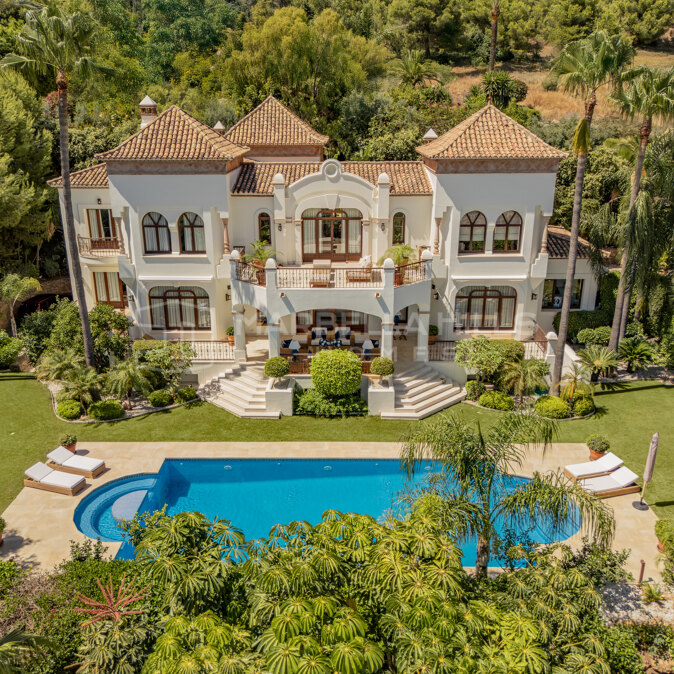
Contemporary Luxury Villa for Sale in Sierra Blanca, Marbella Golden Mile with Panoramic Sea Views
Sierra Blanca, Marbella Golden Mile €10,970,000Completed in 2024, this spectacular contemporary villa occupies a prime position within the prestigious gated community of Sierra Blanca, one…
- View Property
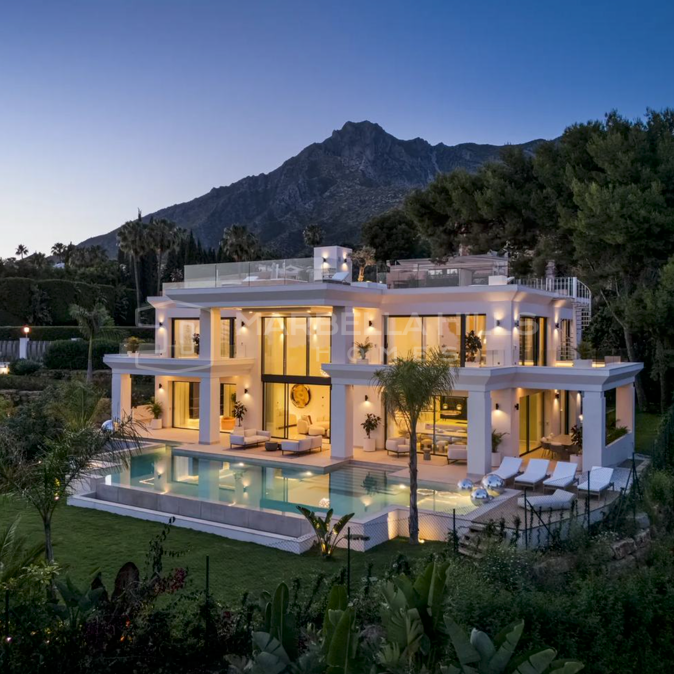
Mediterranean villa for sale in Sierra Blanca, Marbella on the Golden Mile with sea views
Sierra Blanca, Marbella Golden Mile €3,995,000This charming Mediterranean villa for sale in Sierra Blanca, Marbella, is located within one of the most exclusive gated communities…
- View Property
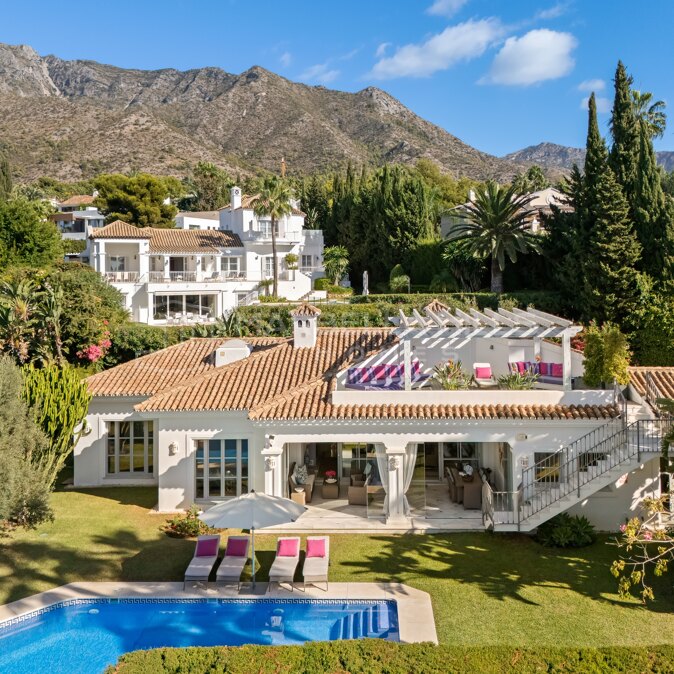
Contemporary luxury villa with sea views in Meisho Hills, Marbella Golden Mile
Meisho Hills, Marbella Golden Mile €3,950,000Located within the prestigious gated community of Meisho Hills in Sierra Blanca, this contemporary luxury villa offers a refined living…
- View Property
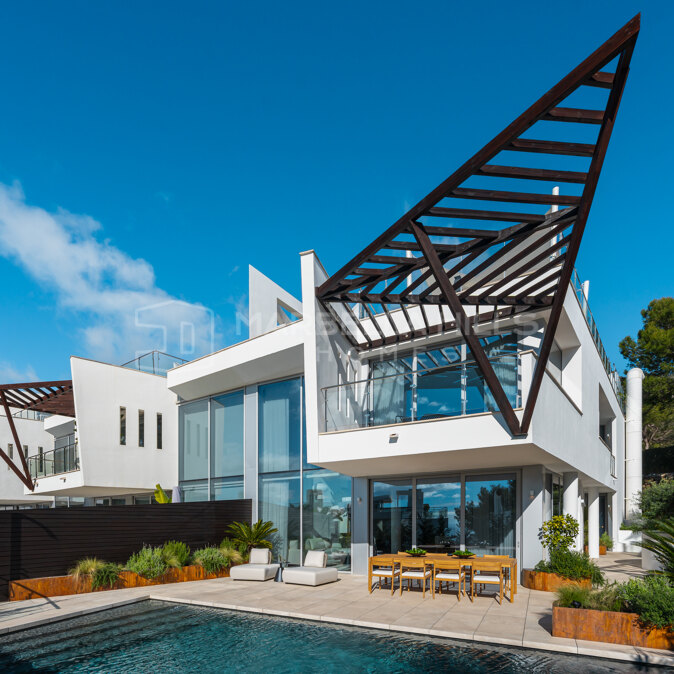
Elegant Newly Renovated Luxury Apartment for Sale in Montebello Hills, Sierra Blanca – Marbella Golden Mile
Sierra Blanca, Marbella Golden Mile Reduced from €1,150,000€990,000This elegant three-bedroom apartment is located in Montebello Hills, an exclusive gated community in Sierra Blanca, on Marbella’s prestigious Golden…
- View Property
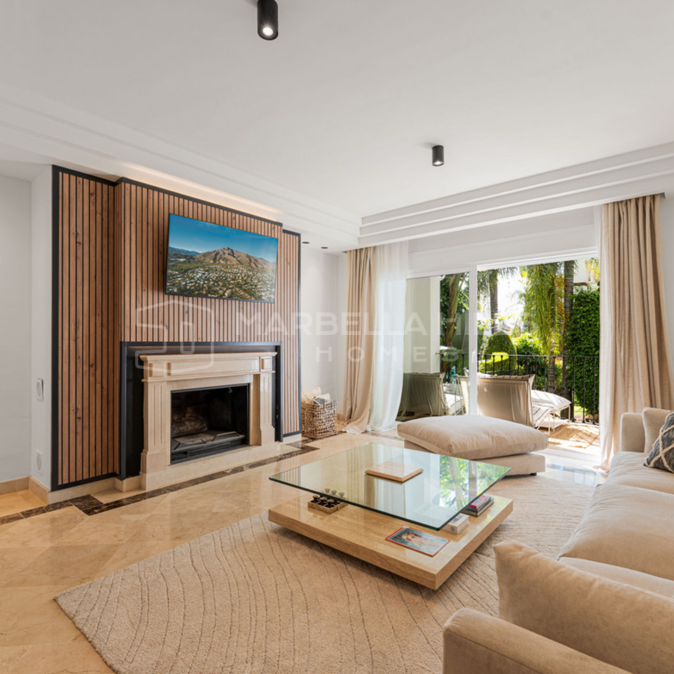
Luxury Villa for Sale in Sierra Blanca Marbella Golden Mile with Sea Views
Sierra Blanca, Marbella Golden Mile SoldLuxury villa for sale in Sierra Blanca, Marbella Golden Mile, located in one of the most exclusive gated communities in…
- View Property
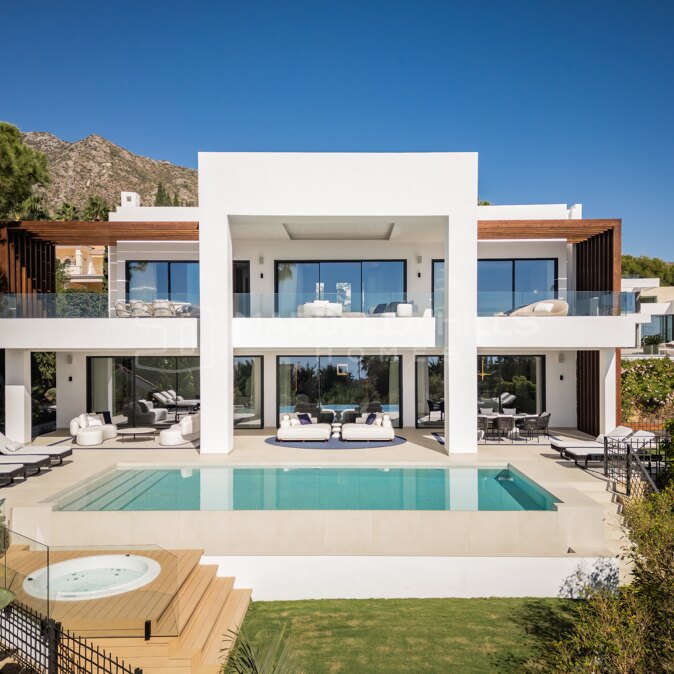
Modern Elegance with Panoramic Views in Prestigious Sierra Blanca
Meisho Hills, Marbella Golden Mile SoldThis exceptional semi-detached villa offers a perfect balance of contemporary design, refined comfort, and architectural sophistication. Located in the exclusive…
- View Property
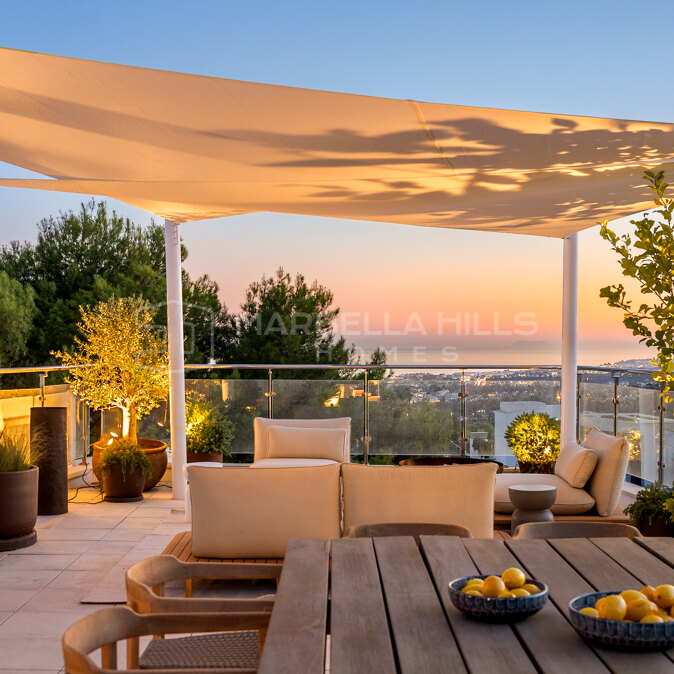
Luxury Villa in Sierra Blanca, Marbella – Sea Views, Privacy and Top-Class Features
Sierra Blanca, Marbella Golden Mile €11,950,000This extraordinary villa is located within Marbella’s most prestigious gated community in Sierra Blanca, just minutes from the Golden Mile…
- View Property
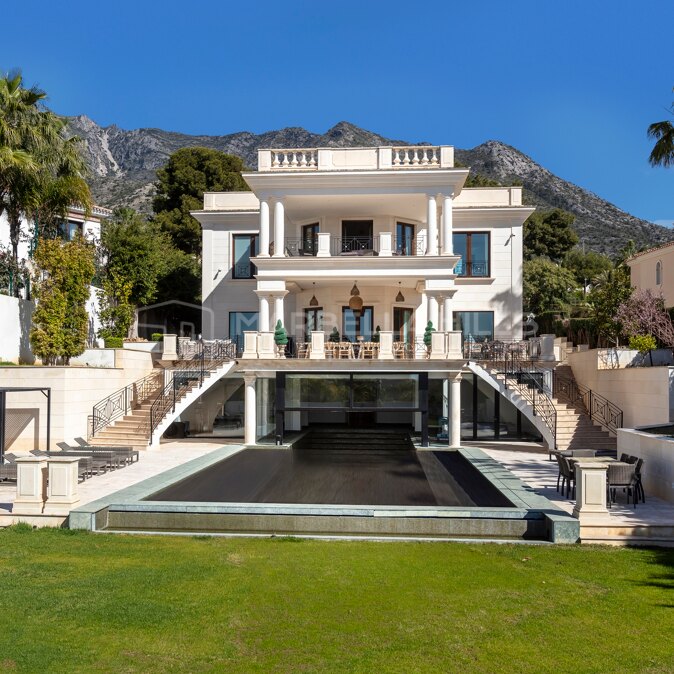
Villa Sinfonía – Exceptional Trophy Estate for Sale in Sierra Blanca, Marbella Golden Mile
Sierra Blanca, Marbella Golden Mile €17,500,000Villa Sinfonía is one of the most exceptional private estates currently available in Sierra Blanca, Marbella's most prestigious gated residential…
- View Property
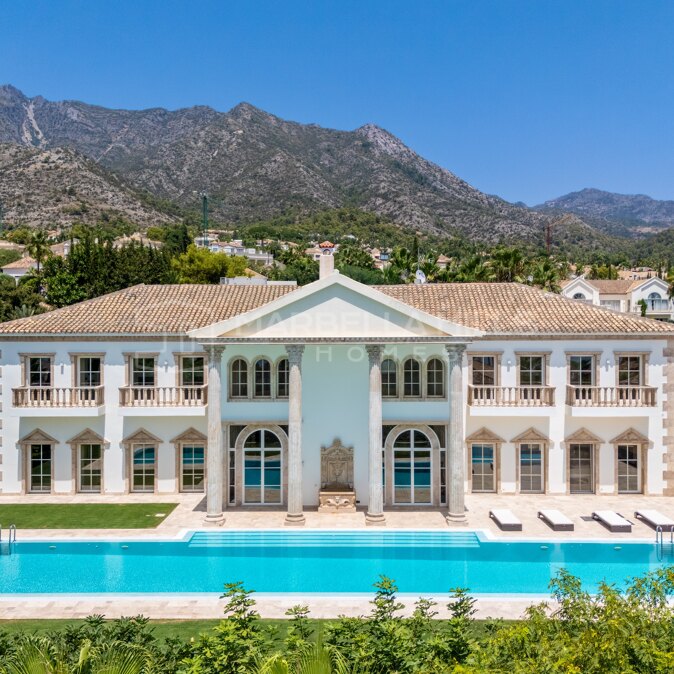
Exceptional Modern 4 bedroom Villa in Sierra Blanca – Luxury, Views, and Unrivalled Craftsmanship - Golden Mile
Sierra Blanca, Marbella Golden Mile Reduced from €3,650,000€3,500,000Situated in the prestigious enclave of Sierra Blanca, this extraordinary modern villa combines an unbeatable location with exquisite craftsmanship, premium…
- View Property