Property Ownership in Marbella: Annual Taxes, Legal Obligations and Running Costs
Summary
Discover the annual taxes, legal obligations, and running costs of property ownership in Marbella. Understand IBI, community fees, non-resident tax, utilities, and maintenance to budget effectively.
Key Takeaways
- Annual property ownership costs in Marbella extend beyond the purchase price, including taxes like IBI, community fees, utilities, insurance, and maintenance.
- Understanding Spanish property taxes, such as the annual Impuesto sobre Bienes Inmuebles (IBI) and potential non-resident income tax, is crucial for owners.
- Community fees cover shared amenities for apartments and properties in urbanisations, while villas may have private maintenance costs for gardens and pools.
- Non-resident owners may still be subject to Spanish tax on imputed income even if the property is not rented out.
- Budgeting for property ownership should include a contingency reserve for unexpected repairs and maintenance.
Buying a property in Marbella is an important investment, but the financial commitment does not end when the purchase is completed. Whether you own a luxury villa in Sierra Blanca, an apartment in Nueva Andalucía or a holiday home on the Golden Mile, understanding the ongoing costs of property ownership in Spain is essential.
For international buyers in particular, the annual expenses and legal obligations can be unfamiliar. Spanish property taxes, community fees, non-resident income tax, municipal charges and maintenance costs all need to be considered, even when the property is only used for a few weeks each year.
One of the most common misconceptions is that a property left empty for most of the year generates very few expenses. In reality, certain taxes and fixed charges continue to apply regardless of how frequently the home is occupied.
The good news is that most ownership costs are predictable when properly understood and budgeted for.
This guide explains the principal annual taxes, running costs and legal responsibilities associated with owning residential property in Marbella. It also examines the differences between apartments and villas, resident and non-resident owners, and properties used privately or rented to tenants.
Although the focus is Marbella, much of the information also applies to Estepona, Benahavís and other parts of the Costa del Sol. Municipal taxes and certain local requirements can vary.

1. What Does It Cost to Own a Property in Marbella?
The annual cost of owning property in Marbella depends on several factors, including the type of property, its size, cadastral value, location, facilities and how it is used.
An apartment within a residential community will normally have different expenses from a detached villa with a private swimming pool and landscaped gardens.
For most owners, the main recurring expenses fall into six categories:
- Municipal property taxes and charges.
- Community of owners' fees, where applicable.
- Electricity, water and other utilities.
- Building and contents insurance.
- Maintenance, repairs and property management.
- Personal tax obligations, including non-resident taxation where relevant.
Owners with mortgages must also budget for loan repayments, while those renting out their properties may have additional tax, licensing and management responsibilities.
The purchase price alone is therefore not a reliable indicator of annual ownership costs.
A relatively modest apartment in a development with extensive communal facilities may carry higher community fees than a more expensive property in a simpler residential complex.
Likewise, a detached villa may have no community fees but require substantial spending on private garden maintenance, pool servicing and general upkeep.
Before purchasing, buyers should request an itemised estimate of the property's existing running costs.

2. IBI: The Annual Property Tax in Marbella
The Impuesto sobre Bienes Inmuebles, commonly known as IBI, is one of the principal recurring taxes associated with property ownership in Spain.
IBI is a municipal property tax charged annually on real estate.
It is generally payable by the person who holds the relevant taxable property right on 1 January of the tax year.
This means that owning a property in Marbella normally creates an annual IBI obligation, whether the home is occupied permanently, used occasionally or left empty.
How is IBI calculated?
IBI is based primarily on the property's cadastral value, known as the valor catastral, and the applicable municipal tax rate.
The cadastral value is an administrative valuation used for taxation purposes.
It is not the same as the property's market value or necessarily the price paid when purchasing the home.
Two apartments with similar market prices can therefore have different IBI bills.
Factors such as cadastral classification, valuation history and municipal provisions can influence the amount payable.
How much is IBI in Marbella?
There is no single fixed IBI amount for all residential properties in Marbella.
The actual bill depends on the property's cadastral value and the applicable local tax rules.
A large villa will often have a higher IBI liability than a smaller apartment, although this is not guaranteed.
Owners should obtain the most recent IBI receipt rather than relying on general estimates.
When is IBI paid?
The payment calendar is established by the relevant tax collection authority.
In Marbella, owners should consult the annual municipal fiscal calendar and the corresponding collection notices.
Direct debit can be a practical option, particularly for non-resident owners who are not in Spain when payment becomes due.
Late payment can result in additional charges and enforcement procedures.
3. Municipal Waste Collection Charges
In addition to IBI, property owners may be liable for municipal waste collection charges, commonly referred to as tasa de basura.
These charges relate to the collection and management of municipal waste.
The amount and billing arrangements depend on the relevant local ordinance.
In Marbella, waste collection charges are governed by municipal fiscal provisions and should be considered separately from IBI.
Owners should not assume that payment of IBI automatically covers every municipal service.
The applicable charge may depend on the property's classification and the criteria established by the municipality.
For properties in Estepona or Benahavís, the relevant local regulations should be checked separately.

4. Community Fees: What Apartment Owners Need to Know
Many residential properties in Marbella form part of a comunidad de propietarios, or community of owners.
This is particularly common for apartments, penthouses, townhouses and villas within gated residential developments.
The community is responsible for managing and maintaining shared elements of the property.
These may include communal swimming pools, gardens, lifts, access roads, security installations, underground garages and other facilities.
Each owner contributes to the community's expenses according to the applicable participation quota or other legally established allocation.
What do community fees cover?
Depending on the development, community fees may include:
- Cleaning and maintenance of communal areas.
- Garden and landscaping services.
- Swimming pool maintenance.
- Lift servicing and inspections.
- Communal electricity and water.
- Security and concierge services.
- Building insurance for communal elements.
- Administration and management expenses.
- Contributions to the community's reserve fund.
Luxury developments with extensive facilities and staffing can have substantial community budgets.
A development with 24-hour security, several swimming pools, landscaped gardens and spa facilities will generally require more resources than a smaller building with limited communal services.
Are community fees paid monthly?
Payment schedules vary.
Some communities collect fees monthly, while others use quarterly or different payment arrangements.
The amount is normally established through the approved community budget and the owner's applicable share.
Before buying a property, it is advisable to request the current community fee amount, recent meeting minutes and information about any extraordinary contributions.
5. Extraordinary Community Contributions: Derramas
Ordinary community fees do not necessarily cover every expense that may arise.
When a community needs additional funds for major works or unexpected expenditure, owners may be required to make an extraordinary contribution, commonly called a derrama.
Examples include façade repairs, waterproofing, lift replacement, structural works or significant improvements to communal installations.
These contributions can be substantial, particularly in older buildings or large residential developments.
A property with relatively low monthly community fees may still expose its owner to significant one-off expenditure.
Before purchasing an apartment or townhouse, buyers should therefore ask whether any extraordinary contributions have already been approved or are under discussion.
Existing owners should review community meeting notices and minutes carefully.
The timing and responsibility for payment may become particularly important when a property is being sold.

6. Non-Resident Property Tax: Why You May Pay Tax Even Without Rental Income
One of the most frequently overlooked obligations for foreign property owners is Spanish non-resident income tax.
A non-resident individual who owns urban residential property in Spain for personal use may be subject to tax on imputed income, even when the property generates no actual rental income.
This is known as imputación de rentas inmobiliarias.
The principle is that the Spanish tax system attributes a notional income to qualifying property available for the owner's own use.
It is not a tax on actual rental payments.
How is non-resident imputed income calculated?
The calculation generally starts with the property's cadastral value.
Depending on the applicable rules and the property's cadastral valuation history, a percentage of 1.1% or 2% is used to determine the imputed taxable income.
The applicable percentage must be checked for the relevant tax year.
The resulting taxable amount is then subject to the appropriate non-resident income tax rate.
The general rates are:
- 19% for qualifying residents of the European Union, Iceland, Norway and Liechtenstein.
- 24% for other non-resident taxpayers.
The precise classification and rate should be verified according to the owner's tax residence and the legislation applicable to the relevant period.
Example of non-resident property tax
Consider a non-resident individual who owns an apartment in Marbella with a cadastral value of €200,000.
If the applicable imputation percentage is 1.1%, the calculation would be:
Cadastral value: €200,000
Imputed taxable income: €2,200
At a tax rate of 19%, the resulting tax would be €418.
At a tax rate of 24%, the resulting tax would be €528.
If the applicable imputation percentage were 2%, the taxable amount and resulting liability would be higher.
This is an illustrative calculation, not an assessment for a particular property or tax year.
How is the tax declared?
Non-resident individuals generally declare imputed property income using Modelo 210.
For imputed income, the tax is assessed by reference to the relevant calendar year, with the filing period extending through the following calendar year under the applicable rules.
Where a property is jointly owned, each owner may have a separate tax obligation corresponding to their ownership share.
Owners who rent out the property for part of the year may need to account separately for rental income and the periods of personal use.
7. What Changes If You Become a Spanish Tax Resident?
Owning property in Marbella does not automatically make someone a Spanish tax resident.
Spanish tax residence is determined under separate legal criteria, which can include the number of days spent in Spain and the location of economic or personal interests.
An individual may own several properties in Spain and still be a non-resident for tax purposes.
Conversely, a person who relocates to Marbella may become a Spanish tax resident even if they retain substantial assets abroad.
Spanish tax residents are generally subject to personal income tax rules that differ from those applicable to non-residents.
For example, the treatment of a habitual residence differs from that of a second home.
A qualifying habitual residence generally does not generate imputed property income under the ordinary resident income tax rules, while certain other properties may.
Tax residents may also have reporting obligations relating to assets outside Spain.
Anyone considering a permanent move to Marbella should obtain tax advice before changing residence, particularly where they have international income, investments or property holdings.
8. Wealth Tax and the Solidarity Tax on Large Fortunes
Owners of high-value Spanish property may need to consider taxes on wealth in addition to annual municipal charges and income tax.
Spain has a wealth tax framework, with regional rules and allowances that can significantly affect the final liability.
Andalusia currently provides a regional wealth tax relief that may substantially reduce or eliminate the ordinary regional wealth tax liability for qualifying taxpayers.
However, this does not necessarily remove all wealth-related taxation.
Spain also has a state-level solidarity tax on large fortunes, which may apply to individuals whose taxable net wealth exceeds the relevant statutory thresholds.
The interaction between these taxes, regional provisions, exemptions and international tax treaties is complex.
Non-residents may be subject to Spanish wealth taxation on qualifying Spanish assets, while residents can face broader taxation based on their worldwide assets, subject to applicable rules.
Ownership through a company, shared ownership and the presence of mortgage debt can also affect the calculation.
High-value property owners should seek individual advice rather than assume that Andalusia's regional wealth tax relief removes every potential liability.
9. Electricity, Water and Other Utility Costs
Utilities are another important component of annual property ownership costs.
Even when a home is not occupied, some services may generate fixed charges.
Electricity
Spanish electricity bills commonly include charges linked to contracted power, energy consumption, applicable taxes and other regulated or contractual components.
A holiday home may therefore incur electricity costs even during periods when no one is staying there.
Properties with heated swimming pools, extensive air conditioning or large outdoor lighting installations can have significantly higher consumption.
Water
Water charges may include consumption, fixed service components and wastewater-related charges.
A villa with extensive gardens or a swimming pool may require considerably more water than an apartment.
Internet and telecommunications
Owners who use their properties intermittently should compare annual and flexible service contracts.
Security systems, smart-home installations and remote monitoring equipment may require a continuous internet connection.
For second-home owners, maintaining essential services while controlling unnecessary fixed costs is an important part of efficient property management.
10. Property Insurance: Buildings, Contents and Liability
Property insurance is not simply another administrative expense.
It provides financial protection against risks that may otherwise result in significant repair or replacement costs.
Owners should consider the distinction between buildings insurance and contents insurance.
Buildings insurance generally covers specified risks affecting the insured structure, while contents insurance relates to belongings and other insured items.
The precise coverage depends on the policy.
For apartments within a community, the community may already hold insurance covering certain shared structural elements.
However, that does not necessarily provide sufficient protection for the individual apartment's interior, contents or the owner's personal liability.
Is home insurance compulsory in Spain?
There is no universal requirement for every mortgage-free homeowner to purchase comprehensive home insurance.
However, mortgage lenders may require appropriate property damage insurance as part of the loan arrangements.
Even where insurance is not legally mandatory, maintaining suitable cover is advisable.
Owners of second homes should confirm that their policies reflect periods of vacancy and the property's actual use.
A property rented to tenants may require different insurance arrangements from a home used exclusively by its owner.

11. Maintenance Costs for Villas in Marbella
Detached villas generally require more individual maintenance than apartments.
The owner is responsible for arranging and financing the upkeep of the property and its private facilities, subject to any relevant community arrangements.
Typical recurring expenses include garden maintenance, swimming pool servicing, air conditioning inspections, plumbing repairs, exterior painting and the upkeep of security systems.
Large villas may also require specialist attention to irrigation systems, water treatment equipment, roof terraces, drainage and exterior surfaces.
Properties close to the sea may experience additional wear from humidity and salt exposure.
Preventive maintenance can reduce the likelihood of expensive repairs.
For owners who spend much of the year abroad, regular inspections are particularly valuable.
A minor water leak or malfunctioning irrigation system can cause substantial damage if it remains undetected for several weeks.
12. Running Costs for Apartments and Penthouses
Apartments generally require less direct exterior maintenance because many shared responsibilities are handled through the community.
However, this does not mean that apartment ownership is maintenance-free.
Owners remain responsible for the upkeep of their private interiors and installations, subject to the legal division of responsibilities.
Air conditioning, plumbing, appliances, private terraces, shutters and interior finishes may all require periodic attention.
Penthouses with extensive terraces may have additional maintenance considerations, including drainage, waterproofing and outdoor installations.
Owners should understand which elements are private and which fall under community responsibility.
This distinction can become particularly important when dealing with leaks, terrace repairs or damage affecting neighbouring properties.
13. Property Management for Non-Resident Owners
For international owners, professional property management can be an important practical consideration.
A property that remains empty for several months still requires attention.
Regular inspections can help identify maintenance problems, security concerns or damage caused by severe weather.
Property management services may include keyholding, periodic visits, utility coordination, maintenance supervision, cleaning and preparation before the owner's arrival.
Where a property is rented, management may also involve tenant communication, repairs, inspections and administrative coordination.
The cost depends on the services included, the type of property and the level of involvement required.
Owners should agree on a clear scope of services and establish who is authorised to approve expenditure.
For higher-value homes, having a reliable local contact can make ownership considerably easier, particularly when urgent repairs are required.
14. Renting Out Your Marbella Property: Additional Tax Obligations
Owners who generate rental income from Spanish property must consider the tax treatment of that income.
The applicable rules depend on whether the landlord is a Spanish tax resident or a non-resident.
For non-resident individual landlords, rental income is generally declared under the non-resident income tax regime.
Qualifying residents of the European Union and certain European Economic Area countries may be able to deduct eligible expenses directly connected with rental income, subject to the relevant requirements.
Other non-resident taxpayers may be subject to different deduction rules.
Owners should not assume that all maintenance, mortgage or community expenses are automatically deductible.
The tax treatment depends on the nature of the expenditure and the applicable legislation.
Where a property is rented for only part of the year, non-resident imputed income tax may also apply to the periods during which the property is available for personal use.
Rental activity can create additional obligations involving contracts, deposits, invoicing and, in certain cases, VAT.

15. Holiday Rentals in Marbella: Legal Requirements and Restrictions
Short-term tourist accommodation is subject to specific regulation in Andalusia.
Owners considering holiday rentals should not assume that every residential property can legally be offered to tourists.
The applicable requirements can involve regional tourism registration, municipal planning rules, building characteristics and restrictions imposed by the community of owners.
Andalusia's tourist accommodation framework was amended by Decree 31/2024, introducing and clarifying requirements affecting tourist properties.
In addition, changes to Spain's horizontal property legislation have strengthened the role of communities of owners in authorising new tourist rental activity.
For new activities subject to the relevant provisions, express community approval may be required.
National short-term rental registration and reporting requirements must also be considered where applicable.
Owners should verify the current rules before advertising a property on booking platforms.
Does a tourist rental licence automatically transfer to a new owner?
Not necessarily.
Changes in ownership or in the person operating the tourist accommodation may require administrative notifications or other formalities.
Existing registration does not automatically guarantee that every future owner can continue operating the property under identical conditions.
Buyers considering a property partly for holiday rental income should investigate its legal position before purchasing.
16. Long-Term Rentals and Landlord Responsibilities
Long-term residential rentals are governed by a different legal framework from tourist accommodation.
Spain's Urban Leases Act, commonly known as the Ley de Arrendamientos Urbanos (LAU), establishes important rights and obligations for landlords and tenants.
The applicable rules depend on the nature of the lease and whether the property is used as the tenant's habitual residence or for another legally recognised purpose.
Landlords may have obligations relating to the condition of the property, repairs, deposits and the terms of the tenancy agreement.
In Andalusia, the treatment and administration of rental deposits must be checked against the legislation applicable to the contract and its date.
Owners should not assume that describing a contract as temporary automatically excludes the legal protections applicable to habitual residential tenancies.
The actual purpose and circumstances of the occupation matter.
Professional legal advice is recommended before drafting a lease, particularly for high-value properties or agreements involving international tenants.

17. Renovations, Building Works and Planning Permissions
Property ownership also involves compliance with local planning and building regulations.
Owners may wish to renovate kitchens, replace windows, enclose terraces, construct extensions or modify swimming pools.
However, not every alteration can be carried out without administrative formalities.
Depending on the works, a municipal licence, responsible declaration, technical documentation or other authorisation may be necessary.
Properties within communities of owners may also be subject to restrictions affecting façades, structural elements and shared installations.
A homeowner should not assume that a modification is permitted simply because similar works have been carried out elsewhere in the development.
Before starting significant works, it is advisable to consult a qualified architect or technical professional and confirm the relevant municipal requirements.
Unauthorised alterations can create problems when the property is subsequently sold or mortgaged.
18. Legal Responsibilities Within a Community of Owners
Owning property in a community involves both rights and obligations.
Under Spain's horizontal property framework, owners must contribute to properly approved common expenses and comply with the applicable community rules.
They also have rights to participate in community decisions in accordance with the relevant legislation.
Community rules may regulate matters such as noise, alterations to façades, use of communal facilities, parking arrangements and certain rental activities.
Owners should keep their contact details updated so that notices and important communications can be received.
Non-payment of community fees can lead to formal recovery proceedings.
Where a property is being sold, outstanding community debts can also create legal and practical complications.
Reviewing community communications is therefore an important part of responsible property ownership.
19. Annual Costs: Apartment Versus Villa
The following comparison illustrates how the main expense categories differ between typical residential property types in Marbella.
These are categories rather than fixed cost estimates, because actual amounts vary substantially from one property to another.
| Expense | Apartment | Detached villa |
|---|---|---|
| IBI | Annual municipal tax | Annual municipal tax |
| Waste collection | Applicable municipal charges | Applicable municipal charges |
| Community fees | Usually applicable | May apply in an urbanisation |
| Electricity and water | Based on consumption and fixed charges | Often higher with larger facilities |
| Insurance | Private cover plus possible community policy | Individual buildings and contents cover |
| Garden maintenance | Usually included in community costs | Often privately arranged |
| Swimming pool maintenance | Usually included in community costs | Privately arranged if pool is private |
| General repairs | Interior and private elements | Building, exterior and private installations |
| Property management | Optional | Optional, often more extensive |
| Non-resident tax | Depends on owner and use | Depends on owner and use |
A luxury apartment with concierge services, spa facilities and 24-hour security may have higher community charges than a simpler townhouse.
Similarly, a large detached villa with a heated pool, mature gardens and extensive technical installations may require a substantial annual maintenance budget.
20. Example: Building an Annual Ownership Budget
Consider an international buyer purchasing a three-bedroom apartment in Nueva Andalucía for use as a holiday home.
The property forms part of a gated residential community with landscaped gardens and a communal swimming pool.
Rather than calculating ownership costs as a fixed percentage of the purchase price, the buyer should obtain actual figures for each relevant category.
An annual budget might be structured as follows:
| Expense | Information required |
|---|---|
| IBI | Latest annual tax receipt |
| Waste collection | Current municipal charge |
| Community fees | Approved annual contribution |
| Electricity | Estimated fixed charges and usage |
| Water | Historical bills or estimated consumption |
| Insurance | Individual insurance quotation |
| Non-resident income tax | Cadastral value and applicable tax rules |
| Maintenance | Allowance for repairs and servicing |
| Property management | Quotation for agreed services |
| Contingency reserve | Provision for unexpected expenses |
The same approach can be applied to a villa, with additional categories for private pool maintenance, gardening, security and technical installations.
This method produces a more reliable estimate than applying a generic annual percentage to the purchase price.
Why a contingency reserve matters
Even a well-maintained property may require unexpected expenditure.
Air conditioning systems fail, appliances need replacing and communal buildings sometimes require major repairs.
Setting aside funds for unforeseen costs can help owners manage these situations without disrupting their annual finances.
The appropriate amount depends on the property's age, condition, equipment and maintenance history.
21. Frequently Asked Questions About Property Ownership in Marbella
Do I have to pay tax on my Marbella property if I do not live in Spain?
Yes, property ownership can create Spanish tax obligations even when the owner lives abroad.
These may include annual IBI, municipal charges and non-resident imputed income tax where applicable.
Do I pay non-resident income tax if I never rent out my property?
In many cases, yes.
Qualifying urban residential property available for personal use can generate imputed income for Spanish non-resident income tax purposes, even without actual rental income.
Is IBI the same as non-resident property tax?
No.
IBI is a municipal tax based on the property's cadastral value and the applicable local rules.
Non-resident imputed income tax is a separate national tax obligation under the Spanish non-resident income tax system.
Are community fees compulsory?
Where a property belongs to a community of owners, owners are generally required to contribute to approved communal expenses according to the applicable legal arrangements.
Are community fees higher in luxury developments?
They can be.
Developments with extensive communal facilities, security personnel, concierge services and large landscaped areas may have higher operating budgets.
However, the actual fee depends on the approved community budget and the individual property's contribution.
Do I need home insurance if I have no mortgage?
Comprehensive home insurance is not universally mandatory for mortgage-free owners, but suitable coverage is strongly recommended.
The policy should reflect the property's use and the risks involved.
Can I rent out my Marbella apartment to tourists?
Possibly, but the property must satisfy the applicable regional, municipal, community and national requirements.
Tourist accommodation should not be marketed without verifying the necessary legal permissions and registrations.
Can I renovate my apartment without permission?
Some works may require municipal procedures, technical documentation or community approval.
The requirements depend on the nature of the alterations and the property's circumstances.
Does owning a home in Marbella make me a Spanish tax resident?
No.
Tax residence is determined by separate legal criteria. Owning property in Spain does not automatically establish Spanish tax residence.
What happens if I do not pay IBI or community fees?
Unpaid IBI can lead to surcharges and collection proceedings.
Outstanding community fees may also be recovered through legal procedures and can complicate a subsequent property sale.
Are property ownership costs tax-deductible?
Certain expenses may be deductible when calculating qualifying rental income, depending on the owner's tax status and applicable rules.
Expenses relating exclusively to private use are not automatically deductible.
Should I use a property manager if I only visit Marbella occasionally?
It is not generally mandatory, but regular inspections and local maintenance coordination can be particularly useful for owners who spend long periods abroad.
22. Property Ownership Checklist for International Homeowners
Owning property in Marbella becomes easier when administrative and financial obligations are reviewed regularly.
Use the following checklist to keep the main responsibilities organised.
- Check that annual IBI payments are up to date.
- Verify municipal waste collection charges and payment dates.
- Review community fees and any approved extraordinary contributions.
- Confirm whether non-resident income tax declarations are required.
- Review rental income tax obligations if the property is let.
- Check whether wealth-related taxes require individual assessment.
- Keep buildings and contents insurance current.
- Review electricity, water and telecommunications contracts.
- Arrange regular maintenance of air conditioning and other installations.
- Inspect roofs, terraces, drainage and waterproofing where appropriate.
- Schedule pool and garden maintenance for villas.
- Keep community contact details and correspondence up to date.
- Confirm planning permissions before carrying out significant alterations.
- Verify rental permissions and registration requirements before offering tourist accommodation.
- Maintain a contingency budget for unexpected repairs.
- Keep copies of tax receipts, invoices, insurance policies and relevant legal documents.
23. Owning Property in Marbella with Confidence
Property ownership in Marbella can be straightforward when the ongoing obligations are properly understood.
The key is to look beyond the purchase price and consider the full financial and administrative picture.
Municipal taxes, community contributions, insurance, utilities and maintenance should all form part of an annual ownership budget.
International owners must also pay particular attention to their Spanish tax status, especially when the property is used as a second home or generates rental income.
For apartments, understanding the community's finances and regulations is essential. For villas, planning for private maintenance and technical upkeep is equally important.
At Marbella Hills Homes, we work with international buyers and property owners throughout Marbella, Nueva Andalucía, the Golden Mile, Benahavís and Estepona.
Our local market knowledge allows us to help clients understand the practical differences between property types, residential developments and locations before making a purchase decision.
Whether you are considering a beachfront apartment, a penthouse in a gated community or a private villa in the hills above Marbella, understanding the ongoing costs is an important part of choosing the right property.
Explore our selection of properties for sale in Marbella and the surrounding areas, or contact Marbella Hills Homes to discuss your requirements and the practical considerations of owning a home on the Costa del Sol.
A well-informed property purchase starts with understanding not only what a home costs to buy, but what it costs to own.
Editorial note: This guide provides general information about residential property ownership in Marbella and the Costa del Sol. It does not constitute individual legal, financial or tax advice. Tax rates, municipal charges, rental regulations and other legal requirements may change. Owners should consult qualified Spanish legal and tax professionals regarding their specific circumstances.
Properties for Sale in Marbella: Luxury Villas, Penthouses and Apartments
Off-plan contemporary villa with infinity pool and sea views in Monte Mayor, Benahavís
Monte Mayor, Benahavis €3,395,000Villa Evania Hills is an off-plan contemporary villa to be built on a 4,078 m² plot in Monte Mayor, Benahavís,…
- View Property

Modern 3-Bedroom Apartment with Spacious Terrace Near Estepona Marina
Estepona Puerto, Estepona Town €782,700This contemporary three-bedroom apartment is situated in a new residential development in Estepona, just 100 metres from the beach and…
- View Property
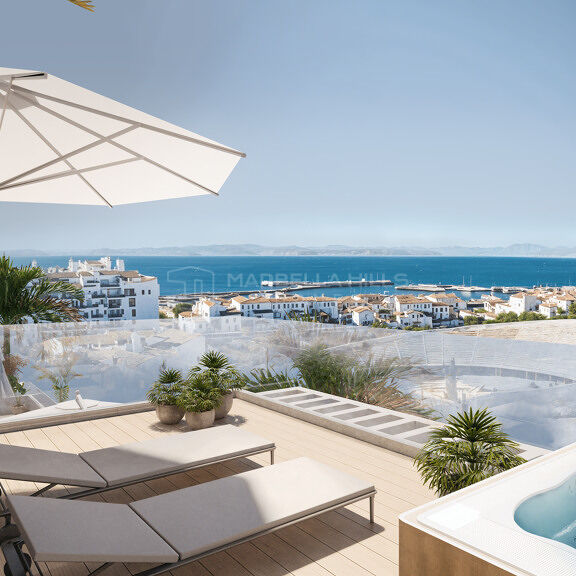
Modern 2 and 3 Bedroom Apartments for Sale Near Estepona Marina
Estepona Puerto, Estepona Town €833,700Discover an exclusive collection of just 22 contemporary apartments for sale in Estepona, ideally situated only 100 metres from the…
- View Property
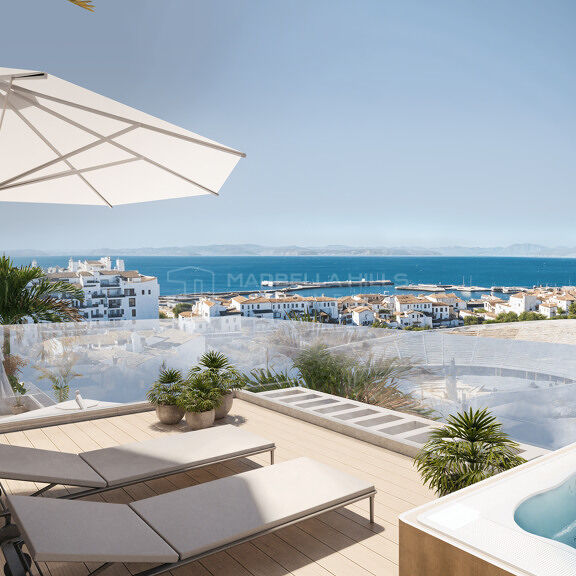
Kalifornia: New 3-Bedroom Apartments Between Two Golf Courses, Estepona
Valle Romano, Estepona West €560,000Kalifornia is a new development in West Estepona, set on a hillside between the Valle Romano and Azata golf courses.…
- View Property
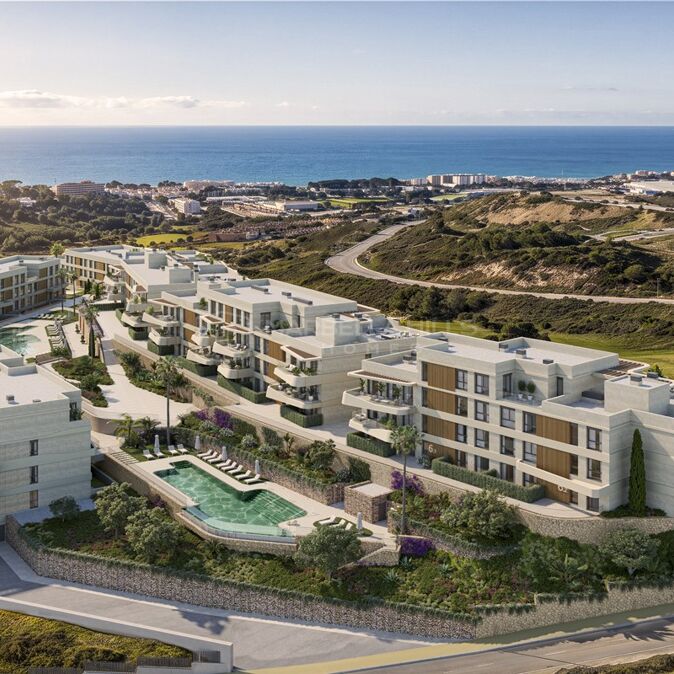
Kalifornia: New Apartments Between Two Golf Courses in West Estepona
Valle Romano, Estepona West €473,000Kalifornia is a new development in West Estepona, set on a hillside between the Valle Romano and Azata golf courses.…
- View Property
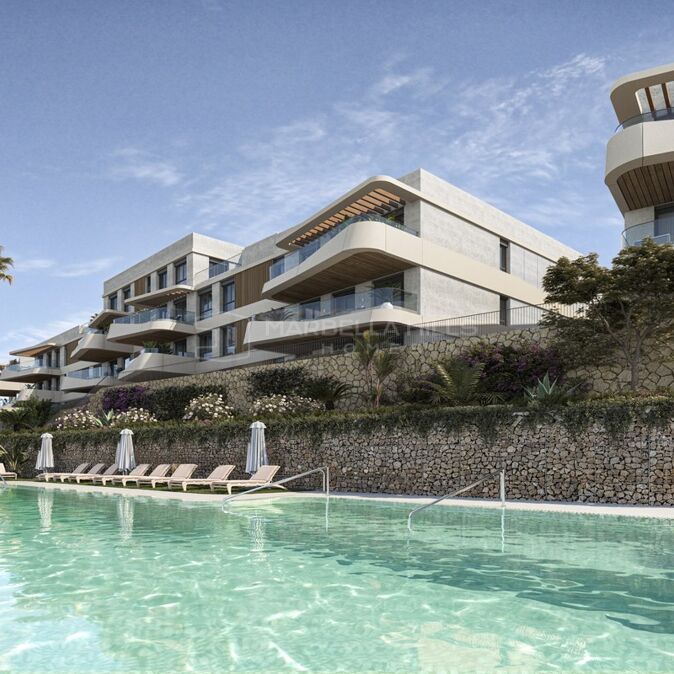
New Penthouses with Rooftop Terrace at The Kove, Mijas
El Chaparral, Mijas Costa €630,000The Kove is a new gated development in the green foothills of El Chaparral, between La Cala de Mijas and…
- View Property

New 3-Bedroom Apartments at The Kove, El Chaparral, Mijas
El Chaparral, Mijas Costa €490,000The Kove is a new gated development in the green foothills of El Chaparral, between La Cala de Mijas and…
- View Property

New 2-Bedroom Apartments at The Kove, El Chaparral, Mijas
El Chaparral, Mijas Costa €395,000The Kove is a new gated development in the green foothills of El Chaparral, between La Cala de Mijas and…
- View Property
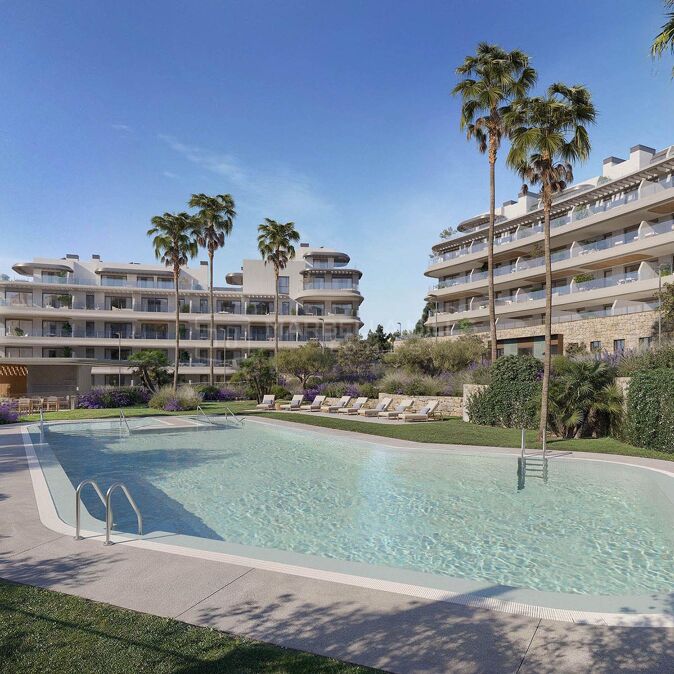
Brand-New Contemporary Villa for Sale in Monte Mayor, Benahavís
Monte Mayor, Benahavis €4,350,000This is a brand-new, completed contemporary villa set on a hilltop plot of 2,750 m² in the heart of Monte…
- View Property

New four bedroom duplex penthouse with rooftop solarium on the San Pedro boulevard
San Pedro Playa, San Pedro de Alcantara €1,795,000A spacious four bedroom duplex penthouse on the beach side of San Pedro Alcántara, directly on the popular boulevard. It…
- View Property

Brand New 3 Bedroom Ground Floor Apartment for Sale in Cancelada, Estepona
Cancelada, Estepona East €1,004,950Discover a new way of living on the Costa del Sol. This brand-new 3-bedroom, 2.5-bathroom ground floor apartment is part…
- View Property
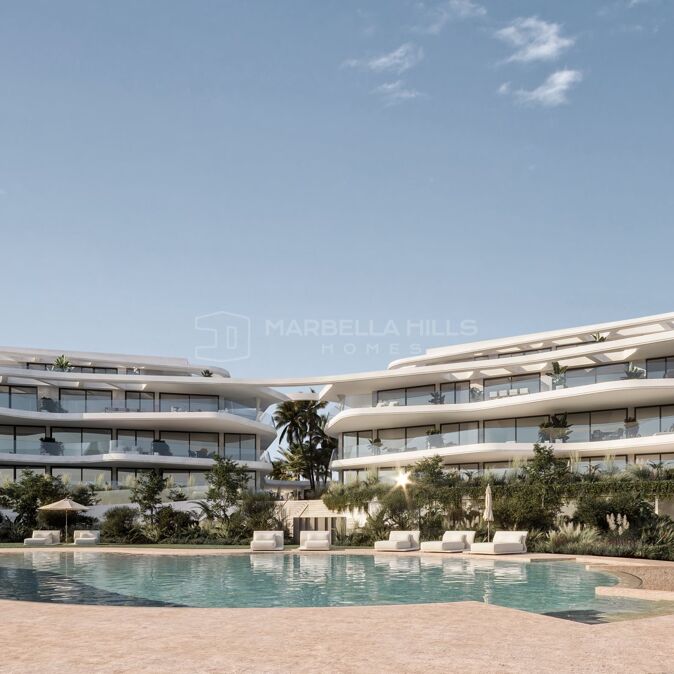
Brand New 2 Bedroom Ground Floor Apartment for Sale in Cancelada, Estepona
Cancelada, Estepona East €898,900Discover a new way of living on the Costa del Sol. This brand-new 2-bedroom, 2-bathroom ground floor apartment is part…
- View Property

€1,321,000Discover a new way of living in La Reserva, the most tranquil and exclusive enclave of Sotogrande. Surrounded by protected…
- View Property

New Penthouse with Private Rooftop Pool and Sea & Golf Views for Sale in Soul Marbella
Santa Clara, Marbella Este €1,495,000Brand new and ready to move into, this two-bedroom penthouse sits in one of the best-positioned blocks of Soul Marbella,…
- View Property
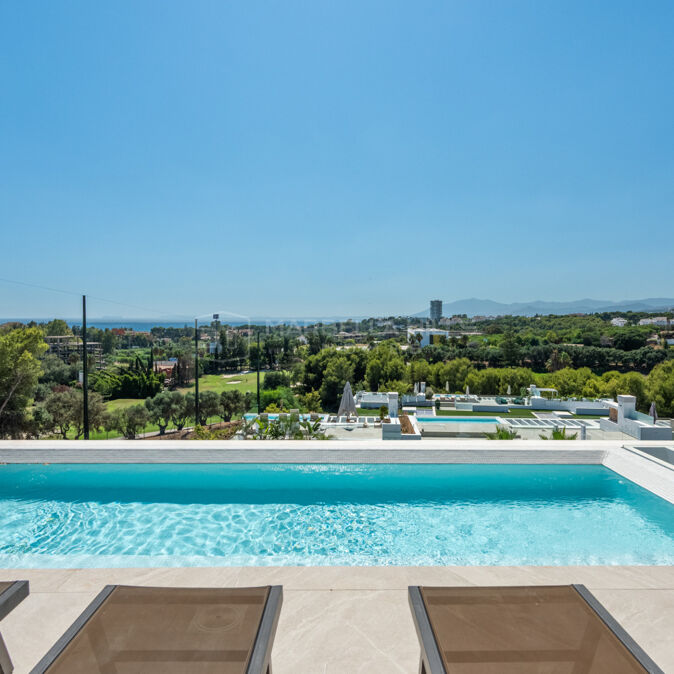
Exceptional Contemporary Luxury Villa Under Construction in Nueva Andalucía, Marbella
Nueva Andalucia, Marbella €5,990,000Discover an exceptional contemporary luxury villa for sale in Nueva Andalucía, ideally positioned in Marbella's prestigious Golf Valley, just minutes…
- View Property

Exclusive Contemporary Villas for Sale in Cortijo Blanco, San Pedro de Alcántara
Cortijo Blanco, San Pedro de Alcantara €4,700,000Just 140 metres from the beach, this exclusive collection of four contemporary villas offers an exceptional opportunity to own a…
- View Property

Contemporary 3-Bedroom Apartment for Sale in El Campanario, Estepona
El Campanario, Estepona East €742,000This stylish three-bedroom apartment forms part of an exclusive new collection of 77 homes in El Campanario, one of the…
- View Property

Contemporary 2-Bedroom Apartment in a New Resort-Style Development in Estepona
El Campanario, Estepona East €425,000This stylish two-bedroom apartment forms part of an exclusive new residential development on Estepona’s New Golden Mile, combining contemporary architecture,…
- View Property

€2,789,500This exceptional luxury apartment for sale at The View Marbella occupies the first floor of the iconic Atlas Building, a…
- View Property

Hillside Luxury Villa for Sale in Real de La Quinta, Benahavís with Sea Views
Real de La Quinta, Benahavis €6,950,000This exceptional luxury villa for sale in Real de La Quinta, Benahavís, has been designed around its privileged hillside setting,…
- View Property

Luxury New-Build Villas for Sale in Hacienda Las Chapas, Marbella East
Hacienda las Chapas, Marbella Este €4,188,000Set within the prestigious residential enclave of Hacienda Las Chapas, this is an exclusive collection of just seven contemporary luxury…
- View Property

New Luxury Villas for Sale in Elviria, Marbella East
Elviria, Marbella Este €2,850,000Discover an exclusive collection of luxury villas for sale in Elviria, one of Marbella East's most desirable residential areas. Blending…
- View Property

Luxury Contemporary Villa for Sale in La Cala de Mijas – Designer Mediterranean Living on the Costa del Sol
La Cala Golf Resort, Mijas Costa €3,685,000Villa Daniella is an exceptional contemporary luxury villa in La Cala de Mijas, where sophisticated architecture, advanced technology and refined…
- View Property

Contemporary New Build Villa for Sale in Cortijo Blanco, Marbella
Cortijo Blanco, San Pedro de Alcantara €4,290,000Discover an exclusive collection of just three contemporary villas in the highly desirable residential enclave of Cortijo Blanco, one of…
- View Property

€6,300,000Positioned along the frontline of the coast in Estepona, these penthouses introduce a more elevated way of living on the…
- View Property

€3,550,000Positioned along the frontline of the coast in Estepona, this residential concept introduces a new standard of living on the…
- View Property
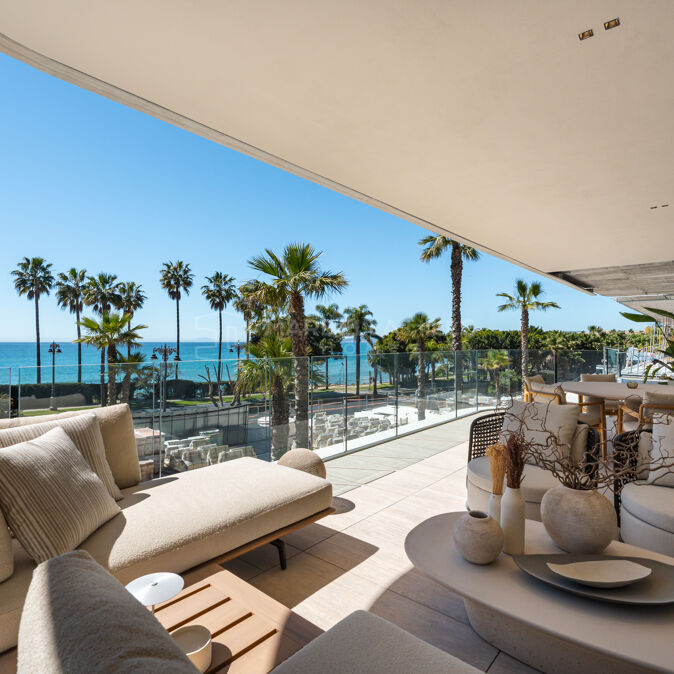
Contemporary 5-Bedroom Villa for Sale in Benahavís | Modern New Build Costa del Sol
Real de La Quinta, Benahavis €4,995,000Located in the prestigious Real de La Quinta area of Benahavís, this contemporary luxury villa for sale offers an exceptional…
- View Property

Luxury 5-Bedroom Villa for Sale in Benahavís | South-Facing New Build Costa del Sol
Real de La Quinta, Benahavis €6,250,000Located in the prestigious hills of Benahavís, this contemporary luxury villa in Real de La Quinta offers refined modern living…
- View Property

New Build Villa for Sale in Guadalmina Baja Marbella Near Beach and Golf
Guadalmina Baja, San Pedro de Alcantara €8,900,000This luxury villa for sale in Guadalmina Baja, Marbella, is located in one of the most exclusive residential areas on…
- View Property

€2,065,000Located in the prestigious hills of Benahavís, this exceptional 3 bedroom first floor apartment represents one of the most desirable…
- View Property

€1,100,000Located in the prestigious hills of Benahavís, this contemporary luxury apartment offers an exceptional lifestyle surrounded by nature, with panoramic…
- View Property

€1,395,000Located in the prestigious hills of Benahavís, this contemporary luxury garden apartment offers an exceptional lifestyle surrounded by natural beauty,…
- View Property

New Apartments, Penthouses and Villas for Sale in Selwo, New Golden Mile
Selwo, Estepona East €562,000Set in the hills of Selwo on Estepona’s New Golden Mile, this new residential development offers a collection of contemporary…
- View Property
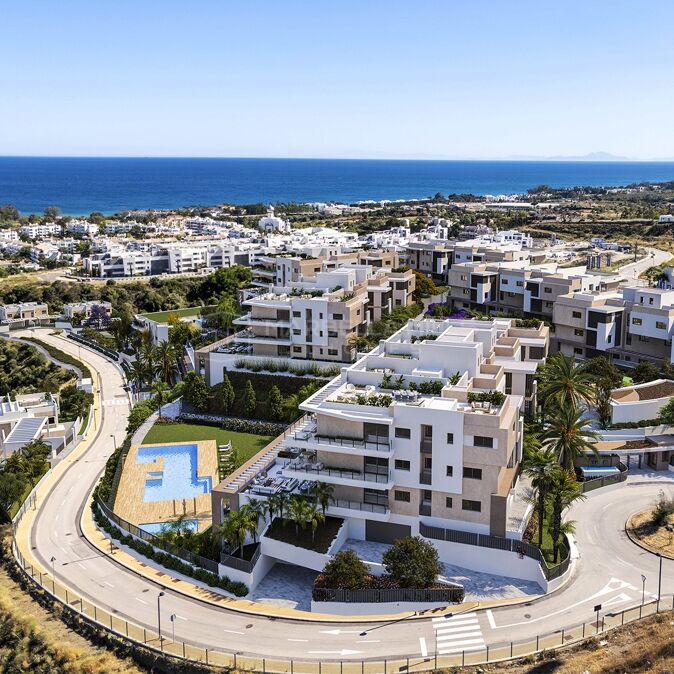
Contemporary Luxury Homes for Sale in Calanova, Mijas Costa
Cala de Mijas, Mijas Costa €1,200,000Set in the elevated surroundings of Calanova, Mijas Costa, this exclusive residential development offers a contemporary Mediterranean lifestyle just minutes…
- View Property

Luxury Homes for Sale in Calanova, Mijas Costa near La Cala de Mijas
Cala de Mijas, Mijas Costa €990,000Discover an exclusive collection of luxury homes for sale in Calanova, Mijas Costa, set in an elevated residential location close…
- View Property