Buying Property in Marbella: The Complete Buyer’s Guide to the Process, Mortgages and Costs
Summary
This guide sets out exactly what to expect, what everything costs, and the choices you will need to make along the way.
Key Takeaways
- A resale purchase follows a clear sequence: reservation, due diligence, private purchase contract, completion before a notary, registration.
- The reservation-to-contract window is where your lawyer investigates the property. What the documents say, not what anyone assures you, decides whether a deposit comes back.
- Budget around 9 to 10% above the price for a resale and around 13 to 14% for a new development, plus ongoing costs such as IBI and community fees.
- Marbella’s planning history makes property-specific checks essential: a city-wide plan never replaces checking the individual property.
- Get your NIE early, appoint an independent lawyer, and allow two to four months from accepted offer to completion.
Legal content reviewed by Francisco Sánchez Jiménez, AbogadosMarbella, Marbella property lawyer and member of the Málaga Bar Association (colegiado no. 4806), on 29 September 2026. Practical content by Evelin Bentz, Executive Director, Marbella Hills Homes. Last updated: October 2026.
Buying a home in Marbella should be one of the most enjoyable decisions you ever make, whether it is a holiday base, an investment or a permanent move to the Costa del Sol. The Spanish process is straightforward once you understand it, but it works differently from the UK, the US or Northern Europe, and the details around contracts, due diligence, taxes and financing are where buyers benefit most from good guidance.

This guide sets out exactly what to expect, what everything costs, and the choices you will need to make along the way. It is built on two things: our day-to-day experience accompanying international buyers, and a recorded conversation between Evelin Bentz and Francisco Sánchez Jiménez of AbogadosMarbella, a Marbella property lawyer with more than 25 years in conveyancing. You can watch the full conversation above, or read on: the guide is designed to be complete without the video. If you would rather talk it through directly, you can always get in touch with our team.
The buying process, step by step
The purchase moves through a clear sequence. Understanding each stage in advance is the single best way to keep the transaction calm and predictable. Buyers are generally far more at ease when the process is explained to them before they commit financially; discovering each step as it comes, under deadline pressure, creates a stress that can largely be avoided.
1. Find the property and agree a price. You view, choose and make an offer through the agent. Once the seller accepts the price and the broad terms, the property moves toward reservation. In the most sought-after areas the best homes move quickly, so it helps to have your finances and your lawyer ready before you start viewing seriously. You can begin your search across our properties for sale and new developments.
2. Sign the reservation agreement and pay a deposit. This takes the property off the market for an agreed period while your lawyer requests documentation and begins due diligence. The amount depends on the property and the seller: it may be a percentage of the price, particularly for villas, or a fixed amount, typically €6,000, €10,000 or more for higher-value properties. These are market practice, not a legal rule.
3. Sign the private purchase contract (the contrato de arras). If the checks and any agreed conditions are satisfactory, both parties sign the private contract, which fixes the price, the payment terms, the completion date and the consequences of breach. At this point the buyer customarily pays around 10% of the purchase price, less the amount already paid at reservation.
4. Sign the title deed (escritura pública) before a notary. This is completion. Both parties confirm their identities, the notary checks that the legal conditions are met, the balance is paid, and the deed is signed. In a normal purchase, the public deed and delivery transfer ownership to you.
5. Registration at the Land Registry. The notary submits an electronic copy to the Land Registry (Registro de la Propiedad) and, once the applicable tax has been filed, the deed is registered in your name. Registration is not generally compulsory, but it is strongly advisable: once registered, your title is protected against a later sale of the same property by the seller to a third party. In practice the post-completion process usually takes a few weeks.
This sequence is common, but it is neither automatic nor identical in every transaction. New developments, company purchases, inherited properties, properties with existing finance, rural land, planning discrepancies and transactions involving powers of attorney can all require additional steps.
The reservation agreement: what it should make clear
The reservation agreement is usually the first written commitment after an offer is accepted, and it deserves more attention than it often gets. Before you transfer anything, your own lawyer should have reviewed it, and it should make the following clear:
- The full identity of buyer and seller, or the representatives signing for them.
- The property being reserved, with enough registry or cadastral detail to remove ambiguity.
- The price, the reservation amount, where it is paid, and whether it forms part of the purchase price.
- The period during which the property is withdrawn from the market.
- The due diligence condition and the deadline for completing it.
- Any mortgage, financing, tourist-rental or planning condition the buyer is relying on.
- The circumstances in which the reservation deposit is refundable, non-refundable, or rolled into the later deposit.
- The intended date and principal terms of the private contract and completion.
Francisco's legal perspective. The reservation-to-private-contract period is the critical window for investigating the property. A buyer should not rely on a generic assurance that a deposit is refundable: the contract wording and the facts of the specific transaction determine the outcome.
Three questions to ask: Has my own lawyer reviewed this document before I transfer anything? Is the purchase expressly subject to satisfactory due diligence? Under exactly which circumstances do I get my money back?
The private purchase contract, and what happens if someone does not complete
After due diligence, the parties sign a private purchase contract, in Marbella often called a contrato de arras. It records the full price, the deposit already paid, the balance due at completion, the completion date, the condition of the property, included contents, allocation of costs, treatment of mortgages or other charges, the consequences of breach, and any remaining conditions.
Francisco's legal perspective. The name on the document matters far less than what the clauses actually say. Two contracts both headed "arras" can produce very different outcomes.
If one party does not complete, the consequence depends on the contract, the type of deposit, the reason for non-completion and whether an agreed condition has failed. A buyer who simply changes their mind faces a very different outcome from one who withdraws because a protected mortgage condition failed. Where the parties have expressly agreed withdrawal arras under Article 1454 of the Civil Code, the buyer may withdraw by forfeiting the deposit and the seller by returning double. Other contracts may instead allow a party to demand performance, claim damages, apply a penalty, or use a different agreed remedy.
Timing is decisive. If a lawyer is going to advise a buyer not to proceed because of a serious property issue, the safest moment is before entering the binding contract, while the buyer still has an express contractual route to recover the reservation money. This must be assessed on the actual documents and deadlines, never on a general rule.
Official source: Spanish Civil Code, Article 1454
Due diligence: what your lawyer actually checks
Due diligence is a professional investigation of the legal, registry, planning, tax, community and contractual risks before you complete. It is not a guarantee that a property is flawless. It is designed to identify risks before you commit, so that they can be resolved, negotiated or, if necessary, lead you to walk away.
Francisco's legal perspective. Due diligence is a general study of the legal situation of the property you intend to acquire, something close to a complete X-ray. By reviewing the registry, cadastral and planning position, among other points, the aim is to ensure that the buyer acquires a property that is fully legal and up to date with all payments and taxes, and that carries no embargoes or charges which the buyer would otherwise have to assume after the purchase.
Evelin's practical perspective. International buyers are often surprised to find that the Land Registry, the Cadastre and the property as it physically exists do not always match perfectly, particularly in older villas. A pool added years ago, an enclosed terrace or a historic extension frequently explain these differences. It does not necessarily mean there is a problem, but it is precisely the kind of point a due diligence exists to verify.

Expect your lawyer to:
- Pull a current nota simple and verify the title deeds, confirming the seller is the legal owner with the right to sell and that everyone with a legal interest is signing.
- Cross-check the Land Registry, the Cadastre, municipal records and the physical property, so that no undeclared extension slips through.
- Confirm the property is free of debts and charges, and that there is no inheritance or third-party claim contesting the sale.
- Check building and occupation documentation, planning status and any enforcement proceedings.
- Confirm IBI, refuse charges and community fees are paid, and review the community statutes and recent minutes for restrictions or special levies.
- Manage the contracts, tax payments and the notary appointment.
The key documents explained
Each document answers a different question, and none of them alone gives the full picture.
Nota simple. An informative Land Registry extract identifying the registered property, the owner or holders of rights, and the nature and limits of registered charges. It is useful for due diligence but has informational rather than evidential status; a registry certificate is the formal document that proves the Registry's content. A fresh search matters, because the legal position can change. Official source: Land Registry.
Cadastral certificate and reference. The Cadastre is an administrative record with descriptive, mapped and valuation data. It is not a substitute for the Land Registry and does not by itself prove ownership. Differences between cadastral, registry and physical data must be analysed, not assumed harmless. Official source: Spanish Cadastre electronic office.
Public title deed (escritura pública). Records the transaction before a notary, identifies parties and property, sets out price and payment method, and provides the instrument needed to register your title. The notary is a public official who controls legality and acts impartially, not as your private lawyer. Official source: Spanish Notariat.
Community certificate and minutes. For property in a community of owners, your lawyer checks whether the seller is up to date with fees and whether extraordinary assessments or major works have been approved or discussed. Ask for the last AGM minutes and a certificate of no community debt at completion, and check whether any special levy, known as a derrama, is coming for major works such as a roof, lift or pool.
Tax and municipal records. IBI receipts, refuse-tax evidence, cadastral data and municipal planning documentation, depending on the property and municipality.
Building, occupation and planning documents. Building licence, first occupation licence or equivalent historic documentation, declarations of new construction, planning certificates, evidence of works or changes of use. A single document rarely answers every planning question.
Certificate of no planning infringement (certificado de no infracción urbanística). Issued by the Town Hall, this certificate confirms whether the property is the subject of any planning infringement proceedings. Francisco Sánchez Jiménez considers it a fundamental document, especially in a sensitive area such as Marbella. Its weight varies with the type of property, its year of construction and its location, but it should always be requested from the municipality.
Energy performance certificate. Generally required for the transaction, subject to exemptions. Confirm the certificate relates to the property being sold and is still valid.
What if a property has no first occupation licence?
The absence of a licencia de primera ocupación does not mean the same thing for every property. Construction date, planning history, building licence, works carried out, municipal records, current use and the reason for the absence all matter.
Evelin's practical perspective. The absence of a document is neither a reason to panic nor something that can be ignored. It is a question to understand, verify and resolve methodically, and that is exactly what a good due diligence is for.
Francisco's legal perspective. The lawyer determines what the absence means legally for that specific property, including its effect on completion, utilities, financing, renovation, resale and intended use. Two questions to ask: Why is this document missing? What does that mean for financing, renovation and resale?
Marbella planning: PGOM, POU and why local advice matters here
Marbella has a more complicated planning history than most of the coast, and this is one reason an independent local lawyer matters here more than almost anywhere. The town's 2010 general urban plan was annulled by the courts, and some properties, particularly older builds, extensions and semi-rural homes, can carry licensing irregularities or sit under a special status for constructions that are tolerated but not fully in line with planning, sometimes handled through an out-of-ordinance declaration such as an AFO.
Marbella's official planning portal now presents the new framework through two separate instruments: the Plan General de Ordenación Municipal (PGOM) and the Plan de Ordenación Urbana (POU). As checked on 29 September 2026, the portal published a final PGOM proposal with related environmental documentation, alongside separate POU material. We follow this closely in our article on Marbella's new PGOM.
A city-wide planning instrument never replaces checking the classification, licences, recorded construction and enforcement position of the individual property. Buyers should not assume that a future or newly approved plan will automatically regularise an existing discrepancy. Your lawyer should explain the status of the plan at the date of advice and how the currently applicable rules affect your property.
Official sources: Marbella Urban Planning Department · Marbella new planning portal
Charges, debts and outstanding amounts
It is not accurate to say that every seller debt automatically passes to the buyer, but some liabilities can affect the property or expose the buyer to risk if they are not checked and settled correctly. A well-managed transaction identifies and deals with them before or at completion.
Commonly checked:
- Registered mortgages, embargoes, easements, usufructs and other burdens.
- IBI and local refuse charges, with evidence of payment.
- Community fees and approved extraordinary assessments.
- Amounts needed to cancel a seller's mortgage, economically and at the Registry.
- Withholdings required by law, including the buyer's 3% withholding where the seller is non-resident for Spanish tax purposes.
- Contractual apportionment of taxes, fees and utilities.
Where an amount remains outstanding, the parties may agree to retain or deduct money at completion. The mechanism should be documented in the deed or completion statement.
Official source: Spanish Tax Agency: 3% withholding when buying from a non-resident seller
How due diligence prevents a serious problem: a real case
Every transaction can present its own issue. Recurring examples include a mortgage expected to be repaid but which was not, a mortgage repaid but still registered, and an easement allowing a path across part of the property. Another recurring category is a mismatch between the property as built and its registry, cadastral or planning documentation. The significance ranges from a correctable administrative discrepancy to a problem serious enough to renegotiate, delay completion, or advise the buyer not to proceed.
Case note from Evelin Bentz (genuine transaction handled by Marbella Hills Homes, anonymised)
We recently accompanied the acquisition of a villa built before Marbella's planning framework was fully stabilised. During due diligence, the buyer's lawyer found that the property had no first occupation licence, a discovery that could have alarmed a buyer unfamiliar with the local market.
Rather than abandoning the transaction, the team worked with the seller, the seller's lawyer and the competent authorities to establish the property's exact legal position. It emerged that the property qualified for an AFO declaration (Asimilado Fuera de Ordenación), which was obtained before signing.
The result was a legally secure acquisition, with documentation matching the real situation of the property. Without that prior verification, the buyer would most likely have discovered the issue only after committing contractually, leading to far more complex negotiations. Certain details have been omitted to protect the client.
Buying off-plan or a new development
Buying a brand new home works a little differently, especially off-plan. Instead of a single completion payment, you pay in staged instalments as construction progresses, with a reservation followed by a series of payments against building milestones and a final balance at handover. The essential protection here is that the developer must provide bank guarantees for each staged payment, so your money is secured if the project does not complete as agreed.

Buying new has real advantages. You can often fix today's price with staged payments, choose or personalise finishes, and move into a home built to current standards with modern energy efficiency. Spanish new builds also carry structural warranties. The trade-offs are the wait for completion and the need to check the developer's licences and track record carefully, which is exactly what your lawyer is for. Only deal with a licensed developer, insist on bank guarantees for your payments, and have an independent lawyer verify the developer's credentials.
Beyond personal taste, resale and new build differ in cost, timing and what needs checking. A resale lets you see the actual home, the community and the views, and move in without waiting. It carries transfer tax (ITP) rather than VAT. The key legal checks are that any past renovations or extensions were properly licensed and match what is recorded, that the community imposes no unwelcome restrictions, and that the property is free of debts. A new development offers modern design, warranties and the option to personalise, usually at the cost of a wait. The tax treatment is VAT plus stamp duty, and the central protections are the developer's licences and the bank guarantees on staged payments.
Buying with a mortgage versus buying in cash
Both routes are common in Marbella, and the right one depends on your circumstances rather than any rule.
With a Spanish mortgage. Foreign buyers are eligible for mortgages in Spain. As a general guide, non-residents can typically borrow up to around 60 to 70 percent of the property's value, with the balance and costs funded from your own resources. It is well worth arranging a mortgage pre-approval early, so you know your budget and can move quickly when the right home appears.
A mortgage purchase requires coordination between the property transaction and the loan. The bank first asks for the property documentation and orders a valuation (tasación). Without a valuation there is no mortgage offer, so this step should be launched as early as possible. Under Spain's Real Estate Credit Contracts Act (Law 5/2019), the lender must provide the required documentation at least ten calendar days before the loan is signed, including the European Standardised Information Sheet (FEIN) and the standard warnings sheet (FiAE). The borrower then attends the notary of their choice for the pre-contract transparency act, commonly called the acta previa, which must be completed before the mortgage deed can be authorised. Allow time for each step.
Francisco's legal perspective. The reservation agreement should be made conditional on obtaining the mortgage, and the private contract should allow the signing date to be extended if the bank's timetable requires it. Where a buyer arranges the mortgage directly with the bank, without their lawyer's involvement, the professionals handling the purchase cannot be held responsible for deadlines or conditions agreed with the bank before the acta previa.
Mortgage costs are lower than older guides suggest. Under the 2019 law the bank pays the stamp duty, notary and registry costs on the mortgage deed itself, so the borrower usually pays only the property valuation plus any lender arrangement fee, broker fee and the insurance the bank requires. One quiet benefit of a mortgage is that the lender runs its own checks on the property before releasing funds. Even so, you should still appoint your own independent lawyer, because the bank protects the bank's interest, not yours.
In cash, with no mortgage. Paying cash keeps the process simpler and faster, and can strengthen your position in a competitive negotiation. Without a lender running parallel checks, all of the due diligence rests with you and your lawyer, so thorough legal work becomes even more important. For large international transfers, a currency exchange specialist can meaningfully reduce the cost of converting funds into euros.
Official source: Law 5/2019 on real estate credit contracts
Getting set up: NIE, power of attorney, bank account and currency
The NIE. The Número de Identidad de Extranjero is the personal identification number assigned to any foreign national with economic, professional or social dealings in Spain. It is not a residence permit. You can apply personally in Spain, through an authorised representative where the power is sufficient, or through the relevant Spanish consular office abroad. In some cases a cash buyer may be able to sign before obtaining the NIE, but it will be needed to pay taxes and register the purchase, and a mortgage lender will require it beforehand. This should not be treated as a strategy: obtain your NIE as early as possible and have your lawyer, the notary, the bank and your tax adviser confirm the requirements for your transaction. Official source: Spanish Ministry of the Interior: NIE.
Power of attorney. Most overseas buyers grant a power of attorney to their lawyer so that the reservation, contract and even completion can proceed without them needing to fly in for every signature. It is entirely standard in Spain, it keeps deadlines from slipping, and it can be signed at a notary at home or in Spain. Make sure the powers are neither too wide nor too narrow to cover the acts required.
A Spanish bank account. You will need one to pay the purchase taxes, service a mortgage if you have one, and set up direct debits for utilities, IBI and community fees. Open it early, since compliance checks on incoming foreign funds can take time.
Currency and timing. For large transfers a specialist foreign exchange broker usually beats a high street bank on the rate, and a forward contract can lock in today's exchange rate so a currency swing between offer and completion does not quietly change your budget.
Completion day at the notary
If contracts, due diligence, financing and payment have been properly prepared, completion day is the formal conclusion of work already done, not the moment major issues surface. What normally happens:
- The deed is reviewed and the parties or their representatives attend.
- The notary verifies identity, capacity, authority, the required documentation and the declared payment method.
- The balance is paid by the method arranged in advance.
- Agreed retentions, mortgage cancellation amounts or tax withholdings are recorded and handled.
- The parties sign the public deed.
- Possession and keys are delivered as agreed in the contract and deed.
- The notary submits an electronic copy to the Land Registry.
Two questions to ask: When exactly do possession, keys and risk pass to me? What is being retained at completion, and why?
Official source: Spanish Notariat: buying a home
How long does the transaction take?
Allow two to four months from accepted offer to completion, depending on financing, due diligence and the parties. A cash purchase typically takes around two to three months from accepted offer to notary; a purchase with bank financing around two to four months, depending on the mortgage offer and the bank. Off-plan purchases follow the construction schedule, with payments staged over months or years until handover.
These are planning ranges, not commitments. Reservation and private contracts should use realistic deadlines based on the property file, buyer documentation, bank process and availability of all parties.
Every cost involved
The headline figure to remember is that the price on the listing is not the total. Plan for the purchase taxes and fees on top, and then for the annual running costs once you own.
Purchase taxes and fees. On a resale, the buyer pays transfer tax (ITP), levied by the regional government. On a new development bought directly from the developer, the buyer pays VAT to the seller together with the price, and separately pays stamp duty (AJD) in order to register the deed. Rates are set by the region where the property is located and can change, so they must be checked against official sources at the time of purchase. Rates below were checked on 29 September 2026; see also our article on property purchase tax in Andalucía.

| Cost | Resale property | New development |
|---|---|---|
| Transfer tax (ITP) | 7% (Andalusia) | Not applicable |
| VAT (IVA) | Not applicable | 10% |
| Stamp duty (AJD) | Not applicable | 1.2% |
| Notary and Land Registry fees | ~1% to 1.5% | ~1% to 1.5% |
| Legal fees | ~1% + VAT | ~1% + VAT |
| Indicative all-in total | ~9% to 10% | ~13% to 14% |
As a rough planning figure, allow around 9 to 10% above the price for a resale and around 13 to 14% for a new development, covering the main tax, notary, Land Registry and legal fees. These are indicative estimates that depend on the assumptions made for each professional fee. If you take out a Spanish mortgage, add a modest amount for the valuation and any lender or broker fees. Always ask for an exact breakdown before you commit.
Seller-side costs that may affect completion. Although this is a buyer's guide, understanding the seller's side explains what may be retained at completion: the plusvalía municipal (municipal tax on the increase in urban land value, generally borne by the seller), capital gains tax on the seller's gain, the 3% withholding the buyer must make and pay using Form 211 when the seller is non-resident, the estate agency fee (normally paid by the seller in this market, a contractual point rather than a legal rule), and mortgage cancellation and registry costs where a seller's charge must be removed.
Ongoing ownership costs. Once the home is yours, budget for IBI, the annual municipal property tax; community fees, if the property sits within a shared development; non-resident income tax, if you are not a Spanish fiscal resident; maintenance, gardening and pool upkeep, which matter more for villas with grounds; and home insurance. A good property manager can handle all of this on your behalf.
Official sources: Spanish Tax Agency (VAT or ITP on a home purchase) · Junta de Andalucía (general ITP and AJD rates)
Taxes while you own, and when you sell
While you own. If you are a non-resident and do not rent the property out, you still pay a small annual non-resident imputed income tax, calculated on a notional rental value of the home. If you do let it, the rental income is taxable instead. Andalusia has effectively removed its regional wealth tax, but a state-level solidarity tax can apply to very large net fortunes, which is worth specific advice on higher-value purchases.
When you sell. Expect capital gains tax on any profit, and the municipal plusvalía on the increase in the land value. If you sell as a non-resident, the buyer is required to withhold 3% of the price and pay it to the tax office as an advance against your capital gains liability, which you later reconcile.
Buying a home does not make you tax resident. Owning property, registering on the Padrón and being tax resident are three different things. Under Spanish domestic rules, an individual can be tax resident if they spend more than 183 days in Spain during the calendar year, or if Spain is the main centre or base of their economic interests. Double-tax treaties and family presumptions may also apply. Registration on the municipal Padrón records municipal residence but does not by itself decide tax residence. If you are relocating for work, the special expatriate regime, often called the Beckham Law, can be very favourable in the early years. Buyers planning to spend substantial time in Spain should obtain tax and immigration advice before relying on a simple day count.
Official source: Spanish Tax Agency: residence of individuals
Inheritance and gift tax in Andalusia
Inheritance and gift tax is regional and depends on the relationship, residence rules, the asset and other circumstances. Spain's inheritance and gift tax (ISD) is charged to the beneficiary who inherits, not to the estate, and it is worked out for each heir according to their relationship to the deceased and their own existing wealth.
What makes Andalusia one of the most favourable regions in Spain is the relief for close family. For Groups I and II, meaning spouses, registered partners, children, grandchildren and parents, Andalusia currently provides a 99% tax-credit mechanism on qualifying acquisitions, subject to requirements, alongside a substantial reduction on the taxable base. If the inherited home was the deceased's habitual residence, a further reduction can apply, subject to a holding period.
Important nuance. A 99% credit does not mean every inheritance or gift is tax-free. The taxable base, relationship group, documentation, declared values and previous wealth can all affect the result. Giving a property away can create a capital gain for the donor for income-tax purposes, even where the recipient benefits from inheritance-and-gift-tax relief. The property's tax value and the donor's acquisition history should be reviewed before any gift is signed. Inheritance can produce a different result.
The relief narrows sharply outside the immediate family. Group III (siblings, nieces and nephews, aunts and uncles, in-laws) receives only a small reduction and meets the national scale before multipliers, and Group IV (cousins, more distant relatives, friends and unregistered partners) receives no regional reduction at all. This is why a partner's legal status matters so much: a registered pareja de hecho is treated as a spouse in Group II, while an unregistered partner is taxed as a stranger in Group IV.
Two points matter for foreign buyers. Non-residents can claim the Andalusian regional reliefs on Spanish assets, following EU and Spanish court rulings that extend this to non-EU nationals. And the inheritance tax return must be filed within six months of the death, with a further six-month extension possible if requested within the first five months; heirs need an NIE to file. Because there may also be inheritance tax in the deceased's home country, cross-border families gain the most from planning in advance.
Succession and a Spanish will. A Spanish will covering your Spanish assets makes inheritance far simpler for your family, and EU rules allow many non-Spanish nationals to elect the law of their own country to govern succession. It is worth deciding how the title is held, for example jointly or through a structure, before you buy rather than after.
Everything in this section is general and shifts with the rules and with personal circumstances, so treat it as orientation and get tailored advice from a Spanish lawyer and tax adviser.
Official source: Junta de Andalucía
Why hire an independent lawyer?
Spain places no restrictions on foreign ownership, so buying as a non-resident is genuinely straightforward. The most important safeguard in the whole process, whether you pay cash or take a mortgage, is an independent lawyer.
The notary and your lawyer perform different roles. The notary is impartial, controls legality and formalises the deed. Your lawyer investigates the property, negotiates protections and tells you whether the transaction meets your objectives. Only your lawyer represents your interests.
Francisco's legal perspective. International buyers sometimes come from systems where another professional performs more of the pre-completion checking. In Spain, a buyer should not assume the notary's role replaces independent due diligence.
Why language matters. Legal understanding is more than translating individual words: you need to understand how Spanish concepts, deadlines and documents work in practice. A lawyer who can explain the transaction in your own language, or who uses qualified translation, reduces the risk of signing something you do not fully understand. Contracts and deeds may be prepared in Spanish or bilingually; the contract should state which version prevails if there is any inconsistency.
Extra checks that catch problems. For older villas, consider a survey, which is not standard in Spain but sensible, covering structure, damp, the roof, the pool and the pipework. When a home is sold furnished or part furnished, agree a written furniture inventory so it is clear exactly what is included. Trying to save money by skipping a lawyer is a false economy that can create far larger problems later.
On choosing an agent
An honest word, since we are one. Most established agencies in Marbella work from broadly the same pool of publicly listed properties through shared listing systems and long-standing professional relationships. Claims of a completely unique portfolio are therefore worth treating with a little scepticism, ours included.
There are two things that genuinely differ. The first is access to homes that never reach the portals, which is a real distinction at the upper end of this market. The second, and the one that affects most buyers more, is judgement: what your agent notices, what they tell you, and what they occasionally advise you not to buy.
A good agent will flag that the cadastral reference value sits above your agreed price before it becomes an unwelcome surprise at the tax stage, recognise when a planning question needs a lawyer with specific local experience, know which questions to ask about the community and the building, and be willing to tell you plainly when a property is wrong for you. That last one costs the agent a commission, which is precisely why it is worth something. Judge an agency on that rather than on the size of its portfolio.
If you plan to rent it out
Many buyers intend to let their property, particularly near the beach or Puerto Banús. Before you buy, confirm three things: whether short-term letting is permitted at all, whether a tourist licence is required, and whether the community of owners restricts holiday rentals. Not every development allows short-term lets, and luxury apartment complexes in particular sometimes prohibit them. Clarifying this in advance protects your investment expectations.
After completion: your first tasks as an owner
The lawyer's work does not stop at the deed. Once it is signed:
- Pay or file the applicable purchase taxes within the legal deadline. In Andalusia, the general filing period for ITP and AJD is two months from the day after the taxable act.
- Follow the deed through the Land Registry and resolve any defect, then obtain evidence you are registered as owner.
- Transfer electricity, water, gas, the IBI and the community charges into your name, and set them up on direct debit from your Spanish account.
- Arrange or update buildings and contents insurance, which a mortgage lender will require in any case.
- Notify the community of owners of your details.
- Plan for annual IBI, community fees, refuse charges and resident or non-resident tax obligations.
- Keep the deed, tax filings, registry confirmation, invoices and due diligence report securely.
- Take separate advice before letting, renovating, changing use or becoming resident.
If the home will sit empty for part of the year, consider a property manager to handle maintenance, bills and security while you are away. Your lawyer and agent can point you to trusted local providers.
Residency. The residency-by-property-investment Golden Visa was discontinued in April 2025, so buying a home no longer grants residency. Non-EU buyers who wish to live in Spain still have alternatives depending on their situation, commonly the Digital Nomad Visa, the Non-Lucrative Residence Visa and the Entrepreneur Visa. A lawyer or relocation advisor can align the right route with your purchase.
The most common mistakes, and how to avoid them
- Skipping proper legal due diligence. Always verify registration, debts, licences for any works, planning status and community rules before committing.
- Transferring a reservation deposit before your lawyer has read the agreement, or before verifying with a nota simple that the person signing really is the owner.
- Underestimating the total cost. Budget around 9 to 10% on a resale and 13 to 14% on a new build, plus ongoing ownership costs.
- Hesitating in prime locations. Turnkey villas, frontline golf homes and beachfront apartments in areas like the Golden Mile, Sierra Blanca, Nueva Andalucía and La Zagaleta sell fast when priced well. Being financially and legally ready lets you move with confidence.
- Ignoring rental rules. Check tourist-licence requirements and community restrictions before you count on rental income.
- Underestimating the mortgage timetable. Valuation, FEIN, FiAE and the acta previa all take time; build it into the contract deadlines.
- Chasing design over location. Sea views, proximity to the beach, security, privacy and access to schools and golf drive long-term value far more than a fashionable interior in a weaker location.
- Missing off-market opportunities. A large share of prime homes, especially in the top price segment, are sold discreetly and never appear publicly.

Questions to discuss with your lawyer
Use these as a starting point for the conversation with your lawyer, not as a checklist to complete before signing.
Before you reserve
- Have you identified the exact legal owner and the property being reserved?
- Has your own lawyer reviewed the reservation agreement before payment?
- Does it state when the property comes off the market?
- Are the refund and withdrawal conditions written clearly?
- Is the purchase subject to satisfactory due diligence?
- Do you need mortgage approval, an NIE or a power of attorney?
- Is your intended use, such as renovation or tourist letting, important to the decision?
- Do you understand the expected tax treatment and total cash requirement?
- Is the completion deadline realistic for the bank and the documentation?
- Have you agreed what is included and when possession passes?
During due diligence
- Who is registered as owner, and is everyone with a legal interest signing?
- What mortgages, embargoes or easements appear in the Registry?
- Do the Registry, Cadastre, municipal records and physical property agree?
- Are the pool, terraces, extensions and changes of use correctly documented?
- What building and occupation documentation exists, and what is missing?
- Is there any municipal enforcement or planning issue?
- Are IBI, refuse charges and community fees up to date?
- Has the community approved special levies or major works?
- Will the property be vacant and free of occupants at completion?
- What must be retained, cancelled or paid at the notary?
Glossary for international buyers
Nota simple. An informative Land Registry extract showing the registered owner and the charges recorded against the property. Always ask for an updated one. Common mistake: treating it as proof of everything; it says nothing about planning legality.
Registro de la Propiedad. The public register of ownership. After completion your deed is submitted here; registration protects you against a later sale of the same property by the seller. Common mistake: assuming registration is automatic or instant.
Catastro. An administrative record of surface areas, boundaries and values, used for local taxes. It is not always coordinated with the Land Registry. Common mistake: reading a mismatch as proof of illegal works; it must be analysed, not assumed.
Referencia catastral. The unique identifier of a property in the Cadastre, used in the deed and tax filings. Common mistake: not checking that it matches the property you actually visited.
Contrato de reserva. The first written commitment after an offer is accepted. Common mistake: transferring funds before both parties have signed and before verifying that the signatory really is the owner.
Contrato de arras. The detailed private contract signed after due diligence and before the notarial deed. Common mistake: assuming the title of the document determines its legal effect; the clauses do.
Escritura pública. The notarial deed that formalises the transfer of ownership. The notary controls legality impartially; he is not your adviser.
Poder notarial. A power of attorney allowing someone to act on your behalf. Common mistake: granting powers too wide, or too narrow to cover the acts required.
Cargas y gravámenes. Charges registered against the property: mortgages, embargoes, easements, usufructs. Some follow the property, not the seller.
Certificado de deuda de la comunidad. A certificate from the community of owners confirming whether the seller is up to date with fees. Common mistake: missing a derrama, an extraordinary levy already voted for major works.
Retención del 3%. The withholding a buyer must make when purchasing from a seller who is non-resident for Spanish tax purposes. Common mistake: not establishing the seller's tax residence early enough.
ITP. The transfer tax the buyer pays on a resale property. Rates depend on the region.
IVA and AJD. On a new development, VAT is paid to the seller with the price, and stamp duty is paid separately to register the deed.
Valor de referencia. An official reference value set by the Cadastre for each property. Your lawyer will check whether the agreed price sits above or below it, as this can affect the tax position.
IBI. The annual municipal property tax. Arrears are checked during due diligence.
Plusvalía municipal. The municipal tax on the increase in urban land value on transfer, generally borne by the seller.
Licencia de primera ocupación. Municipal certification that a completed building is fit for occupation. Its absence is not automatically a problem: each case must be checked individually.
Certificado energético. The energy performance certificate, required for the transaction in most cases.
FEIN, FiAE and acta previa. The binding mortgage information sheet and the standard warnings sheet, which the lender must provide at least ten calendar days before the loan is signed, and the notarial transparency act, which can be signed at any point during that period and no later than the day before signing. Common mistake: underestimating this waiting period.
NIE. The identification number for foreign nationals dealing with the Spanish administration. Not a residence permit.
Comunidad de propietarios. The legal body of owners in a development with shared elements, which sets rules and levies fees. Common mistake: not reading the statutes and recent minutes before buying, especially if letting is part of the plan.
Residencia fiscal. Your status for Spanish tax purposes, determined by the applicable rules, not by owning a home or registering on the Padrón.
Final thoughts
Buying in Marbella is a smooth and rewarding process when three things are in place: legal clarity from an independent lawyer, financial preparation including your NIE and, if needed, mortgage pre-approval, and a clear-eyed understanding of the full cost of buying and owning. Get those right and the rest is the enjoyable part.

If you are considering a purchase, our team guides buyers through every step, from public listings to discreet off-market opportunities across Marbella and the Costa del Sol. Explore our properties for sale and new developments, learn more about buying with us, or simply contact Marbella Hills Homes for a private, no-obligation conversation.
How this guide was prepared
This guide combines Marbella Hills Homes' practical experience with a recorded conversation between Evelin Bentz, Executive Director of Marbella Hills Homes, and Francisco Sánchez Jiménez, Marbella property lawyer at AbogadosMarbella. The editorial version was expanded with official public sources and the practical questions international buyers raise most often. All legal sections were reviewed by Francisco Sánchez Jiménez on 29 September 2026. Tax and planning information was checked against the relevant public authorities on 29 September 2026.
This guide provides general information and does not constitute legal, tax, financial, immigration or investment advice. Property documents, contract terms, tax treatment and planning status vary by transaction and can change. Buyers should obtain independent advice based on their own circumstances before signing any document or transferring funds.
Properties for sale in Marbella
Brand-New Villa in Rocío de Nagüeles, Marbella Golden Mile
Rocio de Nagüeles, Marbella Golden Mile €4,950,000Located in Rocío de Nagüeles, one of the most sought-after residential areas of Marbella's Golden Mile, this brand-new luxury villa…
- View Property

Renovated Villa in El Rosario with Panoramic Sea Views and Private Pool
El Rosario, Marbella Este €2,150,000Set on a south-facing plot of just over 1,000 m² in El Rosario, one of Marbella East's most established gated…
- View Property
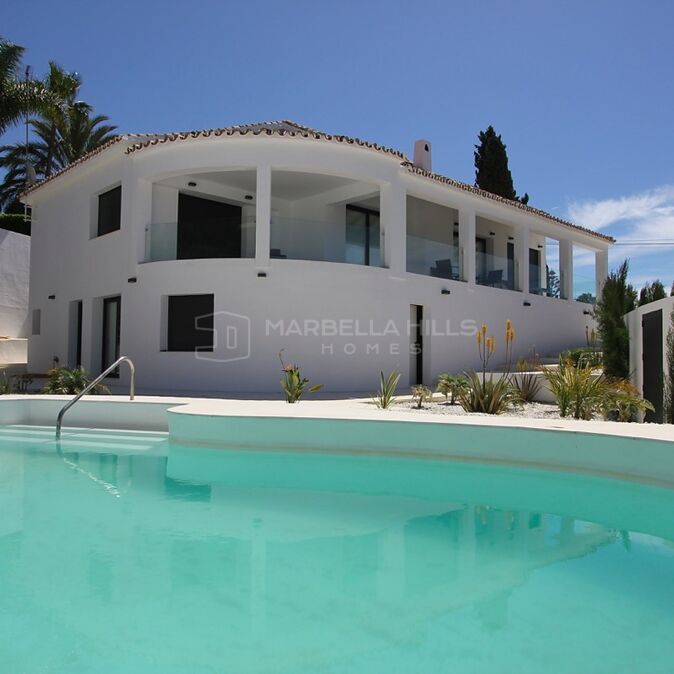
Villa in Altos de Puente Romano, Golden Mile with Indoor Pool
Altos de Puente Romano, Marbella Golden Mile €4,500,000Set within Altos de Puente Romano, a gated community on Marbella's Golden Mile, this five-bedroom villa is within walking distance…
- View Property

Contemporary Villa in Nueva Andalucía, Walk to Puerto Banús
Nueva Andalucia, Marbella €4,450,000Villa Alaya is a contemporary family villa in a quiet residential street of Nueva Andalucía, right by the Hard Rock…
- View Property

Townhouse in La Alzambra with Private Pool, Guest Apartment and Sea Views
La Alzambra, Nueva Andalucia €1,995,000Set in an elevated position within La Alzambra, a gated community with 24-hour security just a short walk from Puerto…
- View Property

Duplex Penthouse in Los Altos de los Monteros with Sea Views
Los Altos de los Monteros, Marbella Este Reduced from €795,000€748,000This spacious penthouse in Las Lomas de los Monteros, Marbella East, stands out for its generous proportions, abundant natural light…
- View Property

Frontline Beach Apartment in Los Monteros Playa, Marbella East
Los Monteros Playa, Marbella Este €2,950,000This south-facing ground-floor apartment in Los Monteros Playa offers three en-suite bedrooms and direct access to the beach from a…
- View Property

Renovated 4-Bedroom Golf Villa in Nueva Andalucía, Marbella
Nueva Andalucia, Marbella €4,500,000Beautifully renovated throughout, this elegant golf villa in Nueva Andalucía combines classic architectural character with a sophisticated contemporary interior. Set…
- View Property

Semi-Detached Villa in Soul Marbella, Santa Clara, with Pool & Jacuzzi
Santa Clara, Marbella Este €2,595,000Set within Soul Marbella, an exclusive new gated community in Santa Clara on the east side of Marbella, this newly…
- View Property

Frontline Golf Townhouse with Rooftop Solarium Near Puerto Banús, Marbella
Los Naranjos de Marbella, Nueva Andalucia €595,000This charming three-bedroom townhouse enjoys a privileged frontline golf position near Puerto Banús, Marbella, combining attractive golf course views, generous…
- View Property
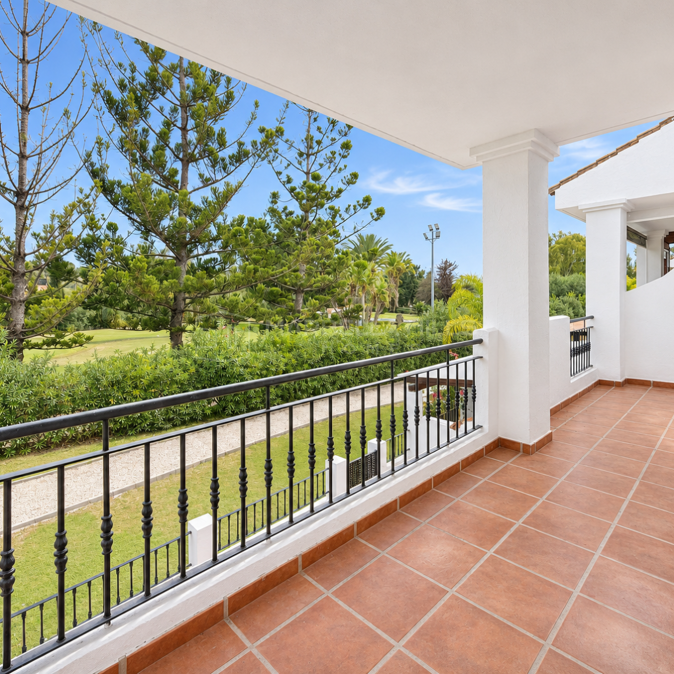
Sea View Apartment in Monte Paraíso Country Club, Marbella Golden Mile
Monte Paraiso Country Club, Marbella Golden Mile €1,850,000This elegant first-floor apartment sits in Monte Paraíso Country Club, one of the most sought-after gated communities on Marbella's Golden…
- View Property

Furnished Duplex Apartment in Señorío de Aloha, Nueva Andalucía, Marbella
Señorio de Aloha, Nueva Andalucia €535,000This fully furnished two-bedroom duplex apartment is set in the popular gated community of Señorío de Aloha, in the heart…
- View Property

Penthouse in El Soto de Marbella with Sea, Golf & Mountain Views
El Soto de Marbella, Marbella Este Reduced from €585,000€545,000This spacious, ready-to-move-in three-bedroom penthouse is located in El Soto de Marbella, an established gated community in La Mairena, in…
- View Property

Renovated 3-Bedroom Villa in Cascada de Camoján, Golden Mile
Cascada de Camojan, Marbella Golden Mile €4,950,000Set within the gated community of Cascada de Camoján, one of Marbella's most sought-after residential areas just above the Golden…
- View Property

3-Bedroom Ground Floor Apartment with Sea Views, Cumbres del Rodeo
Cumbres del Rodeo, Nueva Andalucia €1,150,000This beautifully presented ground-floor corner apartment in Cumbres del Rodeo, Nueva Andalucía, offers privacy, space and sweeping Mediterranean views towards…
- View Property
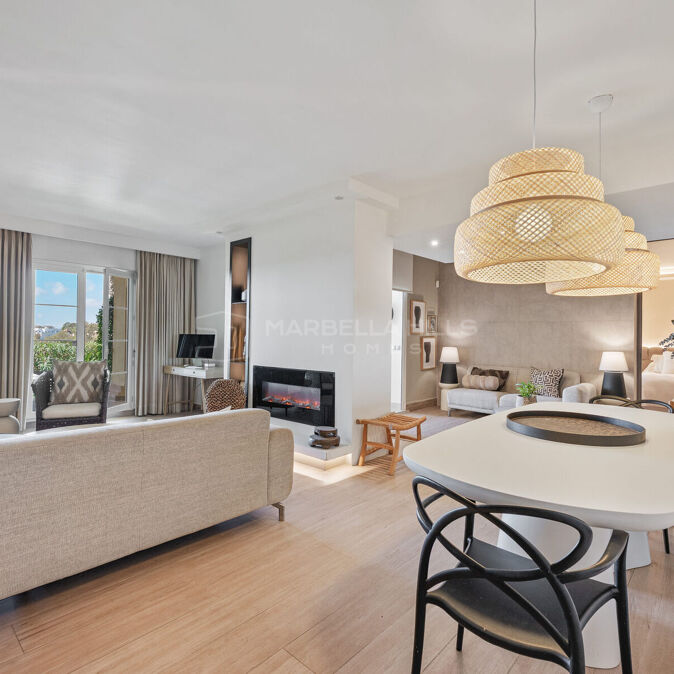
2-Bedroom Sea View Apartment in Señorío de Aloha, Nueva Andalucía
Señorio de Aloha, Nueva Andalucia €465,000Set in the well-known gated community of Señorío de Aloha in Nueva Andalucía, this bright two-bedroom apartment faces south-east and…
- View Property
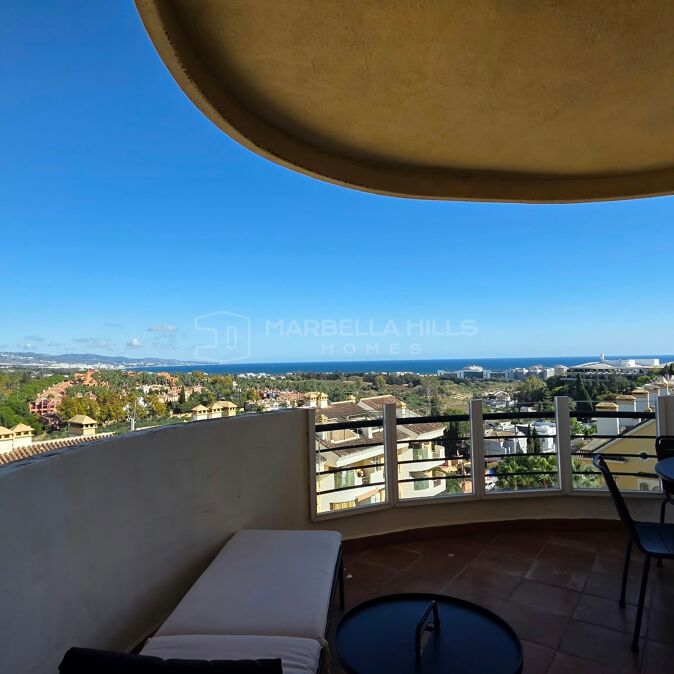
Renovated 3-Bed Apartment in Las Terrazas de Las Lomas, Golden Mile Marbella
Marbella Golden Mile €1,850,000Fully renovated in 2023, this three-bedroom apartment is located in Las Terrazas de Las Lomas, a well-established gated community on…
- View Property

Villa Renovation Project for Sale in Los Naranjos Hill Club
Los Naranjos Hill Club, Nueva Andalucia €1,650,000A rare chance to create your own luxury home in Los Naranjos Hill Club, one of Nueva Andalucía's most established…
- View Property

Frontline Golf Villa for Sale in Aloha, Nueva Andalucía
Aloha, Nueva Andalucia €4,995,000Set directly on the Aloha Golf course in the heart of Nueva Andalucía, this elegant Andalusian-style villa enjoys open views…
- View Property

Renovated 3-Bed Apartment with Sea Views in Nueva Andalucía
Palacetes Los Belvederes, Nueva Andalucia €1,095,000Completely renovated in 2026, this south-facing three-bedroom apartment in the gated community of Palacetes Los Belvederes enjoys open, panoramic views…
- View Property

Single-Level 5-Bedroom Luxury Villa in Nagüeles, Golden Mile
Nagüeles, Marbella Golden Mile €3,995,000Located in the prestigious residential area of Nagüeles on Marbella's Golden Mile, Villa Pandora is an exceptional five-bedroom luxury villa…
- View Property

Penthouse with Private Rooftop Terrace in La Campana, Nueva Andalucía
La Campana, Nueva Andalucia €750,000Modern two-bedroom penthouse in La Campana, Nueva Andalucía, combining contemporary design and Scandinavian-inspired interiors with spacious outdoor living. The home…
- View Property

4-Bedroom Townhouse near Mistral Beach, Nueva Andalucía
Jardines de Andalucia, Nueva Andalucia €695,000Spacious 4-bedroom townhouse in the established community of Jardines de Andalucía, Nueva Andalucía, within walking distance of Mistral Beach, restaurants,…
- View Property
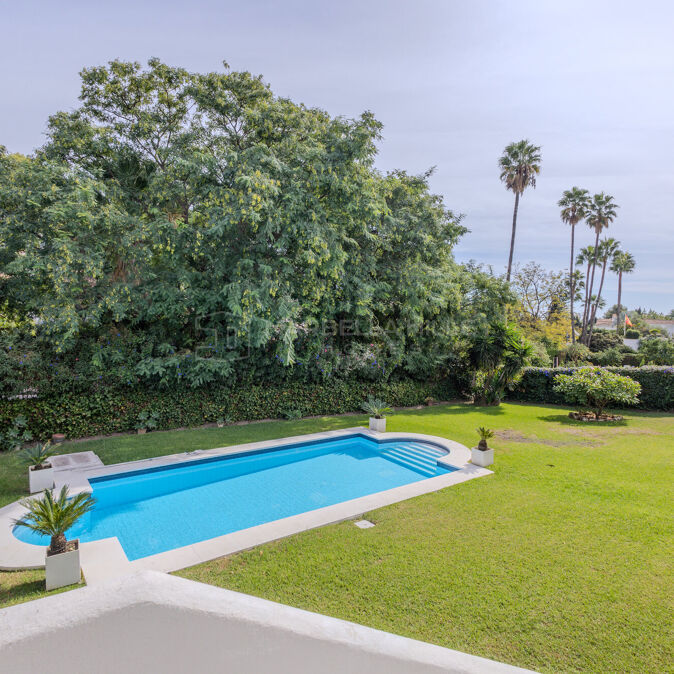
Renovated 7-bedroom villa with rooftop views and tourist licence in Parcelas del Golf
Parcelas del Golf, Nueva Andalucia €4,495,000Set on one of the highest plots in the gated community of Parcelas del Golf, in the heart of Nueva…
- View Property

Fully renovated 4-bedroom villa with heated pool in Marbella Country Club
Marbella Country Club, Nueva Andalucia €3,875,000Tucked away in the gated Marbella Country Club in Nueva Andalucía, this completely renovated villa combines contemporary design with an…
- View Property

Renovated 3-bedroom apartment in Sol y Paz, Nueva Andalucía, walking distance to Puerto Banús
Sol y Paz, Nueva Andalucia €849,000This newly renovated three-bedroom apartment is set in Sol y Paz, a small, well-run gated community in the heart of…
- View Property

Renovated 4-bedroom ground floor duplex frontline Los Naranjos Golf, Alcores del Golf, Nueva Andalucía
Alcores del Golf, Nueva Andalucia €2,475,000Vista Verde is a fully renovated ground floor duplex in Alcores del Golf, one of Nueva Andalucía's most established gated…
- View Property
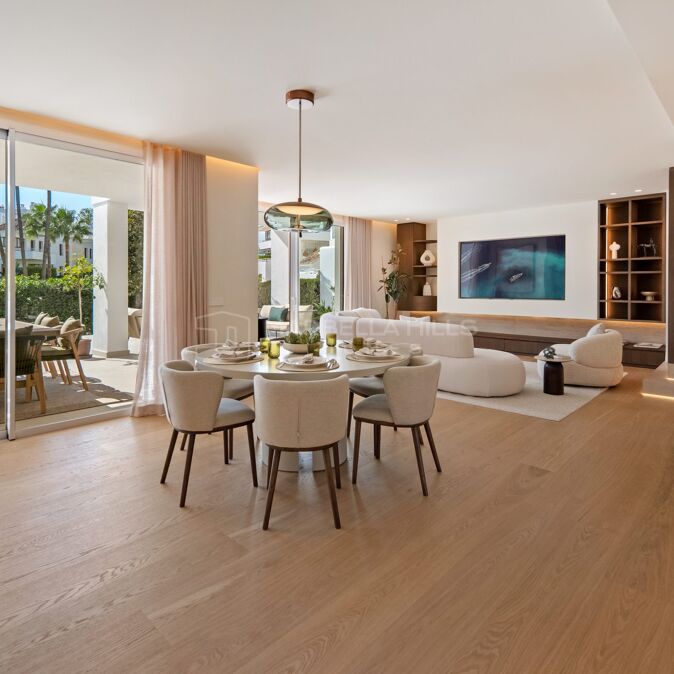
Renovated duplex penthouse with sea views in Monte Paraíso, Marbella Golden Mile
Monte Paraiso, Marbella Golden Mile €2,700,000This fully renovated three-bedroom duplex penthouse is set in Monte Paraíso, one of the most sought-after gated communities in Las…
- View Property

Duplex penthouse with La Concha views in River Garden, Las Brisas, Nueva Andalucía
River Garden, Nueva Andalucia €995,000This spacious duplex penthouse in River Garden, a well-kept residential community in Las Brisas, Nueva Andalucía, offers open views over…
- View Property

Contemporary three bedroom townhouse with lift and rooftop terrace in Vistas Marinas, Sierra Blanca
Vistas Marinas, Marbella Golden Mile €2,300,000A contemporary townhouse in Vistas Marinas, Sierra Blanca on Marbella's Golden Mile, minutes from Marbella Club, Puente Romano, the beach,…
- View Property

Three bedroom townhouse with La Concha views near Puerto Banús
Nueva Andalucia, Marbella €847,000A bright three bedroom townhouse in Los Torreros, a gated Andalusian-style community in Nueva Andalucía, a five-minute walk from Puerto…
- View Property

Two bedroom garden apartment in Las Mimosas, Puerto Banús
Las Mimosas, Puerto Banus Reduced from €825,000€750,000A spacious two bedroom, two bathroom ground floor apartment in Las Mimosas de Puerto Banús, a gated community within walking…
- View Property
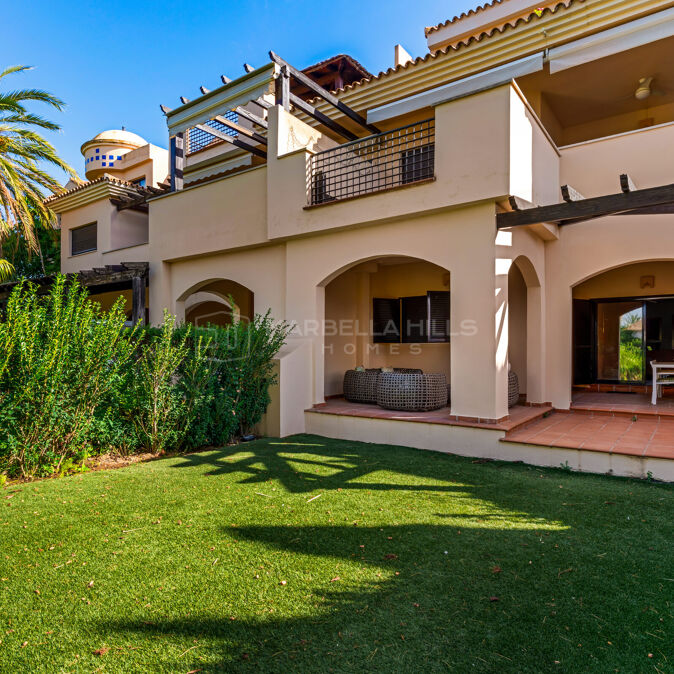
Andalusian villa on a double plot, second line beach in Los Monteros, Marbella East
Los Monteros Playa, Marbella Este €7,500,000Just steps from the Mediterranean Sea, in one of Marbella's most prestigious beachside enclaves, this exceptional Andalusian villa presents a…
- View Property

Contemporary 5 bedroom villa with sea views in La Finca de Marbella
La Finca de Marbella, Marbella Este €2,995,000A contemporary villa completed in 2023 in La Finca de Marbella, a gated community in Marbella East, with views over…
- View Property

€2,445,000A fully renovated apartment in Los Monteros Palm Beach, a gated beachside community in Marbella East with direct access to…
- View Property

Contemporary 4-bedroom townhouse with roof terrace and panoramic views in Nueva Andalucía
Nueva Andalucia, Marbella €1,195,000Set in a gated community in upper Nueva Andalucía, this contemporary townhouse combines modern interiors with sweeping views over the…
- View Property

Exclusive Luxury Villa for Sale in Nueva Andalucía, Marbella
Nueva Andalucia, Marbella €6,950,000Tucked away in a quiet cul-de-sac in the heart of Nueva Andalucía, Marbella's prestigious Golf Valley, Villa Èlan is an…
- View Property

Six-bedroom contemporary villa with 12-car garage in Parcelas del Golf, Nueva Andalucía
Parcelas del Golf, Nueva Andalucia €7,200,000Paris 57 is a bold, contemporary six-bedroom villa in Parcelas del Golf, a discreet residential community with 24-hour security in…
- View Property

New Penthouse with Private Rooftop Pool and Sea & Golf Views for Sale in Soul Marbella
Santa Clara, Marbella Este €1,495,000Brand new and ready to move into, this two-bedroom penthouse sits in one of the best-positioned blocks of Soul Marbella,…
- View Property
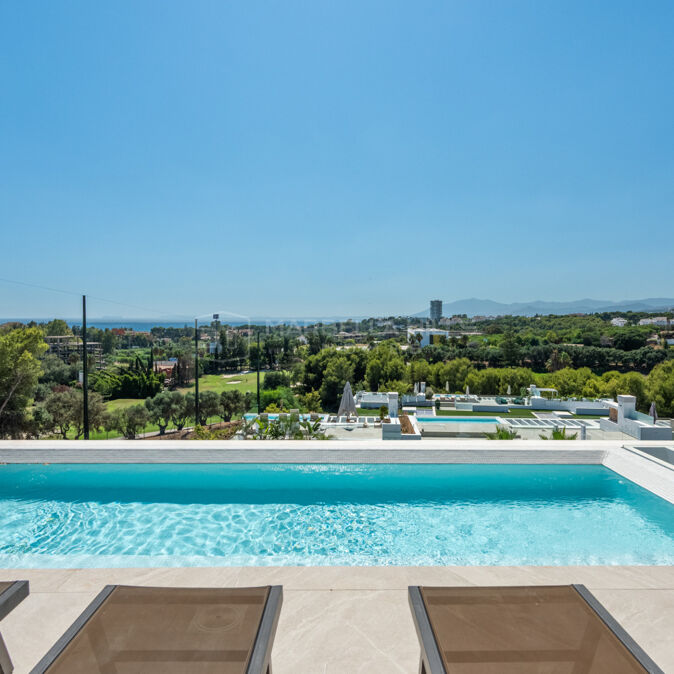
Beautifully Renovated 2 bedroom Apartment for sale in Balcones de Puente Romano, Marbella Golden Mile
Balcones de Puente Romano, Marbella Golden Mile €1,590,000Located within the prestigious Balcones de Puente Romano residential community on Marbella's iconic Golden Mile, this beautifully renovated two-bedroom apartment…
- View Property

Exclusive Luxury Villa for Sale in La Mairena with Panoramic Sea Views and 7,793 m² Estate
La Mairena, Marbella Este €2,800,000Set within the beautiful natural surroundings of La Mairena, in the hills above Elviria in East Marbella, this exceptional five-bedroom…
- View Property

Renovated 2-Bedroom Apartment for Sale in Puente Romano II, Marbella Golden Mile
Marina Puente Romano, Marbella Golden Mile €2,295,000Discover this beautifully renovated ground-floor apartment for sale in Puente Romano II, one of the most desirable residential developments on…
- View Property

Spacious Five-Bedroom Villa with Panoramic Coastal Views in El Rosario, Marbella East
El Rosario, Marbella Este €3,100,000Enjoying an elevated position in the established residential area of El Rosario, Marbella East, this impressive five-bedroom detached villa offers…
- View Property

Duplex Penthouse with Panoramic Sea Views in Les Belvederes, Nueva Andalucía
Les Belvederes, Nueva Andalucia €2,475,000Situated within the prestigious gated community of Les Belvederes in Nueva Andalucía, this exceptional three-bedroom duplex penthouse combines contemporary elegance,…
- View Property
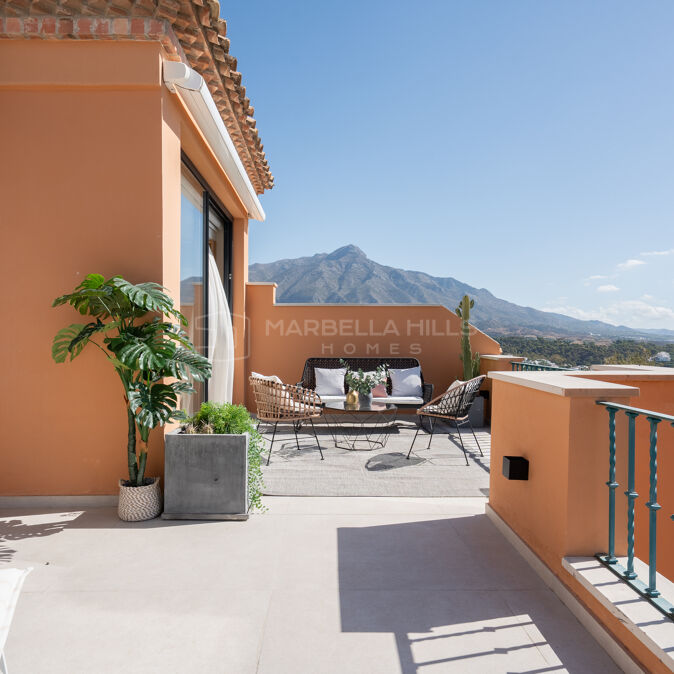
Exceptional Contemporary Luxury Villa Under Construction in Nueva Andalucía, Marbella
Nueva Andalucia, Marbella €5,990,000Discover an exceptional contemporary luxury villa for sale in Nueva Andalucía, ideally positioned in Marbella's prestigious Golf Valley, just minutes…
- View Property