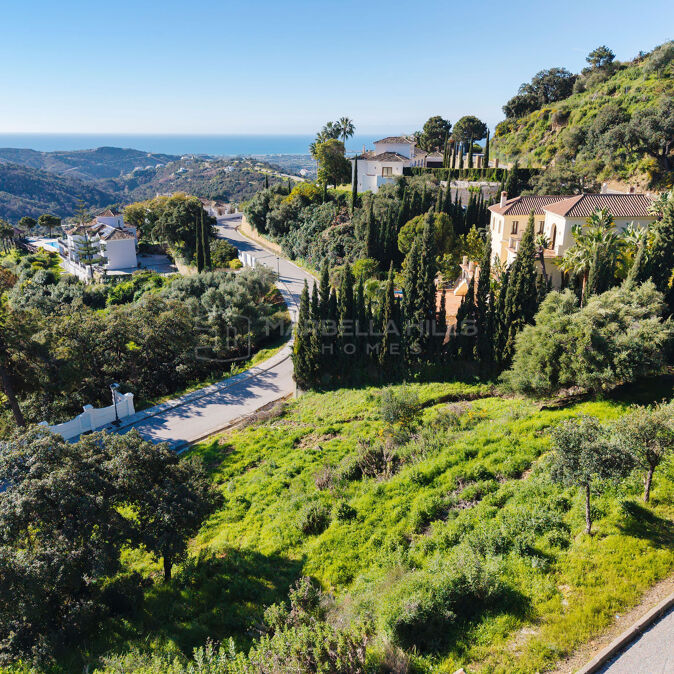
Monte Mayor, Beyond the gates into the valley in Benahavis
Summary
Explore Monte Mayor, Benahavís: a prestigious gated community offering unparalleled privacy, stunning views, and architectural freedom. Discover why discerning buyers choose this unique valley enclave.
Key Takeaways
- Monte Mayor is a 330-hectare gated estate in Benahavís, with over 54% protected green belt.
- Build coverage is capped at 12% per plot, ensuring spacious villas with ample gardens.
- The estate offers panoramic views of the Mediterranean, Gibraltar, and the African coast.
- While the estate itself has limited amenities, it’s minutes from Benahavís village’s renowned restaurants.
- Security is paramount, with 24-hour controlled access, patrols, and no through traffic.
I want to start with something honest. Most of the buyers I take to Monte Mayor have already looked at La Zagaleta, the Golden Mile, Sierra Blanca. They have driven up here as a kind of comparison point, expecting to confirm what they already think they want. And then something happens on the terrace of the first villa, usually within ten minutes of arriving, that changes the conversation completely.
This guide is for the buyers who haven’t made the trip up yet. I’ll tell you what Monte Mayor actually is, where it sits, who buys here and why, and the things I wish my own clients had known before their first visit. Some of what I say is opinion. I’ll be clear about which parts.

What is Monte Mayor
Monte Mayor is a gated residential estate of 330 hectares in the municipality of Benahavís, about ten minutes inland from the coast. More than half of the land is protected as green belt and will never be built on. Inside the gates there are roughly 60 to 100 villas, depending on how you count the townhouses at La Heredia.
Two figures define everything:
- Only 46% of the estate is developable land. The remaining 54%+ is protected green belt, part of it within UNESCO-protected territory. This isn’t a developer’s promise; it’s a planning designation that is genuinely difficult to reverse.
- Build coverage is capped at 12% per plot. On the average plot of 3,000 m², that means up to 360 m² of built area. On larger plots of 5,000 to 8,000 m², villas of 600 to 1,000 m² are possible. This 12% rule is the single most important reason Monte Mayor looks and feels the way it does: never tight, always with the villa surrounded by garden.
The name means "Supreme Mountain" or "Great Mountain", taken from a peak in the Serranía de Ronda range that frames the valley to the north. It isn't a marketing name; it's the name of the mountain that defines the horizon of the estate.
The first time I drove into Monte Mayor I thought I’d taken a wrong turn. You climb up from the AP-7, you pass the security gate, and within two minutes the coast disappears. The landscape feels closer to inland Andalucía, or to parts of Tuscany, than to anything else on the Costa del Sol. That moment of disorientation is part of what the estate sells, although nobody markets it that way.
Where is Monte Mayor located
Monte Mayor sits in the municipality of Benahavís, about eight to ten kilometres above the A-7 coast road, at an altitude of around 580 metres above sea level. To the south, the Mediterranean. To the north, the mountains that climb towards Ronda. To the east, the village of Benahavís, about fifteen minutes away, internationally known for its restaurants. To the west, El Paraíso, Cancelada, and beyond them Estepona.
You can reach Monte Mayor from either direction along the coast. Driving from Marbella, take the Benahavís road. Driving from Estepona, exit at Cancelada. The estate sits less than ten kilometres above the A-7.
The drive times are the thing I always ask my clients to check themselves, twice, on different days. Roughly:
- Puerto Banús, about 25 minutes
- San Pedro de Alcántara, about 20 minutes
- Marbella centre, about 30 minutes
- Benahavís village, 15 minutes
- Málaga airport, around 55 minutes via the AP-7
- Gibraltar airport, about an hour via the AP-7 west
You need a car here. There is nothing else. There are no shops on the estate, no restaurants, no services beyond a small village area at La Heredia. Anything you need, groceries, a coffee, dinner, a doctor, is a drive away. For some buyers, that's the deal-breaker. For the ones who choose Monte Mayor, it's the entire point.
Something I always say to clients on the first visit. The people who do well at Monte Mayor are the ones who already know they want to live this way. The ones who think they probably want it but haven't quite committed tend to sell within two or three years and move back closer to the coast. There is no shame in that, but it costs money. Better to know yourself before you sign.

The history of Monte Mayor
The land around Benahavís has been continuously inhabited since at least the Muslim period. The village name itself comes from the Arabic Ibn Habus, the family who held this land in the eleventh century. After the Reconquista the area shifted to olive and almond cultivation, and the village of Benahavís grew up in the nineteenth century as a small agricultural community.
The Monte Mayor estate as you see it today was conceived in the 1990s. A consortium of investors acquired the land with a specific brief, which was to build a community that would protect the landscape rather than transform it. Construction started in 2000. The decision to cap developable land at 46 percent, leaving the majority as protected green belt, was unusual at the time and is still the defining feature of the estate.
That philosophy has held. Subsequent developers and the estate management have continued to enforce low density through architectural review and strict building coverage rules. New villas built in the last five years operate under the same constraints as those built two decades ago.
I find this part of Monte Mayor's history interesting because it could very easily have gone the other way. The land was acquired in the 1990s, when the rest of the Costa del Sol was being built up at speed. The decision to keep it low density was a long-term bet. The bet was that buyers would eventually value space and silence more than density and amenity. Twenty-five years on, that bet has clearly paid off.
The estate also sits partly inside UNESCO-protected territory, which gives the green belt designation a level of permanence that goes beyond local planning rules. That matters. Planning rules can change. UNESCO protection is much harder to undo.
The areas of Monte Mayor
Monte Mayor isn't divided into named sub-areas the way Nueva Andalucía or La Zagaleta are. The differences here are about elevation and orientation. Three broad zones are worth knowing.
The lower plots sit closer to the entrance and the access road. Drive times to the coast are shorter, the terrain is more accessible, and the views tend to look up the valley towards the mountains rather than out across the coast. Some of the original villas from the early 2000s are concentrated here, on what were the most easily developable plots.
The elevated central plots are the heart of the estate. This is where the panoramic views open up. The Mediterranean, Gibraltar on a clear day, the North African coast on the clearest. Plots are larger, the architecture more ambitious, and these are the addresses most associated with Monte Mayor's reputation today. Most of the contemporary villas built in the last five to ten years sit in this zone.
La Heredia de Monte Mayor is the estate's village. 53 Andalusian-style townhouses arranged around a small plaza, with their own pool and gardens. It functions as a more accessible entry point to the estate for buyers who don't want the maintenance of a full villa, while still wanting to be inside the gates. La Heredia has its own distinct rhythm, quieter, more community-oriented, with neighbours who often know each other.
The right zone depends entirely on what you're trying to buy. I've sold in all three. The conversation about which one fits usually only becomes clear by the second visit. I'll be honest, I cannot tell from a phone call which zone is right for you. I can usually tell within fifteen minutes of meeting you on the estate.

Living at Monte Mayor
Let me describe a specific Tuesday. A client of mine, recently moved up from a Nueva Andalucia apartment, told me he didn't fully understand what he'd bought into until his third month at Monte Mayor. It was a regular Tuesday in October. He'd worked from the terrace until five, walked the hill behind the house, and was sitting outside watching the light go down across the valley. He realised he hadn't checked his phone in two hours, and that nobody was going to call him. That, he said, was the moment Monte Mayor stopped being a house and started being home.
The rhythm here is different from anywhere else in the Marbella area. The first thing to understand is that the difference isn't only physical. It's behavioural. The estate slows you down. The drive in is long enough that you don't pop out for a coffee. You plan the day before you leave the house. You arrive home and the lights go down, the temperature drops, and the city, Marbella, Puerto Banús, San Pedro, feels much further away than the GPS suggests.
I've watched buyers' shoulders drop, physically, when they walk onto a terrace at Monte Mayor for the first time. The valley does that. You cannot quite be in a hurry once you're up there.
The microclimate is one of the estate's underappreciated assets. The valley sits in a natural amphitheatre that's sheltered from the strong easterly winds that hit parts of the coast, and the elevation keeps summer evenings cool enough to actually use a terrace in August. The three rivers running through the estate keep humidity moderate. Winters are mild. The estate sits low enough not to get snow, but high enough to experience proper seasons in a way the coast doesn't.
Day to day, life at Monte Mayor means more time at home and less time in transit. That sounds limiting until you realise the home is built for it. Most villas have outdoor living spaces that function as full second residences. Covered terraces, summer kitchens, multiple pools, gardens designed for entertaining. The estate's design assumes you'll live the way the property is built to be lived in. Outside, slowly, with the view.
For buyers who used to commute to an office, the adjustment is significant. For buyers who run their work remotely, or who are retired or semi-retired, Monte Mayor often becomes the answer to a question they didn't quite know how to articulate.

The community at Monte Mayor
Monte Mayor isn't a community in the sense of an English village or a Mediterranean small town. There's no main square where everyone runs into each other, no morning café where the same regulars meet. The estate is too dispersed, the plots too large, the rhythm too quiet for that. But there is a community, and it's worth describing honestly because it's part of what new buyers don't fully understand until they've lived here for a year.
The community is built on proximity, not density. Most residents know their immediate neighbours, the three or four villas closest to theirs, on the same stretch of road, with the same view orientation. Friendships at Monte Mayor tend to be built slowly, often through dinners, through shared use of the same trainer or pilates teacher, through children at the same school, or through introductions made by neighbours who've been here longer.
There's a low-key social fabric for those who want it. Some residents organise informal gatherings, a summer paella, a winter wine evening, a Christmas drinks. The Marbella Club Golf Resort next door functions as a casual social hub for many Monte Mayor owners, the restaurant is where you bump into your neighbours by accident. La Heredia, the village of townhouses inside the estate, has its own tighter community, with residents who often know each other well and look after each other's properties during the off-season.
Equally, you can be private here without it being strange. This is the part that buyers from London, Paris or Munich often appreciate most. At Monte Mayor, choosing to keep to yourself is socially accepted. Nobody knocks on your door uninvited. Nobody questions your absences. The estate accommodates the quiet, work-focused, family-only life as easily as it accommodates the more social one. You set the temperature of your social life, and the community respects it.
The international mix is genuine. Northern European (German, British, Belgian, Dutch, Scandinavian) is probably the largest single group, but Spanish owners, French owners, Eastern European owners and Middle Eastern owners are all represented. English functions as the common second language. Spanish is genuinely useful for daily life, the gardeners, the contractors, the village shops, but social life inside the estate works in English for most.
The stability of the resident base is one of the quiet advantages. Many Monte Mayor owners have been here for ten, fifteen, even twenty years. Turnover is slow. People know who their neighbours are. Strangers stand out. This kind of low-level community awareness is something a security firm can't manufacture, and it contributes more to the safety and feel of the estate than any individual measure.
Monte Mayor isn't a community for people who need constant social contact. It works best for people who value their own space but also want a few good neighbours nearby. The friendships that form here tend to be deep rather than wide, fewer people, more time spent together, less polite small talk. For the right buyer, that's exactly the trade-off they were looking for.

The views from Monte Mayor
This is the part that genuinely surprises first-time visitors, and I want to do it justice because most listings reduce it to a single line about «sea views» that misses what's actually here.
The view changes depending on where you stand on the estate. That's the first thing to understand. Monte Mayor isn't one view; it's three or four, and the plot you buy determines which one is yours.
From the elevated central zone, on a clear day, you see four landscapes at once. The Mediterranean directly south, with Estepona and Marbella along the coastline below. The Rock of Gibraltar to the west, unmistakable even at this distance. Beyond it, on the clearest days, usually after rain or in winter, the Rif mountains of northern Morocco, properly visible across the Strait. And turning north, the peaks of the Serranía de Ronda climbing inland, with the valley of three rivers cutting down through the estate. I have stood on terraces here on January mornings and counted four countries in a single panorama. Spain, Gibraltar, Morocco, and the snow line of the Sierra de las Nieves behind. It doesn't happen every day. When it does, you remember it.
The lower plots have a different kind of view. Less panoramic, more intimate. You look up the valley toward the mountains rather than out across the sea. The mornings here are about light moving down the slopes; the evenings about watching the upper villas catch the last sun while you're already in shadow. Some buyers prefer this. It feels less exposed, more enclosed. Less «postcard», more «home».
La Heredia faces inward. The townhouses are arranged around their plaza and gardens, and the village format means the dramatic distant views aren't the point. What you get instead is the closeness of the architecture, the sound of the fountain, the immediate landscape of the estate itself. The view is at human scale rather than continental scale, and for the right buyer that's a feature, not a compromise.
Orientation matters more than altitude. This is the part buyers most often miss. Two plots at the same elevation, fifty metres apart, can have completely different views. South-facing plots open onto the sea. East-facing plots get the morning light over the Mediterranean and lose the sun earlier on the terrace. West-facing plots watch the sunset light up the entire coast, those are the plots where the November and January afternoons feel longer than they should. North-facing plots may have no sea view at all, but the framing of the mountain range is often spectacular, and they tend to be cooler in summer, which on this elevation is its own kind of luxury.
The seasonal show is real. People assume the south of Spain has «one view, all year». Monte Mayor doesn't. In summer the haze softens everything, the sea blurs into the sky, Gibraltar is a silhouette, the African coast disappears. In winter the air is crisp, the colours sharper, and the views extend in a way that catches even residents by surprise. The mornings in February sometimes have a sea of cloud sitting below the estate, with Monte Mayor itself in clear sky above it. The first time you see that, you understand why the people who chose to live here chose to live here.
At night, the view inverts. During the day you look out and down at the coast and the sea. At night the lights of Marbella, Puerto Banús, Estepona and Gibraltar stretch out below in a continuous arc. On clear nights you can see the lighthouses on the African coast pulsing across the Strait. The light pollution from the coast is real, but the elevation puts the estate above it, and the sky directly overhead is darker than anywhere along the seafront. I've had clients who originally bought Monte Mayor for the day view tell me, two years in, that the night view is what they ended up loving most.
A practical note for buyers. When you visit a plot or a villa, don't just look at the view from the main terrace. Walk to the corners of the plot. Look from the bedroom windows. Stand where the pool would go. The view shifts dramatically across even a single property, and the best architects working at Monte Mayor design the whole house around capturing it from multiple angles. The villas that age best here are the ones where every important room has its own relationship to the view. Not just one big window in the living room.
If you're trying to decide between zones at Monte Mayor, and the view is a primary factor, I'd suggest visiting at three specific times. Early morning on a clear winter day. Late afternoon in October when the light is at its longest. And once after dark. Three visits, one plot, and you'll know.

The honest situation with golf at Monte Mayor
The Monte Mayor golf course itself is closed.
This is the part that surprises buyers. Monte Mayor Golf and Country Club, designed by the Spanish architect José Gancedo and opened in 1989, was the estate's own course. It was considered one of the most dramatic in Europe, set in a steep mountain valley with sweeping views to the sea, Gibraltar and Africa. It closed in 2011, and the geopolitical situation since 2022 has further complicated the picture for foreign-held assets of this kind, and there have been no credible announcements of a reopening date or a sale to new operators. Buyers should plan as if the course will remain closed. If it ever reopens, treat that as upside, not as a basis for the purchase decision.
Adjacent to Monte Mayor sits Marbella Club Golf Resort, which is genuinely first-class.
This is the part most listings get right but underplay. Marbella Club Golf Resort, designed by Dave Thomas, is an 18-hole par-72 parkland course that sits literally next to Monte Mayor estate, a two-minute drive from the main residential zones. It's considered one of the most exclusive courses in the area, with restricted play, 12-minute tee intervals, and panoramic views to Gibraltar and the African coast. Hotel Puente Romano guests have priority access, but residents of the surrounding area, including Monte Mayor, are part of the local membership pool.
Within easy reach sit a dozen more courses. This is where Monte Mayor's golf positioning actually becomes a strength. Within a 15 to 20 minute drive you have El Higueral (a nine-hole course also part of the Marbella Club Resort, designed by Seve Ballesteros), Los Arqueros (a Seve Ballesteros design, ten minutes), El Paraíso (twenty minutes), Atalaya (twenty minutes), Marbella Golf Country Club, and a few minutes further the four courses of Nueva Andalucía: Las Brisas, Aloha, Los Naranjos, Magna. Further west, the courses of Villa Padierna sit on the Estepona side.
So the honest summary is: you don't play golf on the Monte Mayor estate. You play golf from the Monte Mayor estate. And the courses you can play from here are among the best on the coast.

Schools and family life at Monte Mayor
I'll be honest with you here, because this is where buyers most often get it wrong.
Monte Mayor isn't the most obvious choice for families with school-age children. The estate sits 20 to 30 minutes by car from the international schools families on the coast typically use. Aloha College, BSM, Sotogrande International. There is no shortcut. The drive is the drive, twice a day, every school day.
Families do buy here, and the ones who make it work share a few characteristics. They have children old enough that one parent or a driver can handle the school run without it dominating the day. They've chosen Monte Mayor specifically because it gets the family out of the busier coastal environment. Or their children go to Atalaya International School in Estepona, which is closer, around 20 minutes, and easier to integrate into the daily logistics.
For families with younger children, the estate itself is exceptionally well-suited. The 24-hour security, the absence of through traffic, the size of the plots, and the natural environment make it one of the safest places on the Costa del Sol for children to spend time outdoors. Riding stables in the surrounding hills. Space for pets, for trampolines, for the kind of childhood that's becoming difficult to engineer on the coast.
The families I've sold to at Monte Mayor are usually doing this deliberately. They've thought about the school run, they've decided it's worth it, and they're typically trading something else, proximity to friends, to clubs, to social density, for what the estate offers in space and silence. It isn't a default choice. It's a considered one. If you have a child starting at Aloha next September and you're hoping the school run won't be an issue, I would gently push you to look at Nueva Andalucía first.
Health and wellness at Monte Mayor
The day to day health and wellness infrastructure here reflects the estate's character. Most of it is within the home and the landscape itself, not at the end of a short drive.
The natural environment does a lot of the work. Walking and hiking routes start at the gates, with trails climbing into the surrounding mountains and connecting to the wider Sierra de las Nieves nature reserve. Cycling is excellent. The roads in and out of the estate are quiet enough to ride properly, and the gradient gives you a serious workout without leaving the area. Many villas have full gyms, spa rooms, indoor pools, sauna and hammam installations built into the specification.
For private healthcare, Hospital Quirónsalud Marbella is around 30 minutes east via the AP-7, and Hospital Costa del Sol is similar distance. Helicópteros Sanitarios, the private emergency and home visit service most international residents subscribe to, covers the area and is widely used at Monte Mayor. The reason is obvious. The drive to the nearest hospital is long enough that home visit care matters.
One thing buyers don't always factor in. Twenty-five minutes to a hospital reads differently at 60 than it does at 40. For buyers in their fifties and sixties, which is a meaningful portion of Monte Mayor's market, that distance becomes part of the decision. The ones who think it through tend to subscribe to Helicópteros Sanitarios on day one. I always recommend it.
Restaurants and daily life at Monte Mayor
The restaurant situation at Monte Mayor is unusual. The estate itself has almost nothing. But it sits ten minutes from one of the most concentrated food scenes on the Costa del Sol.
Benahavís village is the answer. It has earned a serious reputation as the gastronomic capital of this part of the coast. A small whitewashed hill town with more restaurants per square metre than almost anywhere else on the coast. The classics run deep. Los Abanicos for traditional Andalusian cuisine. El Cordobés for grilled meats. Asador Antonio for the kind of slow, generous Sunday lunch that defines weekends here. Tragabuches for a more contemporary tasting approach. Reservations on weekend evenings are essential. The village fills up with diners coming up from the coast, and on a busy Saturday it has the buzz of a small Mediterranean port town despite being inland and in the hills.
Closer to home, Marbella Club Golf Resort, which sits adjacent to the estate, has its own restaurant offering, and the Anantara Villa Padierna Palace Hotel further down the valley has multiple dining options that residents use without thinking twice.
For everyday provisions, groceries, the pharmacy, the post office, most residents drive to El Paraíso, San Pedro or Cancelada. The lifestyle assumes a proper weekly shop, not a daily one.
The Benahavís restaurant scene is one of the underrated parts of buying at Monte Mayor. People assume living inland means losing access to good food. The reality is the opposite. You get a higher-quality, less touristy restaurant experience than most of the coast, and you can drive home in fifteen minutes without parking dramas. I've come to prefer it.
Security at Monte Mayor
This is a question I get asked more often than any other, and I want to answer it properly because most of what's published about Monte Mayor's security is a single line that doesn't tell you what you actually need to know.
The estate is fully gated, with 24-hour controlled access. There is one main entrance manned around the clock. Every vehicle is logged. Visitors are not allowed in without prior confirmation from a resident. Delivery drivers, contractors, gardeners and domestic staff are pre-registered. If your name isn't on the list, you don't get past the gate. It sounds basic, but the consistency of the implementation is what matters. There's no shift where the gate is unmanned. There's no slack period.
There is no through traffic at all. This is the part people don't fully appreciate until they live here. Monte Mayor's road network leads to nothing beyond the estate itself. Nobody drives through Monte Mayor on the way to somewhere else. Every vehicle on the road inside the gates is either a resident, a registered visitor, or a registered service provider. That's a different security model from gated communities that sit on through-roads, where the security mainly controls the access point but the internal roads can still see strangers passing through.
Patrols operate inside the estate. Security patrols circulate through the residential zones at irregular intervals, day and night. The patrols know the residents, know which villas are occupied at any given time, and notice anything out of the ordinary. For residents who are away for part of the year, which is a meaningful proportion of the Monte Mayor owner base, the patrols also do scheduled checks of properties, terraces, gates and gardens.
The terrain itself is part of the security. Most buyers don't think about this, but it matters. Monte Mayor's plots are large, the topography is steep in many parts, and the natural vegetation is dense around the perimeter. There's no easy way to approach a villa here on foot from outside the estate. Compare this to flatter coastal developments where the perimeter is essentially a wall along a road, and you understand why Monte Mayor's geography is a structural advantage.
Most villas add their own layer. Estate security is the baseline. On top of that, the vast majority of Monte Mayor villas have their own systems, perimeter alarms, motion sensors, internal alarms, security cameras with remote monitoring, often connected to a private security company that responds within minutes. Several international firms operate in the area and most residents have a contract with one. If you're buying an existing villa, this is one of the first things to check; if you're building, your architect will integrate it into the design from the start.
The owner profile is itself a factor. Monte Mayor isn't a transient address. Residents tend to know who their neighbours are, at least by sight. Cars are familiar. Routines are noticed. Unfamiliar vehicles or people stand out. This kind of low-level community awareness is something a security firm can't manufacture, and it's one of the quiet advantages of an estate where most owners have been here for years.
The honest comparison with other top-tier addresses. Buyers often ask me how Monte Mayor compares with La Zagaleta or Sierra Blanca on security. The honest answer is that all three are exceptional, and the differences are mostly stylistic rather than functional. La Zagaleta has the highest-profile security presence, visible, branded, slightly more theatrical. Sierra Blanca is more conventional gated luxury with a strong police presence in the broader Marbella area around it. Monte Mayor's model is quieter and more about the structural advantages of the location: no through traffic, large plots, dense vegetation, a small and stable resident community. None of these estates has the kind of security incidents that make the news.
One practical recommendation. If security is a primary reason you're considering Monte Mayor, I'd strongly suggest visiting at night. The estate feels different after dark. The roads are quiet, the lighting is intentionally low to preserve the night sky, the security patrols are more visible, and the absence of through traffic becomes physically obvious in a way it isn't during the day. The clients who visit at night usually leave the estate more reassured, not less.
For families with younger children, for buyers who travel frequently and leave the property for weeks at a time, for owners who simply want to live somewhere where security is built into the design rather than bolted on Monte Mayor delivers, and has done so consistently for twenty-five years.

Properties in Monte Mayor
The architectural identity of Monte Mayor has changed considerably since the estate was first developed. The original villas, built between 2000 and 2010, were predominantly classic Andalusian. Whitewashed walls, terracotta roofs, internal courtyards, the language of a high-end Spanish country house translated to a mountain setting. Many of these are still on the market, often thoroughly modernised internally while keeping the exterior character.
The newer villas, particularly those built since 2018, represent a clear shift towards contemporary architecture. Clean lines, large glazed openings designed around the view, flat roofs, natural stone and timber, integrated landscaping. The current generation of Monte Mayor villas is among the most architecturally serious work being commissioned anywhere in the Marbella area, often by international architects working specifically with the topography of each plot.

Plot sizes are generous by any measure. The 3,000 square metre average masks significant variation. Buyers commonly look at plots of 4,000 to 7,000 square metres, and some of the larger holdings exceed a hectare. Build sizes follow the 12 percent coverage rule, so villas typically range from 500 to 1,200 square metres of built area depending on the plot.
What's consistent across the architectural range, old and new, is the relationship to the landscape. Every property I've shown at Monte Mayor is oriented around something. A view of the sea, a view of the mountains, a private valley, a particular tree. The estate's planning rules force this. You cannot just plant a villa in the middle of a plot here. The building has to find its place.
Prices vary widely. Plots with planning permission and a project ready to build typically start around 1 million euros for smaller plots and run to 2.5 or 3 million for prime elevated plots. Existing villas range from around 2.5 million for older Andalusian-style properties in need of renovation, through 4 to 6 million for well-renovated classic villas, into the 6 to 15 million range for the architectural contemporary villas. The top of the market, large new build estates on premium plots, reaches 18 million and beyond.

Property types in Monte Mayor
Monte Mayor's property mix is narrower than mixed-use addresses like Nueva Andalucía or Aloha. The estate was conceived as a villa-focused community, and that focus has held.
Villas are overwhelmingly the dominant category. Whether classic Andalusian or contemporary architectural, the villa is the property type Monte Mayor was built around. Plot sizes start at around 2,000 square metres and run well beyond a hectare, and the design language varies by build era. But the underlying typology is consistent. Substantial single family home, private pool, large garden, focused on the relationship between the building and the landscape.
La Heredia townhouses offer the alternative. The 53 Andalusian-style townhouses are arranged around a central plaza and shared pool. They function as a private village within the larger estate. They suit buyers who want the security, the views and the location of Monte Mayor, but without the scale and maintenance of a full villa. Prices for La Heredia townhouses typically range from around 700,000 to 1.5 million euros depending on size, condition and orientation.

Plots are the third category and they remain an active part of the market. Around 30 to 40 undeveloped plots typically sit on the market at any given time, with prices ranging from around 500,000 for smaller plots to 3 million for prime elevated land with sea views. For buyers who want full control over the design, Monte Mayor remains one of the very few places on the Costa del Sol where you can still genuinely build a custom home on a generous plot inside a serious gated community. Building timelines are typically 24 to 36 months from purchase to keys.
The plot market here is interesting because it forces a different kind of buyer. Someone with a clear architectural vision, the patience for a three-year project, and the relationships needed to manage a build at this scale. The buyers who do it well almost always end up with something better than they could have bought ready made. The buyers who don't think it through end up selling the plot two years later. I will tell you honestly which category I think you fit into, if you ask.

Building a villa at Monte Mayor
Building a villa at Monte Mayor is one of the most rewarding property projects you can take on along this coast, and one of the most demanding. I've walked clients through this process from the first plot visit to the day they get the keys, and I want to be honest about what's involved before you fall in love with a piece of land.
The timeline is real. From the moment you sign on a plot to the day you move in, expect 24 to 36 months. Architectural concept and planning permission take 6 to 9 months. The build itself is typically 18 to 24 months, depending on the size and complexity of the design. Anyone telling you it can be done faster either doesn't know Monte Mayor's planning process or isn't being straight with you.
The 12% rule shapes everything. Build coverage at Monte Mayor is capped at 12% of the plot. On a 3,000 m² plot, that's 360 m² of built area. On 5,000 m², 600 m². On 8,000 m², close to 1,000 m². This isn't a guideline, it's enforced through the estate's architectural review process. Before your project goes to the Benahavís town hall for planning permission, it goes to Monte Mayor's own review. The estate protects itself, and that protection is part of what you're buying.
The architectural review is taken seriously. This isn't a rubber stamp. The review looks at the volume, the orientation, the materials, how the building sits on the plot, how it relates to the neighbours' views. Most projects need at least one round of revisions. A few don't get through at all. The architects who work regularly at Monte Mayor know what gets approved and what doesn't, and that knowledge alone can save you six months.
Choose your architect carefully. Monte Mayor has attracted some genuinely serious international architecture over the past five to ten years. The contemporary villas built here recently, large glazed openings, natural stone, timber, integrated landscaping, are among the most considered work being commissioned anywhere on the coast. Whether you bring your own architect or work with one of the studios already familiar with the estate is a real decision. I have views on which studios deliver and which struggle. I'll share them honestly if you ask.
Plot orientation matters more than buyers expect. Two plots on the same street at Monte Mayor can be completely different properties depending on which way they face. South-facing plots get sun all year and cooler summer evenings thanks to the valley breeze. East-facing catches the morning light but can be cooler in winter. North-facing plots can have spectacular mountain views but lose sun on the terrace from early afternoon. Before you sign on a plot, walk it at different times of day. I always recommend at least one morning visit and one late afternoon visit.
Build costs are a meaningful figure. For a contemporary villa to current Monte Mayor standard, expect to budget €2,500 to €3,500 per built m² for the construction itself, before furnishing, landscaping, pool and outdoor spaces. A 600 m² villa typically lands at €1.8 to €2.5 million in build costs alone, on top of the plot. Premium specifications, high-end kitchens, full home automation, indoor pool, spa room, wine cellar push that higher. The all-in figure for a serious contemporary villa on a prime Monte Mayor plot, including plot, build and finishes, is typically €5 to €10 million.
The local team is half the project. Architect, project manager, structural engineer, technical architect (aparejador), interior designer, landscape designer. The good ones know each other, know the estate, know the town hall, and know the local trades. Building remotely from northern Europe without a properly assembled local team is the single most common reason villa projects at Monte Mayor go over budget and over time. I work with clients who've done this brilliantly and clients who've learned the hard way. The difference between the two is almost always the team.
A finished villa always sells. The buyers who do this well almost always end up with something better than they could have bought ready-made, a home that fits the plot, the family, and the way they actually want to live. And if life changes and they ever need to sell, well-built contemporary villas on prime Monte Mayor plots are some of the most reliable sellers in the entire Marbella market. The plot is irreplaceable. The build, if done properly, holds its value.
If you're seriously considering building at Monte Mayor, the most useful first conversation isn't about budget. It's about whether you have the patience and the temperament for a three-year project. The ones who do this well treat the process as part of the pleasure of buying here. The ones who want a house in twelve months should buy ready-made instead.

A few personal takes about Monte Mayor
What I tell my own friends when they ask about Monte Mayor.
If you want absolute privacy and silence, there's nothing else like it in the Marbella area.
If you have small children and a daily school run, think twice. The drive will define your day.
If you want a project and an architect you trust, Monte Mayor plots are some of the most rewarding land to build on along the coast.
If you want to walk to a coffee, this isn't the address for you.
If you've already lived in La Zagaleta or Sierra Blanca and want more space, more nature, more remove, Monte Mayor is often the natural next step.
Where to buy property in Monte Mayor
Within Monte Mayor, the choice between zones really does come down to lifestyle priorities rather than budget alone.
The lower plots near the estate entrance offer the shortest drive times. Useful if you're going to the coast multiple times a week. The views tend to be less dramatic but the day to day living is more practical, and the older villas here often offer the best value per square metre for buyers willing to renovate.
The central elevated zone is the heart of Monte Mayor's contemporary identity. The views, the plot sizes, and the architectural ambition all peak here. It's also where most of the recent activity has happened. New builds, full renovations, the villas that define how Monte Mayor is presented in the international press. Buyers who arrive specifically wanting the Monte Mayor experience usually end up here.
La Heredia is the answer for buyers who want the estate without the responsibility of a full villa. Single owners, couples, smaller families, or buyers using the property primarily for shorter stays often find the townhouse format gives them everything they wanted from Monte Mayor without the management overhead.
The right choice usually emerges only after walking each zone in person. The brochures don't distinguish meaningfully between them. Ten minutes on each set of streets makes the difference obvious.
The cost of owning at Monte Mayor
This is the conversation buyers want to have but rarely get a straight answer to. I'll give you working figures here, based on what my clients actually pay, with the honest caveat that every villa is different and the only definitive numbers come from a specific property.
The structural costs at Monte Mayor are surprisingly favourable. Let me start with the part that genuinely surprises buyers coming from Marbella centre, Sierra Blanca or the Golden Mile:
- IBI (the Spanish equivalent of council tax / property tax) at Monte Mayor is unusually low for the Costa del Sol. For a villa of around 460 m² built on a 2,700 m² plot, the annual IBI is approximately €1,200. A larger villa of 700-900 m² typically lands around €1,800-2,500/year. For comparison, equivalent villas in Marbella centre or Sierra Blanca often pay €4,000-€8,000. The reason is that the catastral value (the value used to calculate IBI) has historically been set conservatively in Benahavís. This is a real, recurring saving, not a marketing claim.
- Refuse collection (tasa de basura) in Benahavís is €18/year. Effectively symbolic. Most buyers can't believe this number when I tell them.
- Monte Mayor community fees cover the gated security (24-hour controlled access, patrols), the maintenance of internal roads, communal green areas, and the estate's administration. Annual fees for a single-family villa typically sit in the range of €3,000-€5,000/year. La Heredia townhouses have additional shared costs (pool, communal gardens, plaza) that push their community fees a little higher in relative terms.
The operational costs are where the real money goes. These vary widely depending on how you use the villa and what level of service you want:
- Gardening: a villa with a typical Monte Mayor plot (2,500-4,000 m² of garden) requires regular maintenance. Most owners pay €400-€800/month for a professional gardener, depending on the size of the plot, the complexity of the planting and the frequency. Olive trees, lawns, irrigation systems and seasonal pruning all add up.
- Pool maintenance: weekly service for a standard pool runs around €150-€250/month. Larger pools, infinity pools or villas with additional water features can go higher.
- Interior cleaning: most owners use external services. A villa of 500-700 m² with two cleanings per week is typically €600-€1,200/month. Owners who use the villa less can scale this down accordingly.
- Utilities (electricity, water, gas): full-time use of a Monte Mayor villa typically runs €400-€700/month, with electricity being the largest line. Pool pumps, air conditioning in summer and heating in winter all matter. Occasional-use owners (3-4 months a year) often see annual utilities of €2,500-€4,000.
- Insurance (continente + contenido): a comprehensive policy for a villa in the 500-700 m² range typically runs €1,500-€3,000/year. Specific clauses for art, jewellery or wine cellars can push it higher.
- Helicópteros Sanitarios (private home-visit and emergency medical service): annual subscription of approximately €1,200-€1,500 per person. Strongly recommended at Monte Mayor given the distance to the nearest hospital. Most full-time residents subscribe.
The non-resident tax (IRNR). Most Monte Mayor owners are not fiscally resident in Spain. If that applies to you, the Impuesto sobre la Renta de no Residentes applies to your Spanish property even if you don't rent it out. The calculation is based on a deemed rental value (typically 1.1% or 2% of the catastral value, depending on when the catastral value was last updated), taxed at 19% for EU residents or 24% for non-EU. For most Monte Mayor villas, this lands at €500-€2,000/year. A Spanish tax adviser can handle the quarterly filing for around €300-€500/year.
Two working totals for a typical Monte Mayor villa, in 2026 working ranges:
- Occasional use / second home (3-4 months a year): roughly €15,000-€25,000/year all in.
- Full-time / primary residence (8-12 months a year): roughly €25,000-€45,000/year all in.
These are working ranges, not contracts. Every villa is different. I'll happily share specific cost breakdowns for the properties we're discussing and the breakdown matters more than the headline figure, because the same villa run by one owner can cost half what another owner pays for it.
The honest summary: Monte Mayor is not the cheapest address to run, but the structural costs (IBI, refuse, community fees) are notably more favourable than most of its peer addresses. Where you spend is on the operational side and how much you spend there is largely a function of how you want to live.
What buyers in Monte Mayor most often get wrong
A few patterns come up consistently in conversations with buyers who've already done their first visit.
They underestimate the drive. GPS says twenty-five minutes to Puerto Banús. In peak summer Saturday traffic, that becomes forty. In winter at 7am, it's twenty. The drive is the central fact of life at Monte Mayor. The buyers who do well are the ones who've already done it three or four times before they sign anything. The buyers who fall in love with the view on a sunny April afternoon and don't think about the November school run are the ones who end up reselling.
They choose the plot before understanding the orientation. Plots at Monte Mayor face every direction. A south-facing plot is a different property from a north-facing plot, even if the addresses are identical on paper. The sun pattern in winter, the wind exposure, the view in different seasons. All of this varies dramatically from one plot to the next. The same villa on the wrong plot is a different home from the same villa on the right one.
They treat an unrenovated villa as a discount rather than a project. Older Monte Mayor villas can look like excellent value on paper. They often are. But the renovation timelines and costs at this elevation and on these plot sizes aren't trivial. Bringing a 2003 Andalusian villa up to a contemporary standard typically costs 1.5 to 3 million on top of the purchase, and takes 12 to 18 months. The buyers who do this well start with a clear architectural brief and the right local team in place before they sign.
They buy without spending time on the estate at different times of year. Monte Mayor in May is one experience. Monte Mayor in February, when the morning fog sits in the valley until 11am, is another. Monte Mayor in August, when the cicadas are deafening and the view shimmers, is a third. The buyers who do best are the ones who've visited in at least two seasons before committing.
The most useful first conversation about Monte Mayor isn't about budget or square metres. It's about whether you actually want this kind of life. If the answer is yes, Monte Mayor is almost certainly the right address. If the answer is uncertain, the estate is unlikely to make sense, and a more conventional Marbella address will probably serve you better.
Rentals and investment potential in Monte Mayor
Monte Mayor's rental market is unusual. Strong, but in a very specific way.
Short term and seasonal rentals perform well, particularly for villas with private pools, exceptional views and contemporary specifications. Peak season demand is reliable, driven by international visitors who want the privacy and the space that the estate offers and are willing to pay for it. The shoulder seasons, April to May and September to October, have lengthened significantly in recent years as remote work has shifted booking patterns away from the traditional July and August concentration.
The long term rental market is thinner but premium. The estate isn't large enough to generate a deep rental pipeline, and the kind of tenant who can afford 15,000 to 25,000 euros per month at Monte Mayor is by definition a specific market. When the inventory exists, it lets well. But the inventory doesn't always exist.
For buyers thinking about Monte Mayor as an investment rather than primarily as a residence, the logic is straightforward. Limited new supply, the planning rules constrain density. Stable international demand. Steady appreciation since 2021. A maturing market that has moved well past the volatility of the early 2000s. The estate isn't a high yield play. Running costs at this scale and elevation are meaningful. But as a long term store of value in one of Europe's most resilient luxury markets, Monte Mayor has performed well and shows every sign of continuing to do so.
The Monte Mayor property market
The Monte Mayor market has matured significantly over the past five years. The change shows in three places.
Who's buying has shifted. Five or ten years ago, Monte Mayor attracted a buyer who valued nature and quiet but didn't necessarily have a strong architectural agenda. Today, the estate increasingly attracts buyers who could afford La Zagaleta or Sierra Blanca and have specifically chosen Monte Mayor instead. For the plot sizes, for the architectural freedom, for the genuine remove from the coast. The buyer profile now includes a meaningful number of internationally mobile professionals, semi-retired entrepreneurs, and second-home owners from northern Europe who use the property six to eight months of the year.
What's being built has shifted alongside. Contemporary architectural villas now represent the dominant share of new transactions. Classic Andalusian villas trade either after full modernisation, or at meaningful discounts when sold in their original state. Off-plan and turnkey new builds, particularly in the central elevated zone, account for an increasing share of transactions at the top of the market.
Pricing has followed. Monte Mayor has seen steady year on year appreciation since around 2021, with the strongest movement concentrated in the contemporary architectural villas. Renovated classics and prime plots have held their value remarkably well. Older unrenovated villas in less optimal positions have moved more slowly, and that's where the most genuine value still sits for buyers willing to take on a project.
We've sold across several plots and villas at Monte Mayor in the last years. What's struck me most is how decisive the buyers tend to be once they've made the trip up. Monte Mayor doesn't suit indecision. The buyers who get past the third visit almost always buy. The ones who waver typically don't, and end up back in Nueva Andalucía or on the Golden Mile. Self-selection is real here in a way it isn't in more conventional addresses.
What stands out about Monte Mayor isn't just that prices have risen. It's that the market has thickened. A genuinely international buyer pool, a steady pipeline of new build product, a maturing renovation market for the older villas. It is no longer the niche estate it was a decade ago.

When the time comes to sell in Monte Mayor
Most blogs don't talk about selling. They focus entirely on buying, because that's where the agent earns first. I think this is short-sighted. Any serious buyer is also thinking about how the exit looks and at Monte Mayor, the exit is one of the strongest arguments for buying in the first place.
Time on market is reasonable for the price point. A well-priced, well-presented Monte Mayor villa typically sells in 3 to 9 months. The contemporary architectural villas in the central elevated zone move faster, sometimes within weeks of going on the market, sometimes off-market before they ever appear publicly. Classic villas in need of renovation move slower, often 9-18 months, because the buyer pool is narrower and the negotiation is more complex.
Selling costs to factor in. Standard agency commission in the Marbella prime market is 5% of the sale price, typically borne by the seller. Notary and registry fees are minor (a few hundred euros). The two meaningful tax items are plusvalía municipal (a local tax on the increase in land value since acquisition, capped and recently reformed) and capital gains tax on the actual gain. Non-resident sellers face a 3% withholding at completion that's credited against the final capital gains liability. A Spanish tax adviser should calculate the net proceeds before you sign anything.
The off-market reality. Increasingly, the best Monte Mayor properties are sold off-market, agent to agent, through private networks, before a public listing ever appears. For sellers, this is a feature, not a bug. The off-market route protects price (the property doesn't sit publicly listed and get associated with a "stale" price), protects privacy, and tends to attract more decisive buyers. The trade-off is that off-market sales require an agent with the actual network to make them happen. A generalist agency listing the property on the portals will not access this layer of the market.
Which villas sell best. In my experience, three characteristics define the Monte Mayor villas that sell quickest and at the strongest prices:
- The villa fits the plot. Properties designed specifically for their orientation, their views and their topography sell faster than properties that could have been built anywhere. The buyers at this price point recognise the difference within minutes.
- The architecture is current or has been thoughtfully modernised. Classic Andalusian villas that have been brought up to contemporary specification (open layouts, large glazed openings, updated kitchens and bathrooms, integrated technology) sell well. Classic villas left in their original 2003-era state sell slower and at meaningful discounts.
- The orientation is honest. South and west-facing villas with afternoon sun and panoramic views command premium prices. North-facing or shaded villas need to be priced realistically. Buyers at this price point understand orientation, and overpriced shaded properties simply don't move.
The plot itself is irreplaceable. This is the line I find myself repeating to sellers more than any other. You can renovate a villa. You can rebuild one. What you cannot do is replicate the plot. A well-positioned Monte Mayor plot, south-facing, elevated, with the right view corridor and the right relationship to the neighbours is genuinely scarce, and that scarcity is what protects long-term value here in a way that more conventional addresses cannot match.
A practical note for owners thinking about selling. The most useful conversation isn't about pricing. It's about positioning and presentation. A villa that's professionally photographed, properly staged, with a clear architectural narrative and a credible price, sells. A villa thrown onto a portal with phone photos and an aspirational price doesn't. The difference between those two outcomes, at this price point, is often €500,000-€1.5M and 12 months of carrying costs.
I work with many of my Monte Mayor buyers again, often years later, when the time comes to sell. The relationship doesn't end at completion, it shifts. The same understanding of the zones, the same network of international buyers, the same eye for positioning and timing. The conversation simply moves from one side of the table to the other.

The future of Monte Mayor
Three shifts are quietly reshaping Monte Mayor, and together they suggest where the estate is heading over the next five to ten years.
The first is architectural. The contemporary villa is now the dominant new build typology, and the standard of construction has risen meaningfully. The older Andalusian villas are increasingly being thoroughly modernised rather than replaced. That pattern protects the visual coherence of the estate while bringing the stock up to current expectations. The result is a property mix that is upgrading itself in place, without losing the proportion and the integration with landscape that define Monte Mayor's character.
The second is demographic. The shift from seasonal to year round residence has accelerated over the past five years, driven by remote work, by the increasing appeal of low density living, and by the steady internationalisation of the buyer pool. More owners now use their Monte Mayor villa as their primary residence, or close to it, for six to eight months of the year. The infrastructure, security, road maintenance, services, has tightened in response.
The third is the market itself. The best properties at Monte Mayor increasingly move off market, through agents, through private networks, before they ever appear on a public portal. That isn't a passing trend. It's structural, and it reflects how the upper end of the Marbella market now operates more broadly.
If I had to make one prediction for Monte Mayor over the next five years, it would be this. The estate will continue to attract a buyer who could afford anywhere on the coast and has specifically chosen Monte Mayor for what it isn't, rather than what it is. That kind of self selecting market protects value over time better than any planning rule can.
Frequently asked questions about Monte Mayor
Is Monte Mayor a good area for families?
It depends on the family. For families with school-age children doing a daily school run on the coast, Monte Mayor is a meaningful commitment, typically 20 to 30 minutes each way. For families with younger children who don't yet have a daily school commute, or with older children who can manage their own logistics, the estate offers an exceptional environment. Secure, spacious, full of nature, with 24-hour gated security and almost no through traffic.
How far is Monte Mayor from Málaga airport?
Around 55 to 60 minutes east via the AP-7, depending on traffic. Gibraltar airport sits around an hour to the west and is a viable second option, particularly for buyers connecting through London.
What is the best area within Monte Mayor to buy in?
It depends on what you're optimising for. Lower plots near the entrance for shortest drive times. Central elevated plots for the panoramic views and contemporary architecture. La Heredia for buyers who want the estate without the full villa overhead. A short conversation usually narrows this down quickly.
Is Monte Mayor safe?
Exceptionally. The estate is fully gated, with 24-hour security, controlled access, patrols, and effectively no through traffic. The plot sizes and natural topography make casual intrusion almost impossible. Monte Mayor consistently ranks as one of the most secure addresses on the Costa del Sol.
Are there international schools nearby?
Not on the estate. The nearest international schools, Atalaya, Aloha College, BSM, Sotogrande International, sit between 20 and 45 minutes by car. Families based at Monte Mayor typically plan their school run carefully and tend to choose Atalaya for proximity or one of the larger international schools further east for academic preference.
What is the rental market like?
Strong and selective. Short-term holiday rentals perform well in peak season, particularly for premium contemporary villas. Long-term rentals are thinner, the tenant pool is by definition a small one, but the rates are high when the right tenant is found. Monte Mayor is best understood as a residence first and a rental investment second.
Can I still buy a plot and build at Monte Mayor?
Yes. Around 30 to 40 plots typically sit on the market at any given time, with build coverage capped at 12 percent per plot and a clear architectural review process. Building timelines run 24 to 36 months from purchase to keys. For buyers with a clear architectural vision and the patience to manage the process, Monte Mayor remains one of the few places on the Costa del Sol where this kind of custom build is still genuinely possible inside a serious gated estate.
Final thoughts on Monte Mayor
Monte Mayor isn't for everyone, and it doesn't try to be. The estate has been engineered, from the master plan up, to attract a specific kind of buyer. One who values privacy over proximity, landscape over density, considered architecture over instant amenity. The buyers who choose Monte Mayor almost always do so deliberately, and almost always after having looked seriously at the more obvious Marbella addresses first.
What the estate offers in return is something genuinely rare on this stretch of coast. A community where the natural environment hasn't been compromised by the demand for it. A build quality that has steadily risen rather than fallen. A daily experience of being at home that is fundamentally different from being on the coast. The microclimate, the silence, the views, the sense that the rest of the world is held at arm's length. These are not marketing claims at Monte Mayor. They're the daily experience of the address.
Most of the buyers I work with arrive looking at other parts of the Marbella area first. They visit Monte Mayor almost as a curiosity. Somewhere different, somewhere further out, somewhere they're not sure about. A noticeable proportion of them end up here. Not because Monte Mayor is the most spectacular address on the Costa del Sol, but because, day after day, it's the address that most quietly lets them live the way they actually wanted to.

Discover Monte Mayor
If you're considering Monte Mayor seriously, the best place to start is a conversation.
At Marbella Hills Homes, we've been selling at Monte Mayor for years, in all three zones, across the full range from La Heredia townhouses to contemporary villas on the elevated central plots and prime land with approved projects. We know which architects deliver and which struggle, which orientations work in which seasons, which plots have planning permission that's straightforward and which have complications most buyers wouldn't spot. We know the owners. We know the upcoming projects. And we know which properties are quietly for sale before they ever reach a portal.
That's the value of a specialist over a generalist. Monte Mayor isn't a place you can understand from a brochure or a portal listing. It rewards local knowledge, and it punishes the absence of it.
Get in touch and let's talk about what you're actually looking for. Twenty minutes on the phone usually tells me whether Monte Mayor is right for you, and saves you the drive up if it isn't. If it is right for you, the next conversation is about finding the property that matches, and that's where the specialist relationship starts to matter.
Villas and Plots for sale in Monte Mayor
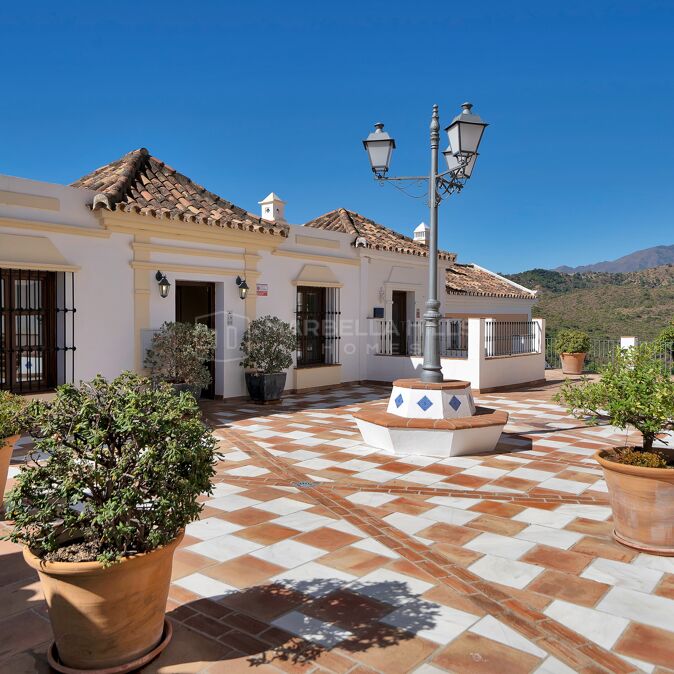
Townhouse for Sale in La Heredia de Monte Mayor, Benahavís with Panoramic Sea Views
Monte Mayor, Benahavis €615,000Set within the exclusive gated community of La Heredia de Monte Mayor in Benahavís, this spacious three-bedroom townhouse offers panoramic…
- View Property
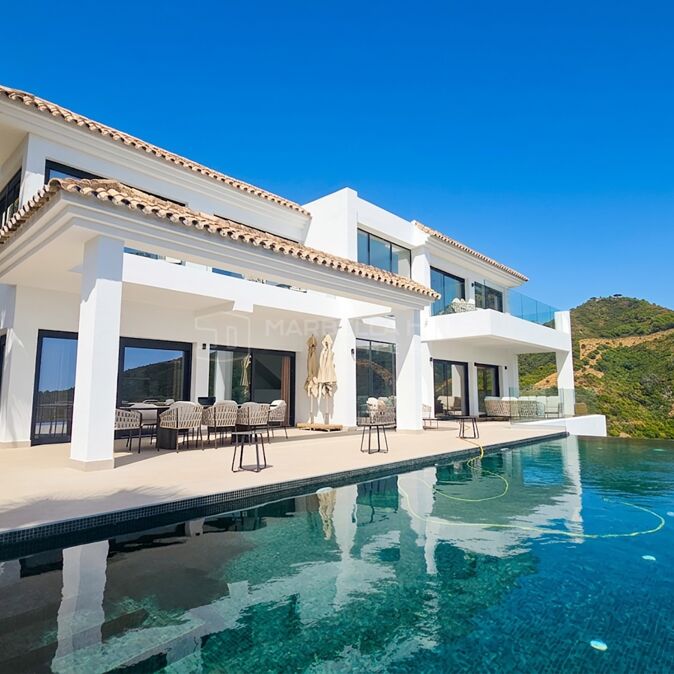
Renovated Villa for Sale in Monte Mayor, Benahavís with Panoramic Sea Views
Monte Mayor, Benahavis €3,875,000Set within the dramatic natural landscape of Monte Mayor in Benahavís, this newly renovated five-bedroom villa combines contemporary interiors, generous…
- View Property
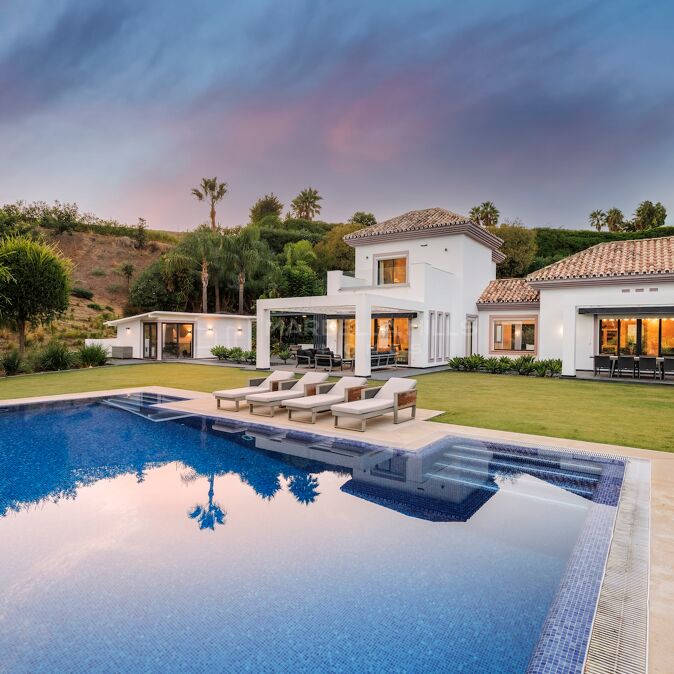
Refurbished Villa for Sale in Monte Mayor, Benahavís on a 7,500 m² Plot
Monte Mayor, Benahavis €2,395,000Set within the private residential community of Monte Mayor in Benahavís, this fully refurbished four-bedroom villa for sale occupies an…
- View Property
Elegant Andalusian Villa with Sea Views in Monte Mayor, Benahavís
Monte Mayor, Benahavis €2,895,000Set within the gated hillside community of Monte Mayor in Benahavís, this elegant Andalusian-style villa combines privacy, generous outdoor space…
- View Property
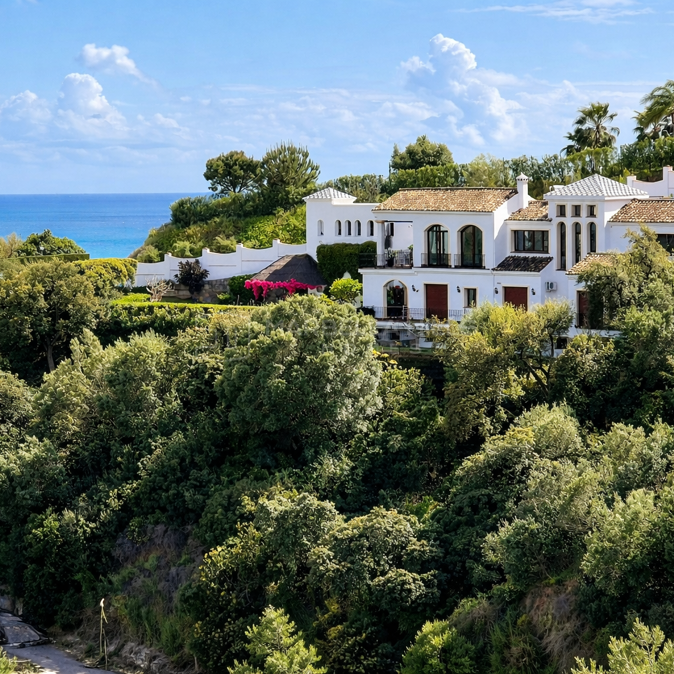
Contemporary Luxury Villa for Sale in Monte Mayor, Benahavís with Panoramic Mountain and Sea Views
Monte Mayor, Benahavis €6,290,000Set within the exclusive gated estate of Monte Mayor in Benahavís, this exceptional contemporary villa represents a rare combination of…
- View Property
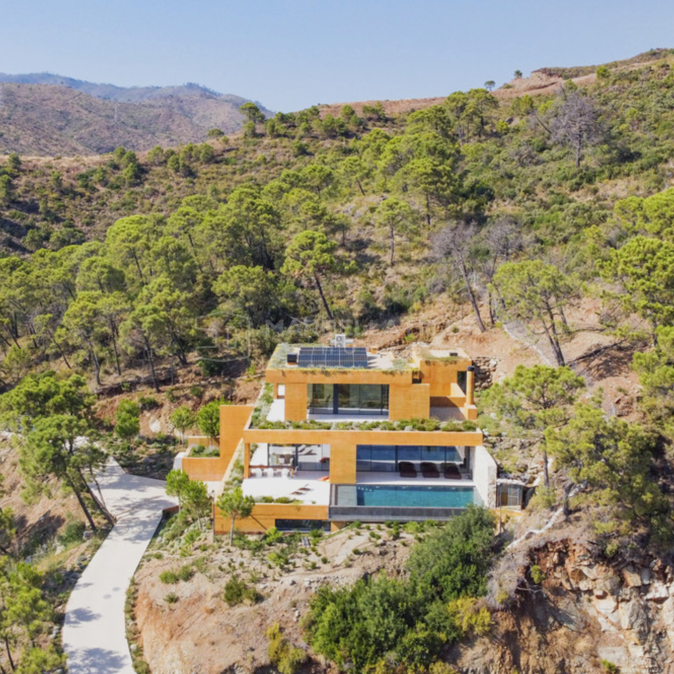
Luxury Villa for Sale in Monte Mayor, Benahavís | Spa, Heated Pool and Panoramic Views
Monte Mayor, Benahavis €7,800,000Set on the edge of a protected natural park within the prestigious gated community of Monte Mayor, Casa Colinas enjoys…
- View Property
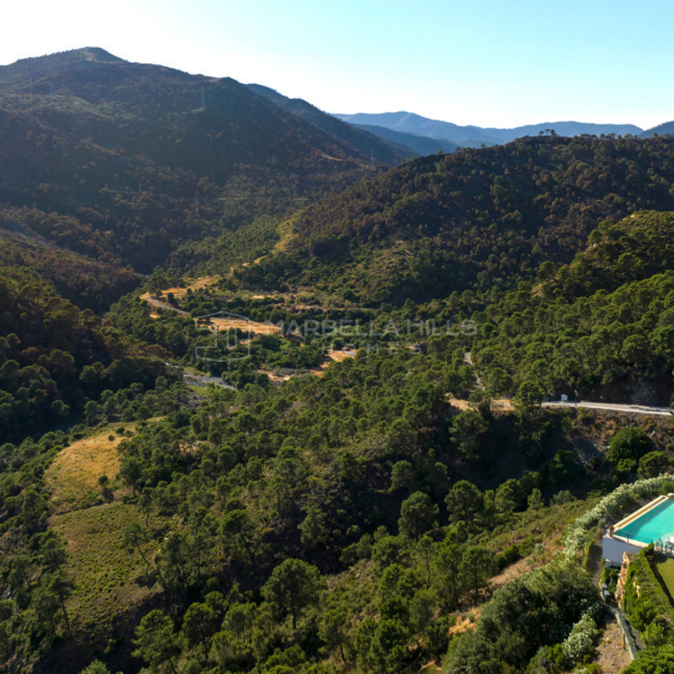
Luxury Contemporary Villa for sale with Panoramic Lake & Golf Views in Monte Mayor, Benahavís
Monte Mayor, Benahavis €5,900,000Nestled within the prestigious gated community of Monte Mayor in Benahavís, this exceptional contemporary villa offers a rare combination of…
- View Property
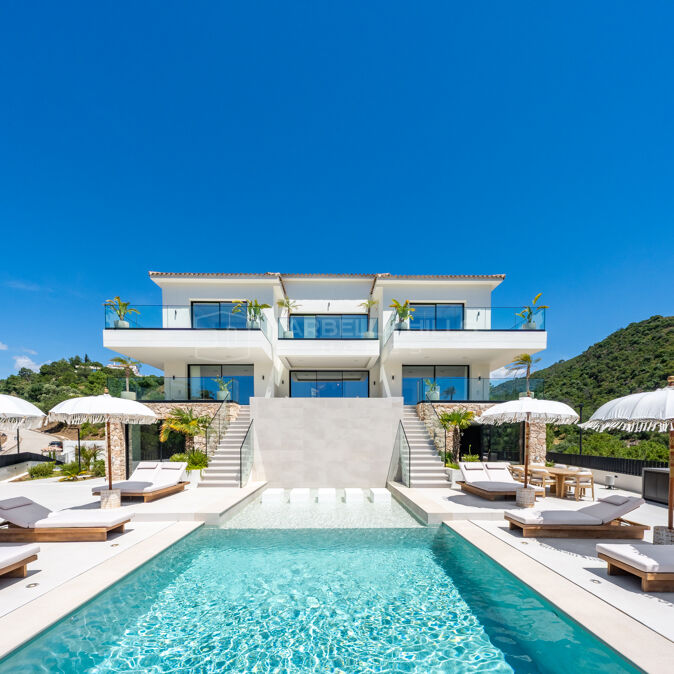
Contemporary Villa with Panoramic Sea Views in Monte Mayor, Benahavís
Monte Mayor, Benahavis €6,695,000This exceptional contemporary villa in Monte Mayor, Benahavís, offers breathtaking panoramic views of the Mediterranean Sea, surrounding mountains, and the…
- View Property
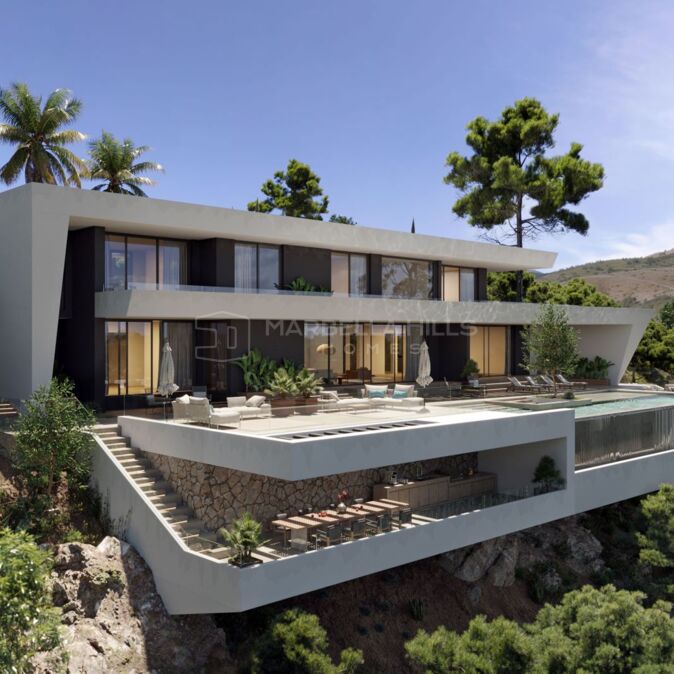
Contemporary Villa with heated Infinity Pool and panoramic Sea Views in Montemayor, Benahavís
Monte Mayor, Benahavis Reduced from €4,150,000€3,850,000Perched in the most privileged position within the exclusive gated community of Montemayor in Benahavís, this exceptional contemporary villa offers…
- View Property
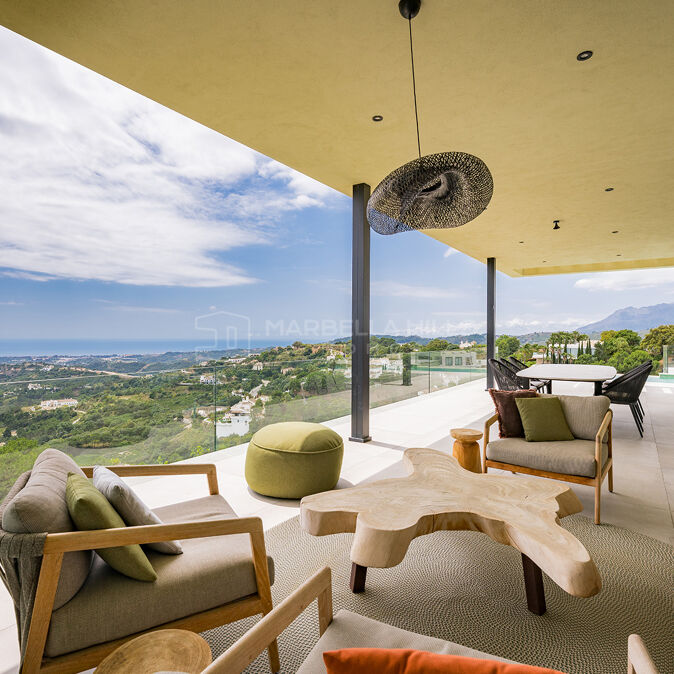
Exceptional Plot for Sale in Monte Mayor, Benahavís – Panoramic Sea Views and Approved Villa Project
Monte Mayor, Benahavis €599,000Set within the breathtaking hills of Monte Mayor in Benahavís, this exceptional 2,100 m² plot offers a rare opportunity to…
- View Property