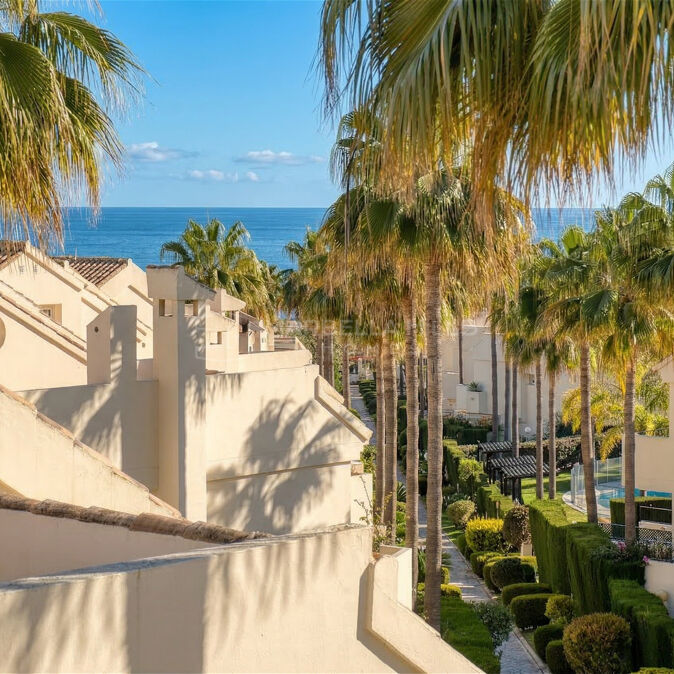
Living beachfront in Marbella: what frontline beach really means, and what it takes to own it
Summary
Discover what ‘frontline beach’ truly means in Marbella. This guide explains the nuances of beachfront living, the strict coastal laws, promenade impact, property types, costs, and essential checks for owning a rare coastal property.
Key Takeaways
- Frontline beach means nothing between your property and the sand except a public promenade.
- Spanish Coastal Law restricts building and ownership in zones behind the shore.
- The seafront promenade has transformed the coastline, impacting privacy and accessibility.
- Beachfront properties are expensive to buy and maintain due to salt air corrosion and regulations.
- Key checks include demarcation, title, permitted alterations, community finances, and legal advice.
Every buyer who says they want a sea view means something slightly different by it. Some mean a horizon glimpsed between two rooftops from a hillside terrace. Some mean the water filling the window. And some mean the specific, unmistakable thing that only a beachfront home delivers: the sound of it at three in the morning, with the doors open.
That last group is buying something genuinely scarce. Marbella's coastline is a fixed length. The hillside above it is not, which is why new villas keep appearing on the slopes while the number of homes actually touching the sand stays roughly where it was thirty years ago. Everything about the beachfront market, the prices, the competition for good stock, the reluctance of owners to sell, follows from that single fact.
It is also the part of the Marbella market with the most regulation attached and the least written about honestly. A beachfront home sits inside a body of Spanish coastal legislation that governs what you may build, extend and sometimes even own. It faces a public promenade that did not exist in its current form when much of the stock was built. And it is under permanent chemical attack from the air around it.
This guide is for buyers seriously considering the shoreline rather than the view of it. It covers what beachfront actually means, the legal framework, the promenade, where beachfront exists along the Marbella coast, what it costs to buy and to keep, and the checks that matter. No specific properties, because individual homes come and go and the questions do not.

What "beachfront" actually means
Three terms circulate, and they are not interchangeable.
Frontline beach means nothing stands between the property and the sand except, in most cases, the public promenade. The garden ends and the beach begins. This is the only version of beachfront that cannot be replicated by a developer somewhere else, and it is priced accordingly.
Beachside means south of the coast road, in the strip between the highway and the sea, but with something in front: another development, a road, a car park, a stretch of scrub. Beachside is a good product and often a sensible purchase. It is not frontline, and the price difference between the two is one of the widest in Marbella.
Walking distance to the beach means whatever the person writing the advertisement wants it to mean. Five minutes on foot from a first-floor apartment in July, carrying towels and children, is a different experience from five minutes measured on a map.
The test is simple and worth applying to every property you see described as beachfront: stand on the terrace and count what lies between you and the water. If the answer is nothing but promenade and sand, it is frontline. If the answer includes any other building, it is not, whatever the listing says.
One further distinction matters within frontline itself. A home that faces the beach across its own garden is a different proposition from one that faces the beach across a communal garden shared with sixty other apartments, which is different again from one where the promenade runs directly along the boundary wall. All three are legitimately frontline. They offer very different amounts of privacy.

The Coastal Law, and why it decides what you can do
This is the section most beachfront guides skip, and it is the one that determines what you are actually buying.
Spain's Coastal Law of 1988, substantially reformed in 2013, establishes that the shoreline itself is public domain. It cannot be privately owned. Inland of that public domain the law then creates two further zones. A transit easement, a strip immediately behind the shore that must remain passable, and a protection easement running further inland, within which construction and alteration are restricted.
The width of that protection zone is where it gets consequential. The general rule is 100 metres, but for land that was already classified as urban when the law came into force, it is reduced to 20 metres. Much of Marbella's developed coast falls into that reduced category, which is precisely why so much frontline housing exists here at all. The 2013 reform then extended the same reduced regime to settlements that were not formally classified as urban in 1988 but had the characteristics of urban land, a change that brought a very large number of Spanish homes into a clearer legal position.
Three practical consequences for a buyer.
First, if the property sits within the protection easement, what you can do to it is restricted. Renovation of an existing building is generally possible. Extending the footprint, raising the height or rebuilding to a different volume may not be. Establish this before you make an offer, not after you have engaged an architect.
Second, where a building actually occupies the public domain itself, ownership may take the form of an administrative concession rather than freehold title. The 2013 reform extended the maximum concession term to 75 years and allowed existing concessions to be extended, which resolved a great deal of uncertainty. But a concession is a right to use for a defined period, not perpetual ownership, and the number of years remaining is a material valuation input. Anyone buying a property held this way needs to know exactly where it stands.
Third, the boundary between public domain and private land is established by a formal demarcation procedure, and demarcations get reviewed. A property comfortably outside the line today was drawn that way by a survey, and surveys are revisited. Your lawyer should confirm the current demarcation position for the specific plot rather than relying on the general character of the neighbourhood.
None of this should deter a buyer. Thousands of legally impeccable beachfront homes change hands here. But it does mean beachfront conveyancing is specialist work, and that the cheap version of it is a false economy.
The promenade changed the product
Anyone who bought beachfront in Marbella in the 1980s bought a different asset from the one on sale today, and the difference is the walkway.
Marbella's seafront promenade now runs close to 12 kilometres, from the fishing port at La Bajadilla through the town centre, Río Verde and Puerto Banús to San Pedro. East of the centre it continues as boardwalk through wilder terrain, past Río Real and Los Monteros and out towards the protected dunes at Artola. It forms part of a much longer provincial coastal path intended eventually to link Manilva to Nerja, a project reported in 2026 as roughly 90 percent complete across the province.
For the coast as a whole this is transformative and overwhelmingly positive. It has made the shoreline continuously walkable, supported the cafés and beach restaurants along it, and given Marbella one of the best urban seafront walks in southern Europe.
For an individual beachfront owner it cuts both ways, and it is worth being clear-eyed about which way it cuts for the property you are looking at. A promenade set below the level of your terrace, screened by planting, is an amenity: you step out of your gate and onto it. A promenade running directly past your garden wall at the same level, on an August Sunday, is a public thoroughfare with a view into your home. Both exist in Marbella, sometimes within a few hundred metres of each other.
The practical advice is unglamorous. Visit at the times that test it. A Sunday afternoon in August tells you more about a frontline property than three weekday viewings in March, and it is the single most useful hour a beachfront buyer can spend.

Where the beachfront is
Marbella's coast runs roughly 27 kilometres, and the character of it changes considerably along the way.
West, towards San Pedro and Guadalmina. The established beachside residential areas here are lower density and quieter, with a mix of villas on generous plots and low-rise complexes. The promenade continues along much of it. The atmosphere is residential and family-oriented rather than social.
Puerto Banús and Río Verde. Beachfront within reach of the marina, which is the attraction and the caveat in a single sentence. In season this stretch is busy, loud in places and extremely convenient. Out of season it is calm. Buyers who love it tend to love it specifically; buyers who want quiet should look elsewhere.
The Golden Mile. The most expensive coastline in the municipality and the most tightly held. Frontline plots here are essentially never replaced, only traded, and the branded resort complexes along the strip have established price levels that sit far above the Marbella average. Walkability to hotels, beach clubs and restaurants is the differentiator.
Marbella centre. Frontline apartments close to the old town, the Avenida del Mar and the town beaches. The advantage is urban: you can live here without a car in a way that is impossible in most of Marbella. The trade-off is that town beaches are busy beaches.
East Marbella. The broadest and most varied beachfront in the municipality, running out through Río Real, Los Monteros, Costabella, Elviria and Cabopino towards the protected dunes at Artola. Density falls as you go east, plots get larger, and the promenade gives way to boardwalk and pine. This stretch has produced some of the strongest frontline results in the municipality in recent years, and it appeals to buyers who want the sea without the social intensity of the Golden Mile.
Which is best depends entirely on what you want from a beach. Sociable and walkable, or empty at eight in the morning. They are twenty minutes apart and they are not the same life.
What the sea does to a building
Nobody enjoys this section, and it is the one that saves money.
Salt-laden air is corrosive, continuously and everywhere, and a beachfront building is exposed to it from every direction. The effects are well known to anyone who has owned here: corrosion of metalwork, railings, hinges, locks and fixings; degradation of window and door mechanisms; pitting of untreated aluminium; accelerated failure of air conditioning condensers and pool equipment; salt deposits etching glass and stonework; and rapid deterioration of paint, render and timber. Humidity compounds all of it.
The practical implications for a buyer are three.
Specification matters more here than anywhere else. Marine-grade stainless steel, properly anodised or powder-coated aluminium, treated timber and quality glazing systems are not luxuries on the shoreline; they are the difference between a building that ages well and one that needs everything replaced in twelve years. When you inspect a beachfront property, look hard at the metalwork. It tells you what the developer specified and what the community has spent since.
Maintenance is continuous, not periodic. Exterior repainting cycles are shorter. Window and door mechanisms need servicing. Pool and air conditioning plant works harder and fails sooner. A beachfront home is a higher-running-cost asset than an equivalent home 500 metres inland, and any budget that ignores this is wrong.
High community fees can be a good sign. This is counterintuitive and important. A frontline community with well-kept gardens, sound render, functioning gates and clean metalwork is spending money to stay that way. A community with visibly low fees and visibly corroding railings has deferred the cost, not avoided it, and a new owner inherits the bill through a future extraordinary levy. Read the accounts and the minutes of recent meetings, and treat evidence of sustained investment as reassurance rather than as a warning.
Storms are the other consideration. Winter weather systems can strip sand from beaches and drive water and debris against seafront properties, and replenishment work is a recurring feature of the coast. Ask what happened here in the worst recent storm, check the drainage arrangements, and make sure insurance is appropriate to the exposure.

Prices and the premium
Beachfront does not follow the municipal average, and quoting the average in this context is misleading.
Marbella-wide asking prices have been running in the region of €5,000 to €6,000 per square metre. Published market surveys put frontline beach product far above that: broadly €10,000 to €15,000 per square metre for frontline villas, €15,000 to €25,000 per square metre on prime Golden Mile frontline positions, and individual trophy resales in the branded complexes reported well beyond that. East Marbella has produced frontline apartment and penthouse results in the same upper range in recent years, which reflects how narrow the supply of true frontline stock is on that stretch.
Treat all of these as indicative rather than as a valuation. Three factors move a beachfront price more than anything else:
- Genuine frontline position, as opposed to second line with a sea view
- Orientation and the width of the frontage, since a wide southern frontage and a narrow oblique one are different products
- Condition, because renovating on the shoreline costs more than renovating inland and buyers price that in
The premium is durable for a structural reason. Hillside supply can expand; coastline cannot. That is the whole argument for beachfront as an asset, and it is a stronger one than any forecast.
Rental, if that is part of the plan
Beachfront lets well and commands a clear premium over comparable inland stock, particularly in the peak summer months when proximity to the sand is the deciding factor for holiday tenants.
Two cautions. Short-term tourist letting in Andalucía requires registration and compliance with the applicable regional rules, and, separately, the statutes of the individual community may restrict or prohibit it regardless of what the regional framework allows. Frontline communities are not uniformly relaxed about tourist letting, and some are markedly less so than inland ones. Confirm both positions in writing before you buy on the basis of projected income.
The long-let market on the coast is quieter but steadier, and for owners who want the property themselves in August it is often the more sensible structure.
How beachfront compares
Against a hillside sea-view home, you are trading the panorama for the proximity. Elevation gives you a wider view, more privacy, cooler air in August and usually more house for the money. The beach gives you the sound of the water, a walk to the sand and an asset in genuinely finite supply. Buyers often start convinced of one and finish buying the other, which is why viewing both is worth the day it costs.
Against the golf valley communities inland, the comparison is about daily life rather than views. Inland Nueva Andalucía and the equivalent areas offer more space per euro, larger plots, and a quieter year-round community. The coast offers walkability and the sea. Families with school runs and golf memberships often find inland works better; couples and downsizers frequently prefer the shore.
Against new-build beachfront, which does still appear along the wider coast west of Marbella, the trade is contemporary specification and warranties against established position and mature gardens. On the shoreline, specification is worth more than it is inland, for the corrosion reasons above. Position, though, is still the thing that cannot be built.

What to check before you commit
- The demarcation position of the specific plot, and whether any part of the property sits within the transit or protection easement.
- The title, including whether any part is held under administrative concession and, if so, how many years remain.
- What alterations are permitted, at both coastal-law and municipal level, before you plan any works.
- The community accounts and minutes, with particular attention to exterior maintenance history, recent extraordinary levies and anything approved but not yet spent.
- The condition of all metalwork and glazing, as the clearest indicator of specification quality and maintenance discipline.
- Storm and drainage history, and insurance appropriate to a seafront exposure.
- The promenade relationship, viewed in person on a busy summer weekend rather than a quiet weekday.
- Tourist letting rules, at both regional and community level, if rental income matters.
- Your own independent lawyer, experienced specifically in coastal transactions, acting for you alone.
Frequently asked questions
What is the difference between frontline beach and beachside?
Frontline beach means nothing stands between the property and the sand except, usually, the public promenade. Beachside means the property is in the strip between the coast road and the sea but has something in front of it. The price difference between the two is substantial.
Can you privately own the beach in front of a beachfront property?
No. Under Spanish coastal legislation the shore is public domain and cannot be privately owned, and a transit easement immediately behind it must remain passable. Some buildings occupy public domain under an administrative concession, which is a right to use for a fixed term rather than freehold ownership.
Can I extend or rebuild a beachfront property in Marbella?
It depends on which coastal zone the property occupies. Renovation of an existing building is generally possible; extending the footprint, raising the height or increasing the volume may be restricted within the protection easement. Municipal planning rules apply on top. Establish the position before agreeing a price.
Does the promenade run in front of every beachfront property?
Along most of the developed Marbella coast, yes. The municipal promenade runs close to 12 kilometres and continues eastwards as boardwalk, forming part of a provincial coastal path. How intrusive it is varies enormously with level, screening and planting, which is why it should be inspected in person at a busy time.
Are beachfront properties more expensive to maintain?
Yes, materially. Salt air corrodes metalwork and fixings, shortens repainting cycles, and reduces the life of air conditioning and pool plant. Community fees in frontline complexes are correspondingly higher, and a community charging enough to keep on top of it is usually the better buy.
What does beachfront cost in Marbella?
Well above the municipal average. Published surveys indicate broadly €10,000 to €15,000 per square metre for frontline villas and €15,000 to €25,000 per square metre on prime Golden Mile frontline positions, with individual trophy sales reported higher. Actual pricing depends on frontage, orientation and condition.
Is beachfront a good investment?
The supply argument is unusually strong: coastline is finite while hillside supply is not, which is why frontline stock has historically held its premium. That is a structural point rather than a forecast, and it does not remove the need to buy the right position at the right price.
Our honest take on beachfront living
Beachfront is one of the few things in Marbella that genuinely cannot be replicated. A developer can give you a better kitchen, a larger plot, a more dramatic view or a newer building. What nobody can create is more coastline. That scarcity is the fundamental argument for buying on the beach, and it is a compelling one.
What beachfront asks in return is an acceptance of three realities: regulation, maintenance and people.
Regulation, because the shoreline is subject to rules and restrictions that do not apply in quite the same way further inland, and the legal due diligence can therefore be more involved. Maintenance, because salt, humidity and constant exposure to the sea are hard on buildings, façades, metalwork and installations. The question is not whether the marine environment has an effect, but whether the community has anticipated it, budgeted for it and kept pace with the work required.
And then there are people. The same promenade that makes beachfront Marbella so attractive and allows you to walk for kilometres beside the Mediterranean also brings walkers, runners, cyclists and summer visitors directly past many frontline communities. Depending on the individual property, the difference between a wonderfully connected beachfront home and one that feels exposed can be a matter of a few metres, a hedge or the position of a terrace.
Buyers who understand all three and still want beachfront are usually buying it for the right reasons. The problems tend to arise when someone falls in love with the July version of a property and only discovers the August version after completion, or assumes that a home exposed to the Mediterranean will cost no more to maintain than an equivalent property further inland.
Neither issue is difficult or particularly expensive to investigate before buying. Both can become expensive once you own the property.

Final thoughts
The most useful question a beachfront buyer can ask is not how close the sea is, but what specifically sits between the terrace and the water, and what is legally permitted on that ground. Answer that and most of the rest follows: the privacy, the price, the works you can do, the fees you will pay.
The best beachfront homes in Marbella are not necessarily the largest or the newest. They are the ones with a good frontage, a sensible relationship with the promenade, a community that has spent properly on maintenance, and a clean legal position on the coastal boundary. Those four things are worth more, over a twenty-year hold, than any amount of interior specification.
Discover the Marbella coast
If beachfront is what you are after, the conversation worth having is about specific stretches and specific communities, because that is where the differences live. We can tell you which frontline complexes have kept up with maintenance and which have levies coming, where the promenade sits comfortably below terrace level and where it does not, how the eastern beaches differ from the Golden Mile in practice, and what to check on the coastal boundary before you commit.
Browse the current properties for sale in Marbella, read our Marbella buying process guide and our market report, and when you are ready, get in touch and tell us how you actually intend to use the house.
Beachfront villas, apartments and townhouses for sale in Marbella
UNO Marbella Garden House for Sale on the Golden Mile
Beach Side Golden Mile, Marbella Golden Mile Price on applicationUNO Marbella Garden House 1 offers the scale, privacy and lifestyle of a contemporary villa within one of the most…
- View Property
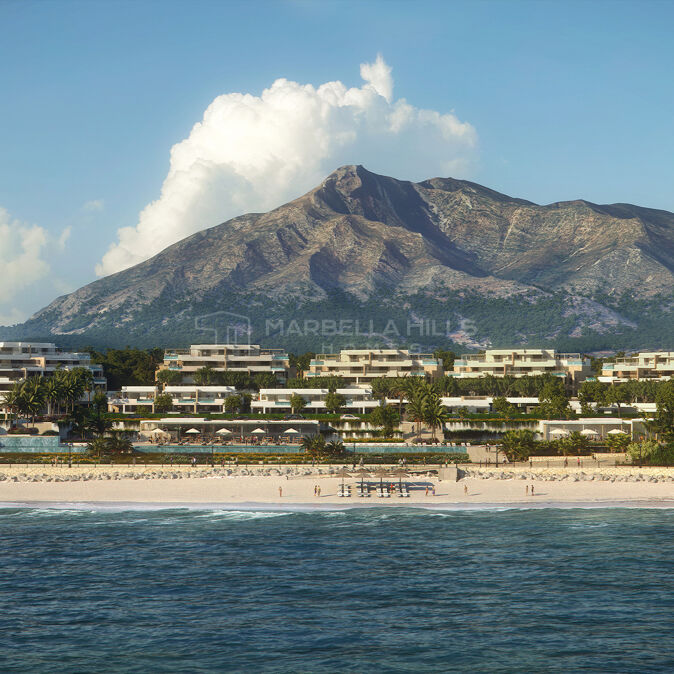
Renovated Apartment with touristic license for Sale in Andalucía del Mar, Puerto Banús
Andalucia del Mar, Puerto Banus Reduced from €680,000€650,000This fully renovated ground-floor apartment is located in Andalucía del Mar, one of the established beachfront developments in Puerto Banús.…
- View Property
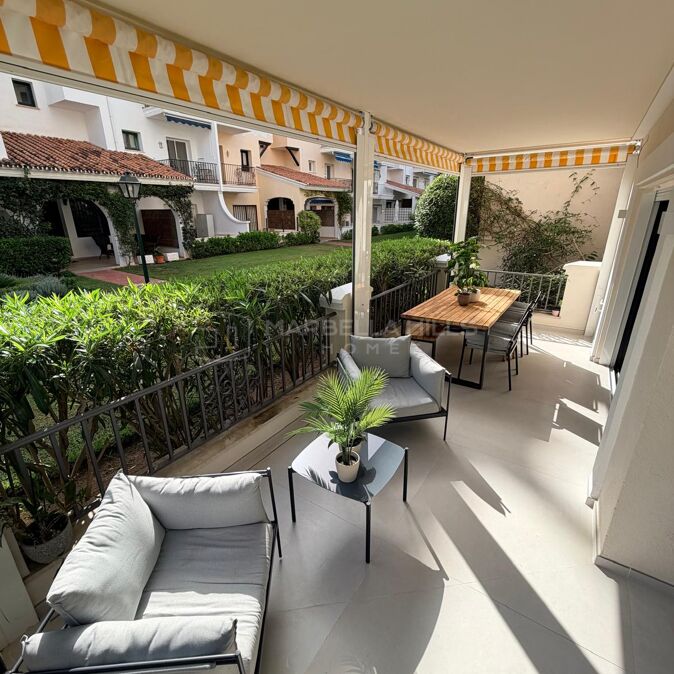
West-Facing Penthouse for Sale in Puente Romano II, Marbella Golden Mile
Marina Puente Romano, Marbella Golden Mile €2,900,000This elegant west-facing penthouse for sale in Puente Romano II offers a rare opportunity to own a beautifully renovated home…
- View Property
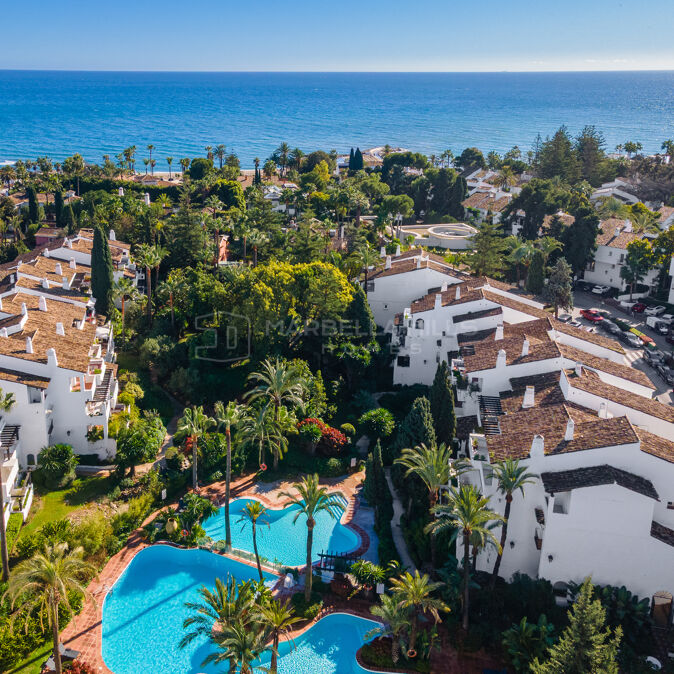
2-Bedroom Beachfront Apartment for Sale in The Edge, Estepona
The Edge, Estepona West €898,000This contemporary 2-bedroom ground-floor apartment is located in The Edge, one of the most distinctive beachfront developments in Estepona West.…
- View Property
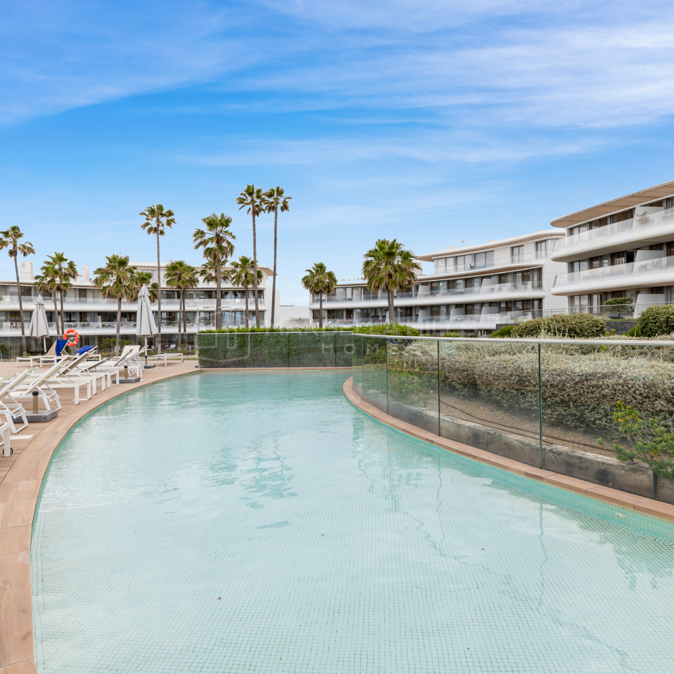
Renovated 3-Bedroom Apartment for Sale in Marina Puente Romano, Marbella
Marina Puente Romano, Marbella Golden Mile €4,495,000Set within Marina Puente Romano, one of the most sought-after residential settings on Marbella’s Golden Mile, this elegant three-bedroom apartment…
- View Property
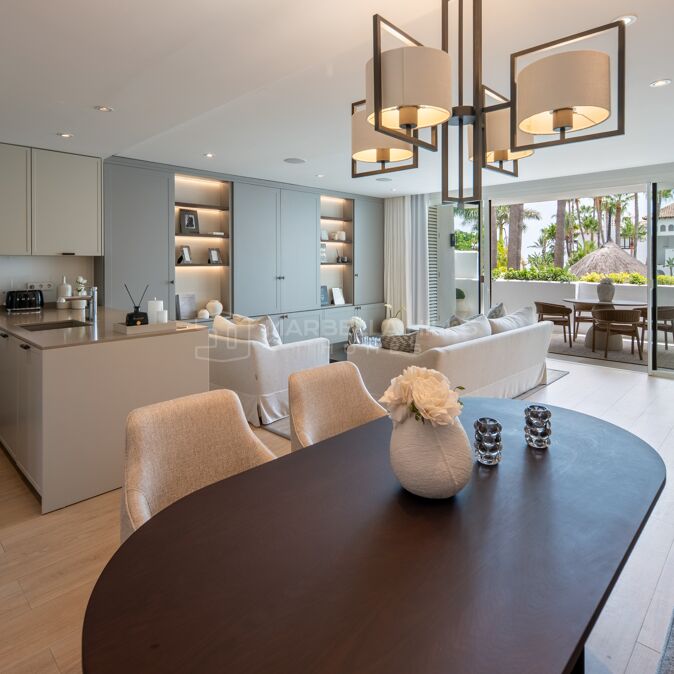
Renovated Penthouse for Sale in Dominion Beach, Estepona
Dominion Beach, Estepona East €2,495,000This beautifully renovated three bedroom penthouse is located in Dominion Beach, one of the most established beachfront communities on Estepona’s…
- View Property
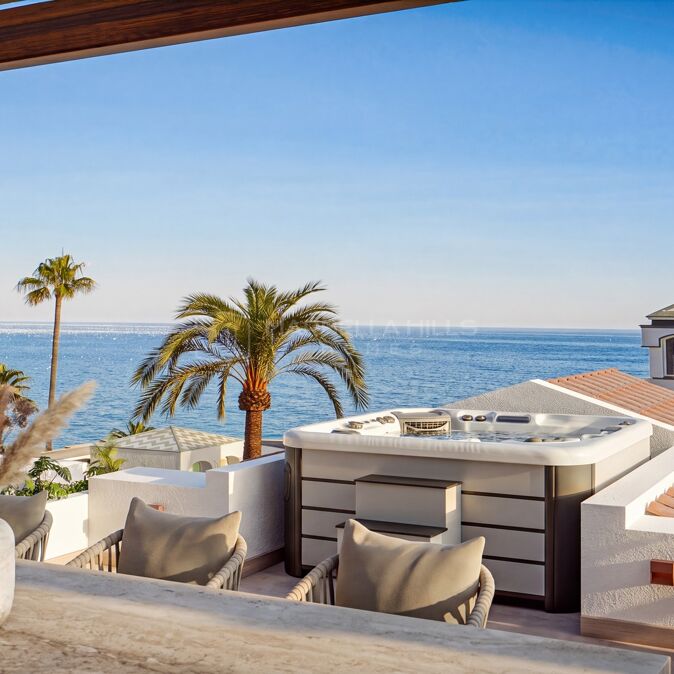
Renovated 3-Bedroom Apartment in Jardín del Mediterráneo, Marbella Golden Mile
Jardín del Mediterráneo, Marbella Golden Mile €2,250,000This beautifully renovated three-bedroom apartment is located in Jardín del Mediterráneo, an established residential community in one of the most…
- View Property
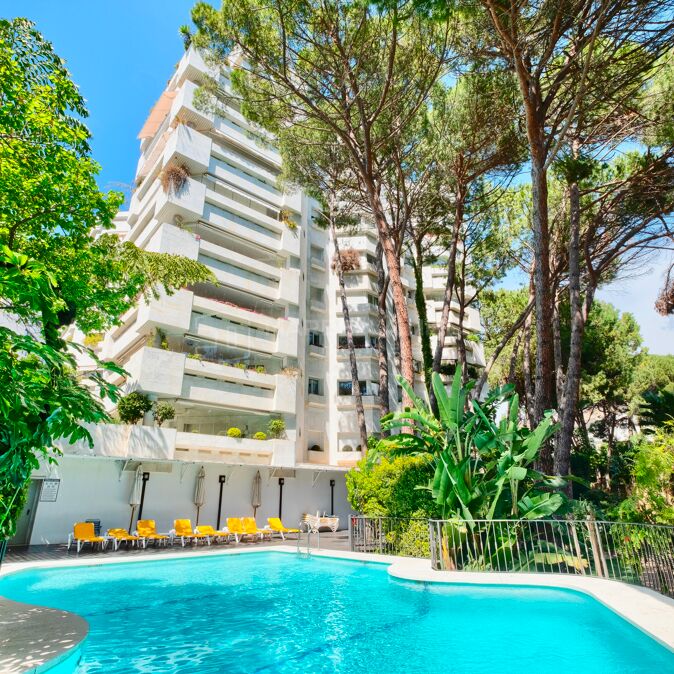
Renovated Beachfront Apartment for Sale in Cabo Bermejo, Estepona
Cabo Bermejo, Estepona East €2,695,000This beautifully renovated ground-floor apartment is located in Cabo Bermejo, one of the most established beachfront communities on Estepona’s New…
- View Property
Fully Renovated Beachfront Apartment with Sea Views in Velaya, Estepona
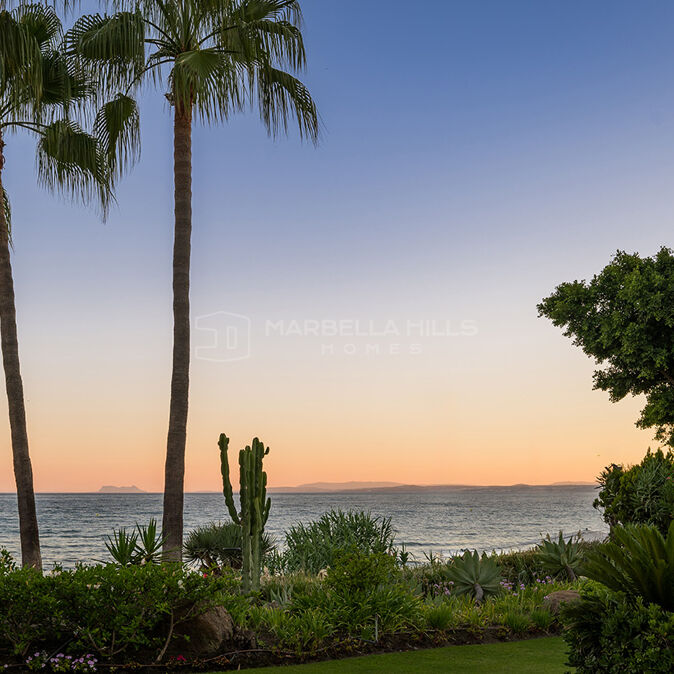
Velaya, Estepona East €1,595,000Set within Velaya, one of the most desirable contemporary beachfront communities on the New Golden Mile, this beautifully renovated two…
- View Property
Fully Renovated Frontline Beach Apartment for Sale in Los Granados, Puerto Banús
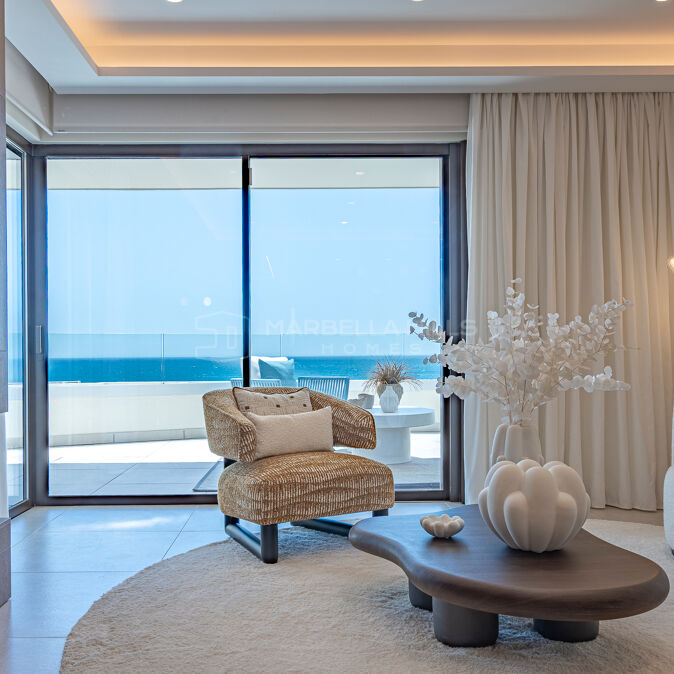
Los Granados, Puerto Banus €4,900,000This exceptional three bedroom apartment is located in Los Granados, one of the most established and sought after frontline beach…
- View Property
Luxury Beachfront Apartments for Sale at UNO Marbella on the Golden Mile
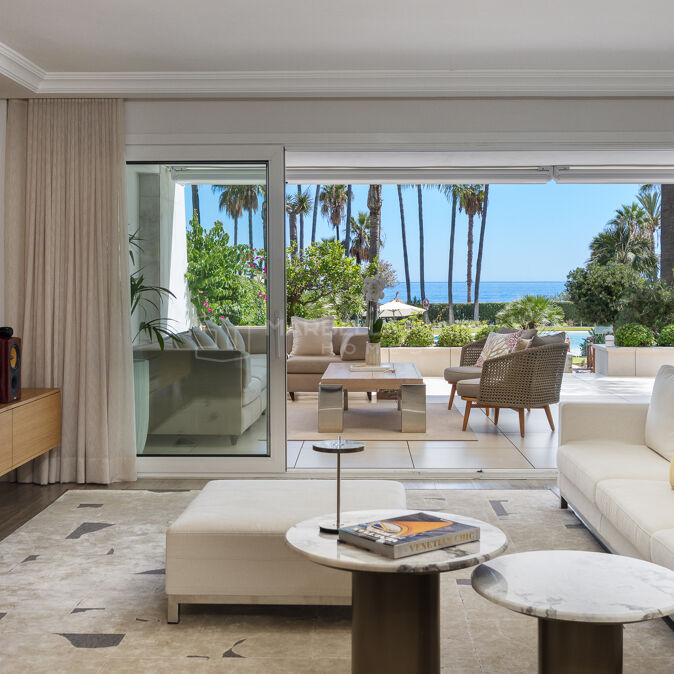
Beach Side Golden Mile, Marbella Golden Mile Price on applicationUNO Marbella is one of the most prestigious beachfront residential developments on Marbella's iconic Golden Mile, offering an exceptional collection…
- View Property
New Contemporary Beachfront Villa for Sale in Cortijo Blanco, San Pedro de Alcántara
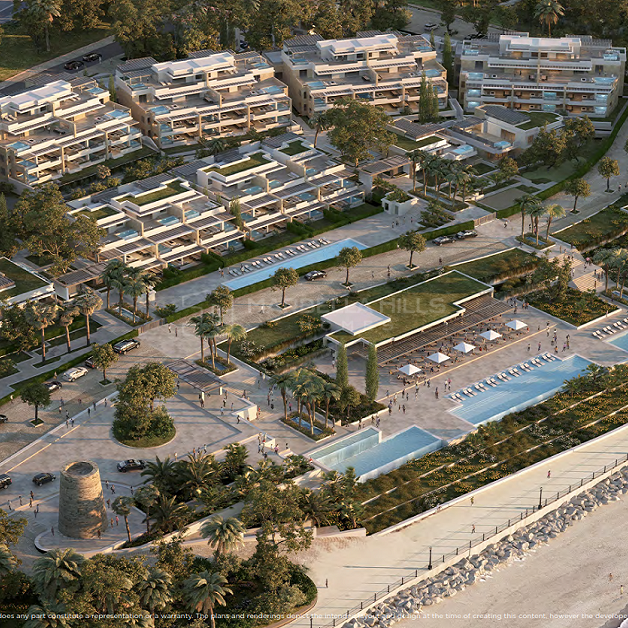
Cortijo Blanco, San Pedro de Alcantara €10,000,000This exceptional newly built contemporary villa enjoys a privileged beachfront location in Cortijo Blanco, one of the most desirable residential…
- View Property
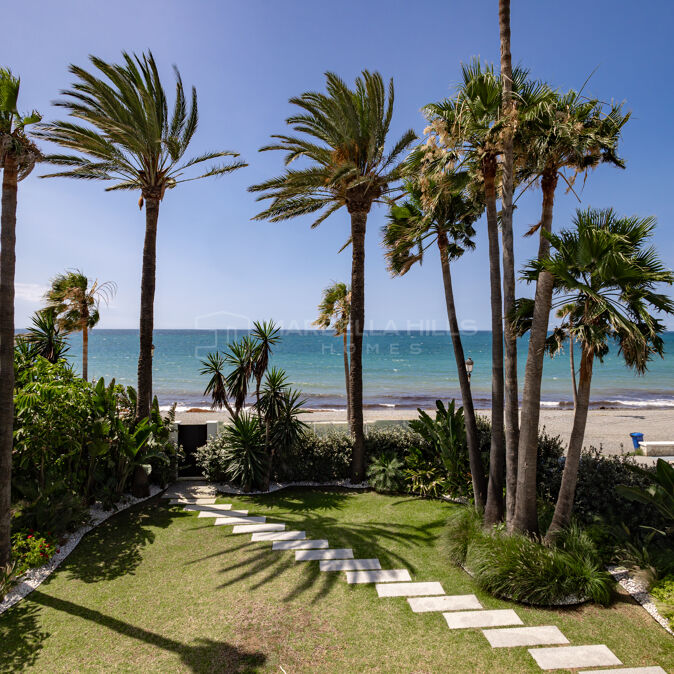
Beachfront Garden Apartment for Sale in Mar Azul, New Golden Mile, Estepona
Mar Azul, Estepona East €799,500Wake up to the sound of the Mediterranean in this beautifully presented beachfront garden apartment for sale in Mar Azul,…
- View Property
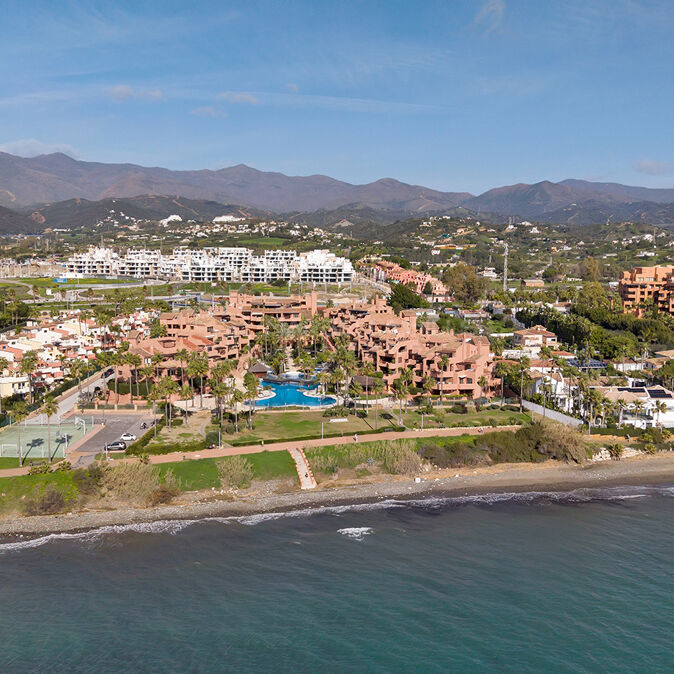
Frontline Beach Apartment for Sale in Puerto Banús | Renovated Sea View Apartment
Puerto Banus, Marbella €550,000Situated in one of Puerto Banús' most sought-after beachfront developments, this beautifully renovated one-bedroom apartment offers an exceptional opportunity to…
- View Property
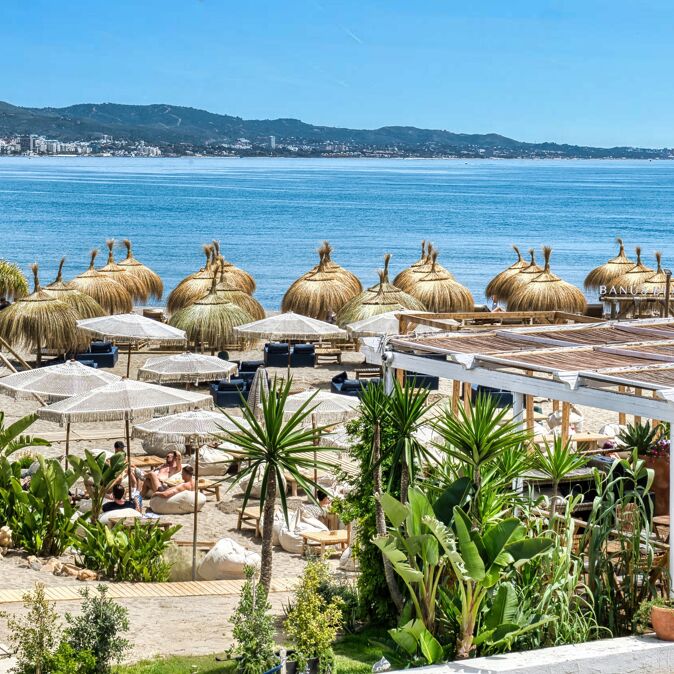
Luxury Frontline Marina Apartment for Sale in Puerto Banús, Marbella | Fully Renovated & Sea Views
Puerto Banus, Marbella €1,245,000Positioned in one of the most privileged frontline locations within the iconic marina of Puerto Banús, this beautifully renovated apartment…
- View Property
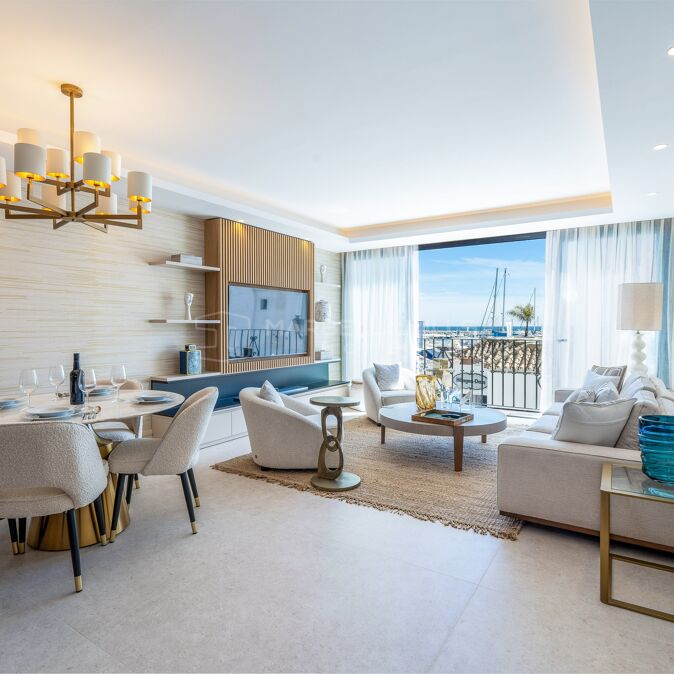
Luxury Beachside Apartment for Sale in Cabo Bermejo, Estepona | Sea Views
Cabo Bermejo, Estepona East €2,395,000Situated within the exclusive beachfront community of Cabo Bermejo on Estepona's prestigious New Golden Mile, this beautifully presented luxury apartment…
- View Property
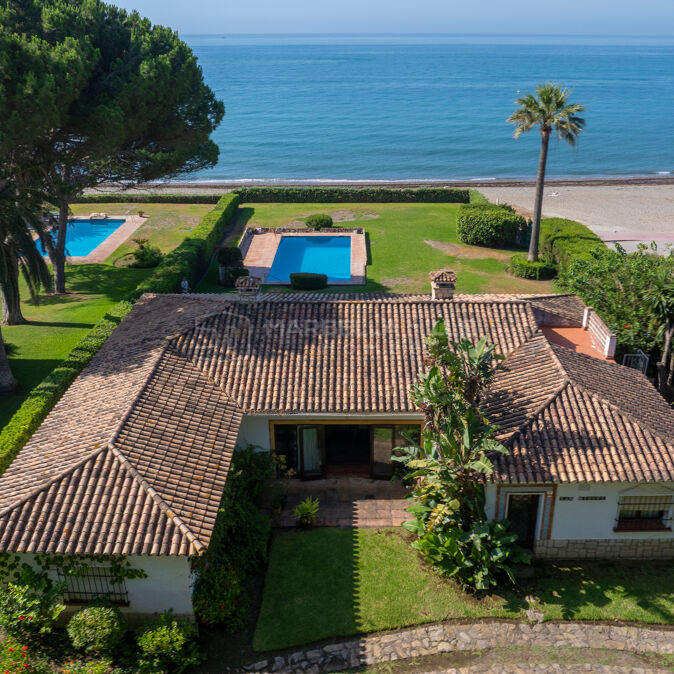
Beachfront Villa for Sale in Cancelada, Estepona with 3,310 m² Plot and Direct Beach Access
Cancelada, Estepona East €3,250,000Situated in one of the most exclusive beachfront locations on the New Golden Mile, this unique villa for sale in…
- View Property
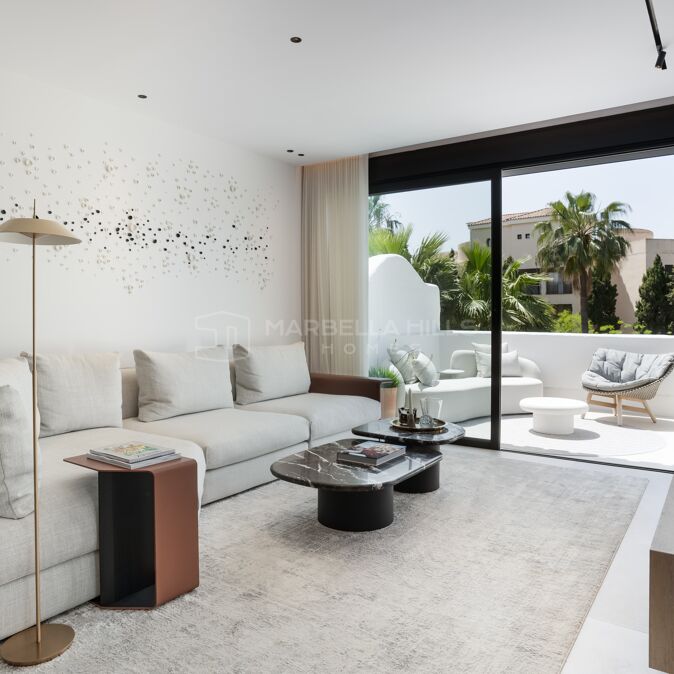
Luxury Duplex Penthouse for Sale Near Puerto Banús | Fully Renovated, Walking Distance to the Beach
Jardines de las Fuentes, Puerto Banus €1,490,000Located in the exclusive gated community of Jardines de las Fuentes, just moments from the beach and Puerto Banús, this…
- View Property
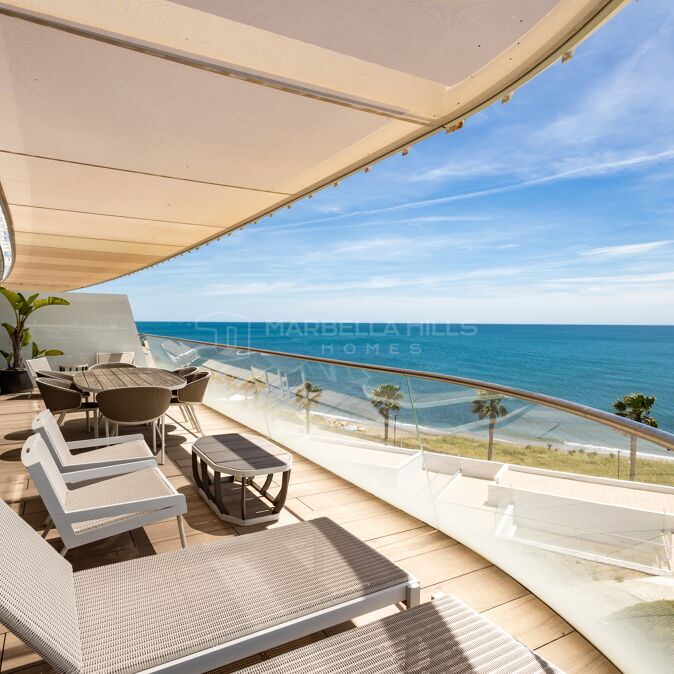
Luxury Beachfront Apartment for Sale in The Edge, Estepona – Panoramic Sea Views and Five-Star Amenities
The Edge, Estepona West €1,975,000Positioned frontline to the Mediterranean within the prestigious The Edge development in Estepona, this exceptional 3-bedroom, 3-bathroom apartment ranks among…
- View Property
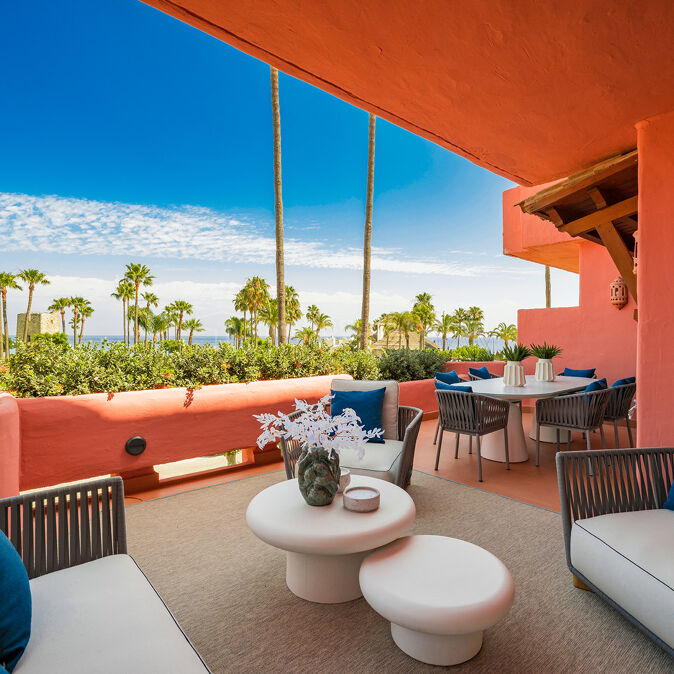
Frontline Beach Penthouse for Sale in Estepona | Rooftop Terrace and Panoramic Sea Views
Estepona Town €1,300,000Perfectly positioned on the beachfront in the heart of Estepona, this beautifully renovated penthouse offers spectacular panoramic views over the…
- View Property
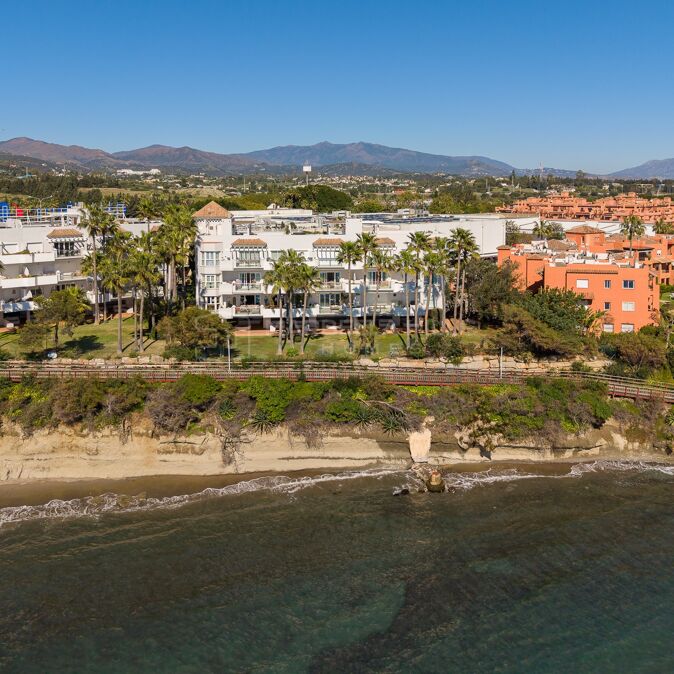
Beachfront Luxury Apartment for Sale in Estepona | Las Dunas Park
Las Dunas Park, Estepona East €4,750,000Located in the prestigious Las Dunas Park, one of the most exclusive beachfront developments on the New Golden Mile, this…
- View Property
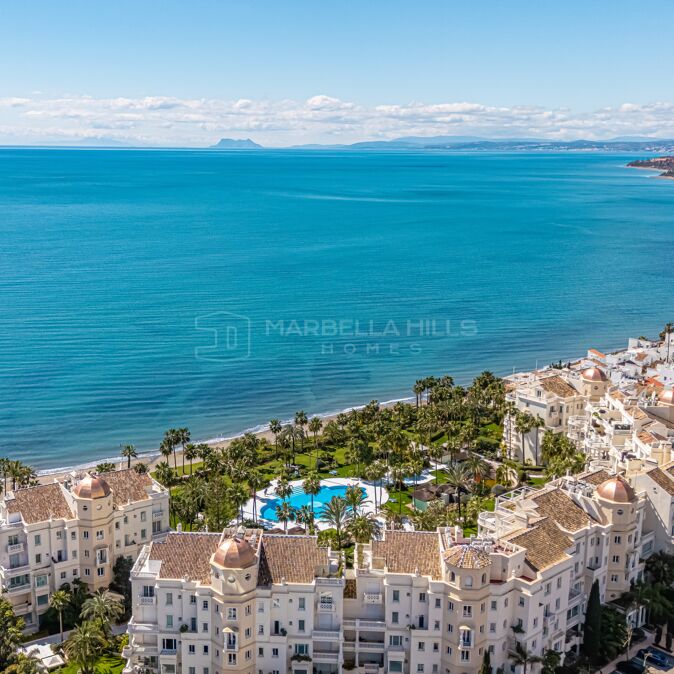
Beachfront Apartment for Sale in Costalita del Mar, New Golden Mile Estepona
Costalita del Mar, Estepona East Price on applicationFully renovated three-bedroom, two-bathroom apartment located on the beachfront within the gated community of Costalita del Mar, on the New…
- View Property
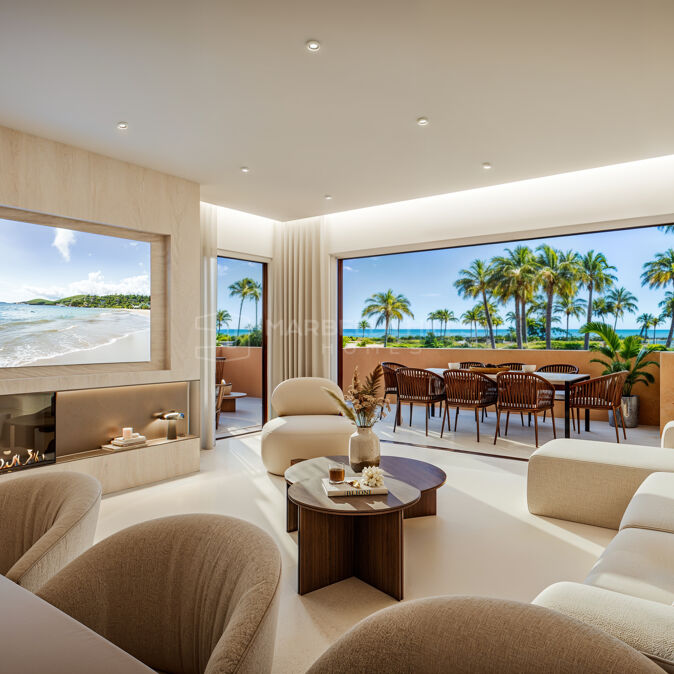
Exclusive Frontline Beach Apartment in Alcazaba Beach, Estepona
Alcazaba Beach, Estepona East €2,995,000Maison Alcazaba presents a rare opportunity to acquire an exceptional frontline beach residence within the prestigious Alcazaba Beach community in…
- View Property
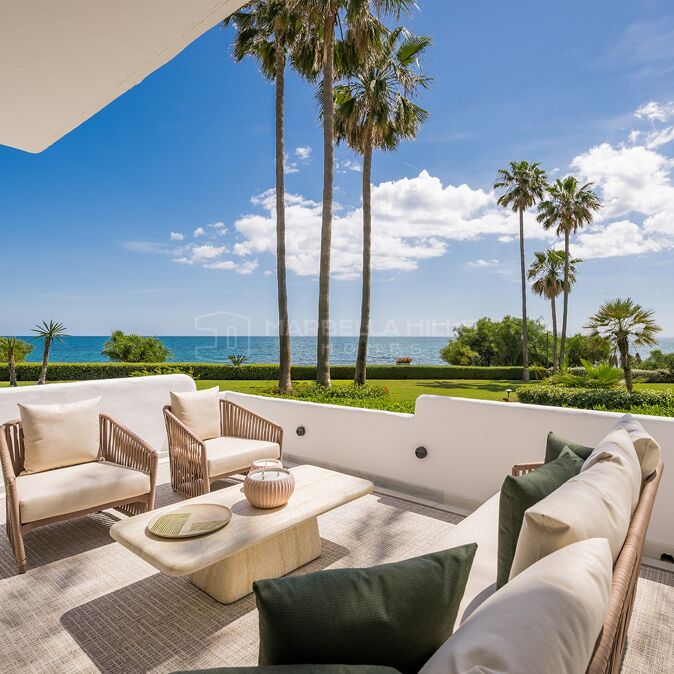
Exclusive Beachfront Duplex Penthouse for Sale in Menara Beach, Estepona – New Golden Mile
Menara Beach, Estepona East €1,499,000Discover this elegant 3-bedroom duplex penthouse in the prestigious beachfront community of Menara Beach, one of the most sought-after luxury…
- View Property
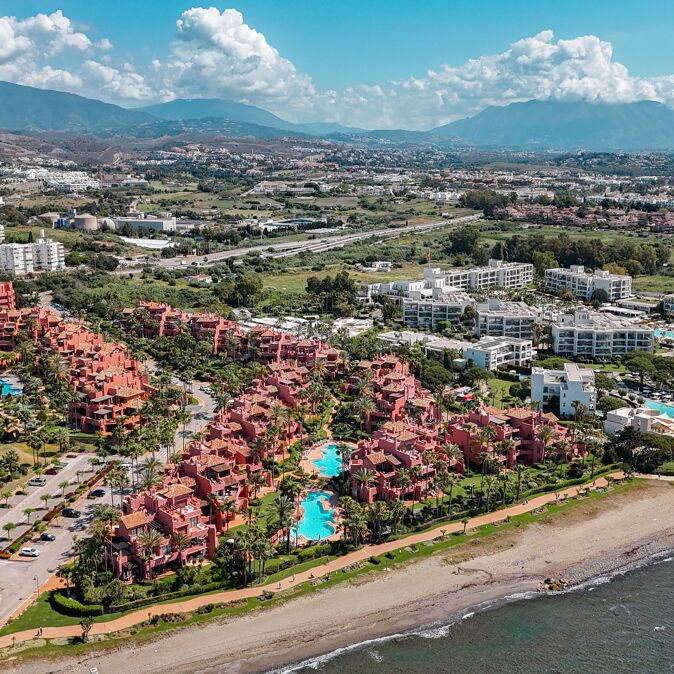
Beachside Townhouse with Tourist Licence for Sale in Costabella, Marbella East – Walking Distance to the Sea
Costabella, Marbella Este €750,000Located in the highly sought-after beachside community of El Arenal in Costabella, Marbella East, this elegant southwest-facing townhouse offers the…
- View Property