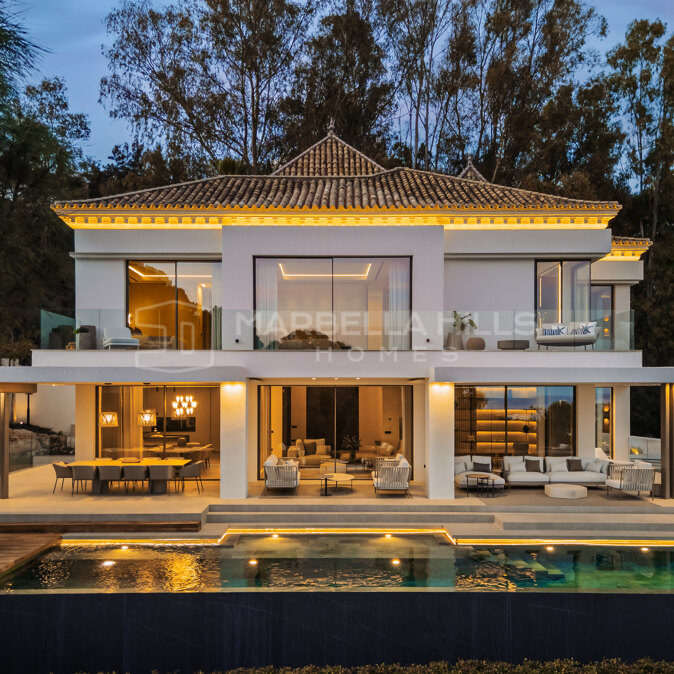
El Herrojo Property Guide, Benahavís: La Quinta at its Highest
Summary
El Herrojo in Benahavís offers a unique blend of privacy, stunning sea views, and proximity to Puerto Banús and golf courses. This luxury villa enclave provides an elevated lifestyle without sacrificing convenience, making it a sought-after address on the Costa del Sol.
Key Takeaways
- El Herrojo is a luxury villa enclave in La Quinta, Benahavís, known for privacy, sea views, and golf proximity.
- It offers a balance of seclusion and convenience, being ten minutes from Puerto Banús but a world away from its pace.
- Key features include elevation, south-facing orientation with panoramic Mediterranean views, and a reserved, quiet character.
The Costa del Sol has addresses that earn their reputation quietly and hold it for decades. El Herrojo is one of them. Perched in the upper part of La Quinta, in Benahavís, it's one of those places you drive up to for a specific reason: privacy, views and golf, ten minutes from Puerto Banús but a world away from its pace.
Buyers usually arrive at El Herrojo carrying a question they think they have to answer: hills or coast. Privacy or convenience. The big view or the short drive. They've been told, politely, that you can't have both on this part of the Costa del Sol, and most of them have half-accepted it by the time they reach me.
El Herrojo is the address that quietly refuses the question. You're ten minutes above Puerto Banús, on a frontline-golf hillside, with the Mediterranean opening all the way to Africa, and the school run, the marina and dinner in Benahavís village are all still within reach. This guide is about how that works, who it suits, and the things I wish my clients knew before their first visit up here. Some of what I say is opinion. I'll be clear about which parts.

What is El Herrojo
El Herrojo is a luxury villa enclave within La Quinta, in the municipality of Benahavís, at the heart of what's known as the Golf Valley. It isn't a single gated development by one builder, but a cluster of adjoining residential communities on the hills rising above the La Quinta golf course, with security, low density and an orientation towards the sea as their common denominators.
Two features define almost everything:
- The elevation and the orientation. El Herrojo sits on elevated, forested hills, mostly south-facing. From here the sea doesn't peek through, it stretches out. On clear days the view reaches the Rock of Gibraltar and the silhouette of the African coast. Behind you, the mountains, La Concha and the sierra of Benahavís, close off the landscape and shelter the area.
- The reserved character. It's an almost exclusively residential zone with a strong emphasis on quiet. There are barely any services inside the enclave; the Westin La Quinta Golf Resort & Spa and the club function as the social hub for the surrounding urbanisations. Whoever drives up to El Herrojo drives up because they live here.
The name has become, over the years, one of those addresses spoken about in a low voice. Not for marketing reasons, but because the people who live here tend not to talk too much about it.
There's a specific point on the climb up to El Herrojo Alto where the golf course drops out of the rear-view mirror and the sea fills the windscreen instead. That's the moment that sells the address, and it doesn't translate to a brochure. Height, quiet and an uninterrupted horizon, arriving all at once.

Where is El Herrojo
El Herrojo sits in La Quinta, Benahavís, on the natural border between Benahavís and Marbella, on the hills that overlook the Golf Valley. It's one of those areas where the municipality matters less than the elevation: what defines the place is the height, the south orientation and the way the terrain opens to the sea.
El Herrojo Alto is reached via the A-397 Ronda road, through the Monte Halcones urbanisation, or via Avenida Tomás Pascual, which runs through La Quinta. You need a car here. There's nothing else. Beyond the club and the La Quinta gourmet grocery, the day-to-day services are a drive away.
The drive times are the thing I always ask my clients to check themselves, twice, on different days. Roughly:
- Puerto Banús, about 10 minutes (around 7 km)
- San Pedro de Alcántara, about 10 minutes (around 5 km)
- Nueva Andalucía, about 8 to 10 minutes (around 5 km)
- Marbella centre, between 15 and 20 minutes
- Benahavís village, about 15 minutes
- Málaga airport, under an hour via the AP-7
- Gibraltar airport, around an hour to the west
The right distance, in short: close to everything, the port, the beaches, the international schools, the dining of Benahavís village, but without any of it interrupting the calm. It's proximity without the friction.

The history of La Quinta and El Herrojo
The upper part of La Quinta began to develop hand in hand with golf. The La Quinta Golf & Country Club course opened in the early 1990s, originally linked to the tennis player Manolo Santana, and gave identity to the whole valley. Around it grew the residential urbanisations we know today, and El Herrojo, and especially El Herrojo Alto, on the highest ground, established itself as one of the most sought-after addresses for villas.
What's interesting about El Herrojo's history is that its value never depended on a trend. It depended on geography. Plots with this elevation, this orientation and these views are finite, and that has sustained the area through the market's cycles. What has changed, and a great deal, is the architecture.
The first villas, built between the late nineties and the first decade of the 2000s, were mostly classic Andalusian: whitewashed walls, terracotta roofs, courtyards, closed volumes that protected themselves from the exterior. Many are still on the market, often thoroughly renovated inside while keeping the exterior character. The latest generation of villas, by contrast, has brought a different grammar: double-height ceilings, floor-to-ceiling glass, volumes that open onto the landscape rather than defend themselves from it. The plot was always exceptional. Now, at last, the architecture is a match for the setting.

The areas of El Herrojo
El Herrojo isn't divided into named sub-areas the way Nueva Andalucía is. The differences here are about elevation, orientation and degree of exclusivity. Three zones are worth knowing.
El Herrojo (lower part). Closer to the golf course and the access roads. Shorter drive times, more accessible terrain, and many frontline-golf villas. It's a zone that combines golf and practical day-to-day living particularly well.
El Herrojo Alto. The highest and most exclusive part. This is where the panoramic views open up fully, the Mediterranean, Gibraltar on clear days, the African coast on the clearest, over the La Quinta course and the natural landscape. The plots are larger, the architecture more ambitious, and it's the address most associated with El Herrojo's reputation today. It's a gated community with 24-hour security, access control and regular patrols.

The Hills. A more recent enclave, within El Herrojo Alto, with double 24-hour access control. It concentrates some of the most recent contemporary architecture in the area, on elevated plots with frontline sea views.
The right zone depends entirely on what you're looking for. I've sold in all three. The conversation about which one fits usually becomes clear by the second visit. I'll be honest: I can't tell over the phone. I can usually tell within fifteen minutes of meeting you on the ground.
Living in El Herrojo
The defining feature of daily life in El Herrojo is that the coast stays optional. You can be at the beach club in Puerto Banús in the time it takes a coffee to go cold, but nothing about living up here pushes you to go. The elevation does something to the day. Errands get batched. You stop making the third trip down for something you forgot. The marina is close enough to use on a whim and far enough that whims become rarer, which most owners find is exactly the filter they were missing.
What surprises people who move up from an apartment on the coast is how much the house absorbs the day. Villas here are built outward, the terrace becomes the living room for eight months of the year, the pool is where the afternoon goes, the kitchen opens to the view rather than to a corridor. The architecture assumes you'll spend your time at home, and the result is that home expands to meet it.
The microclimate is one of the area's underappreciated assets. The elevation keeps summer evenings cool enough to actually use a terrace in August, and the south orientation gives sun all year. Winters are mild. And yet you feel the seasons in a way that, down on the coastline, gets blurred, the February light is sharper, the autumn afternoons run longer, and the hillside greens up after the first rains in a way the seafront never does.

The community in El Herrojo
The thing to understand about El Herrojo's social life is that very little of it actually happens in El Herrojo. That isn't a criticism, it's the design. This is a private base, not a self-contained village, and the people who buy here tend to want exactly that: gated, quiet streets to come home to, and a full social world a few minutes down the hill rather than manufactured on the doorstep.
So the rhythm is outward-facing. The Westin La Quinta hotel and the golf club are where neighbours actually cross paths, over a round, a lunch, a drink after eighteen holes, and from there the social orbit widens easily into Nueva Andalucía and the marina, which is where most residents' dinners, tennis, gyms and friendships sit. You don't have to engineer a community up here, because you're never far from one. For a lot of buyers that's the relief: somewhere genuinely private to live without the obligation of a tight estate where everyone tracks everyone.
The ownership mix reflects that. It's heavily international, and it runs from full-time residents to owners who are here a few months a year and treat the villa as a connected bolt-hole rather than a retreat. Plenty of neighbours know each other through the club; plenty don't know each other at all, and nobody finds either strange. You set the dial. The point of El Herrojo, again, is that you don't have to choose between privacy and a social life. You keep the first behind your own gate and pick up the second whenever you feel like driving down for it.
The views from El Herrojo
A listing will give you "sea views" and move on. That's not laziness so much as the limits of the format, but it does the address a disservice, because the view here is not one thing.
The view changes depending on where you stand. El Herrojo isn't one view, it's three or four, and the plot you buy determines which one is yours. From the high ground, on a clear day, you see several landscapes at once: the Mediterranean to the south, with the coast of Marbella and Estepona below; the Rock of Gibraltar to the west; and, on the clearest days, usually after rain or in winter, the Rif mountains of Morocco across the Strait. Turning north, La Concha and the sierra of Benahavís.
Orientation matters more than altitude. It's the part buyers most often miss. Two plots at the same elevation, fifty metres apart, can have completely different views. South-facing plots open onto the sea. West-facing plots watch the sunset light up the entire coast, those are the plots where the November afternoons feel longer than they should.
The show is seasonal. People assume the south of Spain has "one view, all year". El Herrojo doesn't. In summer the haze softens everything; in winter the air is crisp and the views extend in a way that surprises even residents. And at night the view inverts: the lights of Marbella, Puerto Banús and the coast stretch out below in a continuous arc. I've had clients who bought for the day view tell me, two years on, that what they've ended up loving most is the night one.
A practical tip. When you visit a plot or a villa, don't just look from the main terrace. Walk to the corners of the plot. Look from the bedroom windows. The villas that age best here are the ones designed to capture the view from several angles, not just one big window in the living room.

Golf in El Herrojo: a course beneath you and a dozen within reach
Golf is the reason this area exists, so it's worth being precise.
El Herrojo sits literally above La Quinta Golf & Country Club, a 27-hole course integrated into the resort that gives the valley its name, with the five-star Westin La Quinta Golf Resort & Spa as its social hub. Many villas in the lower part of El Herrojo are frontline golf; those in El Herrojo Alto look down over it. For a meaningful share of international buyers, living a short walk from the course isn't a nice extra: it's the reason for the purchase.
And unlike more isolated areas, from El Herrojo you can play everything without long drives. Within a 15 to 20 minute radius you have Los Arqueros (a Seve Ballesteros design), Las Brisas, Aloha, Los Naranjos and Magna in Nueva Andalucía, El Paraíso and Atalaya towards Estepona, and the Villa Padierna courses a little further west. Few Costa del Sol addresses combine a course beneath your feet with a dozen more within easy reach. It's the golf version of the whole El Herrojo proposition: you don't have to choose between living on a course and living near everything else.

Schools and family life in El Herrojo
El Herrojo's real advantage for families is proximity: Aloha College is about ten minutes, Atalaya fifteen to twenty, and the British, IB, Scandinavian, French and American options across Marbella are all a reasonable weekday drive east, the full breakdown is in our guide to international schools in Marbella. On a hillside that matters, because the school run is what usually decides whether a family stays or sells; here it skips the half-hour descent that makes mornings miserable elsewhere in the hills. Do check it yourself at 8am, not on an empty August road. Add 24-hour security, no through traffic and big plots, and it's one of the safest places on the coast for children, hillside living without the hillside school run.
Restaurants and daily life in El Herrojo
The enclave itself has few services, but it's surrounded by them. Closest and most everyday is Nueva Andalucía, eight to ten minutes down, where the Aloha strip alone packs in more restaurants than anywhere nearby, La Sala, Vovem for steak, Breathe and dozens more, alongside the supermarkets, pharmacies and services most residents use on a weekly run. For a destination dinner, Benahavís village (about fifteen minutes) has a real claim to be the gastronomic capital of this stretch, Los Abanicos, El Cordobés, Asador Antonio and more contemporary tables, though it books up at weekends. And closer to home, the La Quinta club and the Anantara Villa Padierna Palace cover the casual end without a second thought.
The same connectedness covers the things that matter more than dinner. The private hospitals most international residents use, Quirónsalud Marbella and Hospital Costa del Sol, are around twenty-five minutes away via the AP-7, close enough that distance never becomes the deciding factor it can be from a remote estate, and many residents also subscribe to Helicópteros Sanitarios for home visits. We cover public versus private cover in full in our guide to healthcare in Marbella. Wellness, meanwhile, tends to live inside the house: most villas here build in a gym, spa, sauna or pool, the featured MH5839 below among them.
Security in El Herrojo
It's the question I get asked most, and I want to answer it properly. El Herrojo Alto is a gated community with 24-hour security, manned access control and regular patrols inside. The Hills adds a double access control. Every vehicle is logged; if you're not on the list, you don't get in.
There's no through traffic. The internal roads lead nowhere except to the villas themselves, so any car driving inside is a resident, a registered visitor or a registered service provider. It's a different security model from communities that sit on through-roads. Add to that the topography: large plots, steep gradients and dense perimeter vegetation make approaching a villa on foot from outside almost impossible.
Most villas add their own layer: perimeter alarms, sensors, cameras with remote monitoring and, often, a contract with a private security firm that responds within minutes. If you're buying an existing villa, it's one of the first things to check; if you're building, your architect integrates it from the start.
A practical tip: if security is one of your main reasons for looking at El Herrojo, visit at night. The community feels different after dark, the quiet streets, the deliberately low lighting, the more visible patrols, and the absence of through traffic becomes physically obvious. What you don't get here is the trade-off you'd expect: this level of privacy and control usually comes at the cost of being remote, and El Herrojo manages it ten minutes from the marina.

Properties in El Herrojo
El Herrojo's architectural identity has changed a great deal since the area first developed. The original villas, built between the late nineties and 2010, were predominantly classic Andalusian. Many are still on the market, often modernised inside while keeping the exterior character. The newer ones, particularly those built since 2018, represent a clear shift towards contemporary architecture: clean lines, large glazed openings designed around the view, flat roofs, natural stone and timber, integrated landscaping.
What's consistent across the whole range, old and new, is the relationship to the landscape. Every property I've shown in El Herrojo is oriented around something: the sea, the mountains, a particular view corridor. The elevation and the gradient demand it. You can't plant a villa in the middle of a plot here without wasting what makes it valuable.
The plots are generous, ranging from just over 1,000 m² in the more compact positions to considerably larger estates in El Herrojo Alto. Prices vary widely. Contemporary villas move today across a broad range, from around €5 to 9 million for the more contained sizes up to figures beyond €18 million on the largest plots and the most recent builds. Unrenovated classic villas, in less optimal positions, offer the most genuine value for buyers willing to take on a project.
As a market data point: the area has appreciated steadily, having risen around 11% in the year to early 2025 and roughly 12.5% in the year to early 2026 across the wider La Quinta district. It isn't a figure I'd use to push a purchase, but it does illustrate why the area is still seen as a solid store of value.

Property types in El Herrojo
Villas. By far the dominant category. Classic Andalusian or contemporary, the villa is the property type El Herrojo was built around. A substantial single-family home, private pool, large garden, focused on the relationship between building and landscape.

Apartments and penthouses in La Quinta. In the lower-elevation urbanisations, within the La Quinta resort, there are also quality apartments and penthouses, many with frontline golf and sea views. They're a more accessible entry point to the area for buyers who want the location without the scale and maintenance of a full villa.

Plots. Increasingly scarce. El Herrojo is largely built out, so most "building" here means buying an older villa to renovate or rebuild; genuine virgin plots for new build are now mostly found in The Hills or the upper part of La Quinta. For buyers who want full control over the design, they're worth chasing, but don't count on choice.
Building a villa in El Herrojo
Building here is one of the most rewarding projects on the coast, and one of the most demanding. I want to be honest about what's involved before you fall in love with a plot.
The timeline is real: from signing on a plot to the day you get the keys, count on 24 to 36 months. The project and the planning permission take the first six to nine; the build itself, eighteen to twenty-four. Anyone who tells you it can be done faster either doesn't know the process or isn't being straight with you.
Plot orientation matters more than buyers expect. Two plots on the same street can be completely different properties depending on which way they face. Before signing, walk the plot at different times of day, at least one morning visit and one late afternoon visit.
And the local team is half the project: architect, project manager, technical architect (aparejador), interior designer, landscape designer. The good ones know each other, know Benahavís town hall and know the local trades. Building remotely from northern Europe without a properly assembled local team is the most common reason projects run over time and over budget. I have views on which studios deliver and which struggle; I'll share them honestly if you ask.

The featured property: a villa that sums up the area
Few properties sum up El Herrojo's evolution as well as this contemporary villa for sale in El Herrojo, La Quinta (ref. MH5839).
Brand new and offered fully furnished, it sits on a 1,740 m² plot at the highest point of El Herrojo Alto, with 408 m² of terraces wrapping the house and panoramic views over the sea, Gibraltar and the surrounding mountains. It's defined by its position: elevated, private and completely open to the horizon, with the architecture turned outward so that interior and landscape read as one.

The main level. Clean contemporary lines and floor-to-ceiling glass open the living spaces to the view. A contemporary fireplace separates the lounge from the dining area and the designer kitchen, which extends to an outdoor cooking and dining terrace built for Mediterranean evenings. Two guest suites with en-suite bathrooms complete this floor.

The bedrooms. Eight in total, nine bathrooms. Upstairs, three en-suite bedrooms include an exceptional primary suite of over 70 m², with a dressing room, an elegant bathroom and a private panoramic terrace with a Jacuzzi set for the sunset. The lower level adds three more en-suite bedrooms, one with independent access and a kitchenette, ideal for guests or staff.

The lifestyle level. The lower floor, roughly 800 m², is given over to wellness and entertainment: a spa with indoor pool and Jacuzzi, a cinema room, a playroom, a fully equipped gym and multiple lounges, plus a home office and a garage for up to eight cars.

The exterior. Expansive terraces and landscaped gardens give a variety of places to spend the day, from quiet mornings over the sea to evenings entertaining at sunset, the elevated position deepening both the privacy and the views.

Reduced from €21,500,000 to €19,880,000, it sits at the upper end of El Herrojo, but within its logic, not outside it. It isn't simply another contemporary villa in Benahavís: it's a property defined by position, perspective and the way architecture responds to landscape.
A few personal takes on El Herrojo
The honest pros and cons, the ones I'd give over dinner rather than in a listing.
If you want golf beneath your feet and sea views without giving up being close to the port and the schools, few addresses combine it as well.
If your priority is absolute isolation and the feeling of being deep in the mountains, Monte Mayor or La Zagaleta might fit better; El Herrojo is more connected, and that's precisely its strength.
If you have school-age children, El Herrojo is one of the few hillside areas where the daily school run doesn't define your day.
If what you want is to walk down for a coffee, this isn't your address.
Where to buy in El Herrojo
The choice between zones depends more on lifestyle than on budget.
The lower part of El Herrojo, by the golf, offers the shortest drive times and the frontline-golf villas. Practical for buyers heading to the port or the coast several times a week.
El Herrojo Alto is the heart of the area's contemporary identity: the best views, the largest plots and the most ambitious architecture. It's where most of the recent new builds have happened.
The Hills, within El Herrojo Alto, is the option for buyers looking for the most recent product, with double security and elevated frontline-view plots.
The right choice usually becomes clear only when you walk each zone in person. The brochures don't distinguish meaningfully between them. Ten minutes on each set of streets makes the difference obvious.
The cost of owning in El Herrojo
Buyers rarely get a straight answer on running costs, so here are working figures, with the honest caveat that every villa is different.
The structural costs in Benahavís are the pleasant surprise, notably lower than Marbella centre or the Golden Mile. IBI (property tax) on a villa of this size typically runs into a few thousand euros a year, refuse collection is a token amount, and community fees for a single-family villa, covering the 24-hour security, the roads and communal areas, typically run €3,000 to €5,000 depending on the urbanisation.
The operational side is where the real money goes, and it scales with how you live: gardening, pool, cleaning, utilities and insurance for a villa of this size realistically add up to somewhere in the region of €25,000 to €45,000 a year combined for full-time use, less for a part-year home. And if you're not fiscally resident in Spain, non-resident tax (IRNR) applies even if you never rent the villa out; a tax adviser handles it for a few hundred euros a year.
The short version: El Herrojo isn't cheap to run, but the fixed costs are gentler than its peer addresses, and the rest is a function of how you want to live.
What buyers in El Herrojo most often get wrong
A few patterns come up consistently in conversations with buyers who've already done their first visit.
They treat "El Herrojo" as a single address. The name covers three quite different things, the lower frontline-golf streets, the elevated El Herrojo Alto, and the newer double-gated The Hills, and they don't share a price, a security level or a character. A figure that sounds steep for one pocket can be fair for another. Work out which one you're actually buying into before you anchor on a number.
They assume frontline golf always beats elevated. Often it doesn't, here. A frontline plot puts you level with the fairway, with the play, the foot traffic and the occasional stray ball that come with it. The elevated plots in El Herrojo Alto trade the immediacy of the course for the panorama and the privacy, and over time they've tended to hold both their value and their view better, often carrying a meaningful price-per-m² premium over frontline land for exactly that reason. Frontline is a preference, not automatically a premium.
They buy the view without checking it's protected. This is the one that costs people. A south-facing terrace with an open horizon is only permanently open if nothing can rise on the plot below it. Before you fall for a view, find out what the parcel in front is zoned for and how high it can build. On a stepped hillside, one neighbour's new roofline is another neighbour's lost sea view, and that risk is very specific to where you sit on the slope.
They assume every gated pocket offers the same security and the same fees. El Herrojo is a cluster of communities, not one estate under a single administration. The level of access control, the patrol arrangement and the community fees genuinely differ from one urbanisation to the next, The Hills runs a double gate; some of the lower streets are gated more lightly. Ask exactly what you're paying for, and what's actually manned, before you assume.

Rentals and investment in El Herrojo
If you're buying partly as an investment, the El Herrojo case is specific. Short-term and seasonal rentals let well for villas with a pool, a view and contemporary finishes, and the shoulder seasons have lengthened as remote work has spread bookings beyond high summer. Long-term lets are thinner but premium, the tenant pool at this level is small by definition. As a store of value the logic is simple: supply is capped by geography, international demand is steady, and prices have appreciated consistently. It isn't a high-yield play given the running costs, but in one of Europe's most resilient luxury markets it has held up well.
The El Herrojo property market
El Herrojo is a small, quickly appreciating market that has lately turned fussy about price. It sits inside the wider La Quinta district, where average asking prices reached around €6,081 per square metre in early 2026, up roughly 12.5% over the year and ahead of the €5,458 figure for Benahavís as a whole. Growth has run in the double digits and only recently eased off its winter peak. Those are asking figures for the district rather than closed sales in El Herrojo alone, but the direction is not in doubt, and on the ground the trend reads the same way.
What that figure doesn't capture is the spread at the top, where El Herrojo actually trades. Contemporary villas now dominate, asking from roughly €5m to €9m, with the occasional trophy estate beyond €18m. The handful of older Andalusian villas sit far below the contemporary range, the most affordable well under half the price of a new build of similar size. The gap between contemporary and classic has stopped being a matter of taste and become a matter of price. The classics now sell either fully reworked or at a discount honest enough to fund the rework.
The part no portal will show you is how those asking prices behave after listing. Right now a clear share of the available villas carry reductions: one cut from €7.4m to €7.0m, another from €6.25m to €5.95m, an elevated villa in El Herrojo Alto from €6.5m to €5.2m, a fifth off. The growth is real, but at this end it rewards the sensibly priced and punishes the hopeful. A villa judged right is gone before it properly surfaces, often before it reaches a portal at all, while the one priced too high sits, ages on the books, and trades for less than it ever asked.
This is what makes the place quietly decisive once buyers see it. Almost nobody walks onto a terrace facing south here at six in the evening and leaves unconvinced. The doubt comes earlier, at the kitchen table, over the idea of living above the coast rather than on it. The market reflects exactly that: thin supply, strong appreciation, and no patience for ambition. The buyer who could afford anywhere keeps choosing El Herrojo, and pays for it accurately.

Reselling in El Herrojo
The question that decides an El Herrojo resale is one most sellers never think to ask until a buyer's lawyer asks it for them: can anything be built on the land below you? A south-facing plot whose outlook is secured by planning rather than by luck is a scarcer asset than one that merely enjoys a view today, and at this level buyers and their advisers check it early. Before you list, establish the actual planning status of the plots beneath and around you. If the answer is good, it is the strongest single thing you can put in front of a buyer; if it is not, you want to know before they do.
After that, what holds value is whether the house was built for its plot rather than dropped onto it, designed around the orientation and the view. This is where the contemporary and classic divide returns on resale. A well conceived modern villa tends to find its buyer quickly, sometimes before it reaches a portal, while an unrenovated classic moves more slowly, held back less by the house than by the narrower pool of buyers willing to absorb today's renovation costs.
The selling costs are routine, but two of them are widely misunderstood and worth getting right. Capital gains tax falls on your profit, and if you are not tax resident in Spain the buyer withholds 3% of the price at completion and pays it straight to the tax authority as an advance against that bill, which you reclaim if it overshoots. Plusvalía municipal, the tax on the land's rise in value, is the one most blogs still describe wrongly: since the 2021 reform there are two ways to calculate it and you may choose whichever is cheaper, and if the land has not actually risen in value, nothing is due at all. Because an unpaid non-resident plusvalía can be pursued from the buyer, it is normally settled at the notary too. None of it is exotic, but the net varies enough that a tax adviser should run it before you sign, not after.
Frequently asked questions about El Herrojo
Is El Herrojo a good area for families?
Yes, and it's one of its advantages over other hillside areas. The international schools (Aloha College, Atalaya, among others) are ten to twenty minutes away, and the setting, 24-hour security, no through traffic, generous plots, is among the safest on the coast for children.
How far is El Herrojo from Málaga airport?
Under an hour to the east via the AP-7, depending on traffic. Gibraltar airport is around an hour to the west and is a valid second option.
Which is the best area within El Herrojo to buy in?
It depends on what you prioritise. The lower part for the shortest drive times and frontline golf; El Herrojo Alto for the panoramic views and contemporary architecture; The Hills for the most recent product with double security.
Is El Herrojo safe?
Exceptionally. El Herrojo Alto is a gated community with 24-hour security, access control and patrols, and The Hills adds a double control. The absence of through traffic and the topography make casual intrusion very difficult.
Is El Herrojo close to golf?
It sits literally above the La Quinta Golf & Country Club course, with frontline villas, and is fifteen to twenty minutes from a dozen more courses.
Can I still buy a plot and build in El Herrojo?
Few are left. El Herrojo is largely built out and virgin land is scarce; the more common route is buying an older villa to renovate or rebuild. For new build on a plot, the options tend to be in The Hills or the upper part of La Quinta. Either way, budget 24 to 36 months from purchase to keys.
Is El Herrojo right for you, or is it really somewhere else?
Most buyers who reach El Herrojo are quietly choosing between four or five addresses. Here's the honest version of who should pick it, and who shouldn't.
El Herrojo over Nueva Andalucía? Choose Nueva Andalucía if you want to be in the thick of the Golf Valley, walkable, social, full of restaurants and amenities, with apartments and townhouses at a wider range of prices. Choose El Herrojo if you want elevation, privacy and the open sea view, and you're happy to drive the eight minutes down for the buzz rather than live in it.
El Herrojo over La Zagaleta? La Zagaleta is the play for ultimate prestige, vast plots, and a degree of seclusion and security theatre that nothing else on the coast matches, at the budget that implies. El Herrojo suits the buyer who wants genuine privacy and a serious gated address but actually intends to use the marina, the beach and the schools on a daily basis, rather than retreat from them. If you'd resent the drive out of Zagaleta every time you wanted dinner, El Herrojo is probably your answer.
El Herrojo over Sierra Blanca? Sierra Blanca wins on proximity to Marbella town and the La Concha backdrop, and it's the more established "Marbella" prestige address. El Herrojo wins on golf-front living, larger and more affordable plots for the space, more contemporary new-build stock, and a quieter, more private feel.
El Herrojo over Monte Mayor? This is the most revealing comparison. Monte Mayor is for buyers who genuinely want to be removed, deep in nature, twenty-five minutes from everything, and who treat that distance as the point. A meaningful share of El Herrojo buyers are people who looked at Monte Mayor first, loved the idea, and then did the school run and the dinner-reservation maths. El Herrojo is what they buy instead: most of the hillside privacy, almost none of the remove.
If, after all that, what you actually want is to walk out of your front door onto a flat coastal street and into a beach club, none of these is for you, and that's worth knowing before you spend a Saturday driving up here.

Final thoughts on El Herrojo
Strip everything else away and El Herrojo comes down to one thing: it's the address that doesn't make you choose. The height, the view and the privacy of the hills, with golf beneath your feet and the port, the beaches and the schools ten minutes down. Everywhere else on this coast asks for a trade, the view for the commute, the privacy for the isolation. Here you keep both, and the only real decision left is where on the hill you want to be.
That's why the buyers who end up here rarely arrive set on it. They come braced for a compromise, and leave having found the one place that doesn't ask for one. Not the most spectacular address on the coast, just the one that asks them to give up the least.
Discover El Herrojo
If you're seriously considering El Herrojo, the best place to start is a conversation.
The thread running through this whole guide is that El Herrojo doesn't ask you to choose between the hills and the coast. But getting that trade-off right in practice comes down to specifics: which pocket actually fits how you'll live, whether the view in front of you is protected or merely current, what the gate and the fees really cover, and whether frontline or elevated is right for you rather than just cheaper or dearer.
That's the conversation worth having. At Marbella Hills Homes we work this corner of La Quinta closely, across the lower streets, El Herrojo Alto and The Hills, and the most useful thing we can do early is help you separate what's permanent about a property from what just happens to be true today.
Get in touch and tell us what you're trying to balance, the school run, the golf, the view, the privacy, the budget, and we'll tell you honestly where in El Herrojo that balance lives, and whether it lives here at all.
Villas and plots for sale in El Herrojo
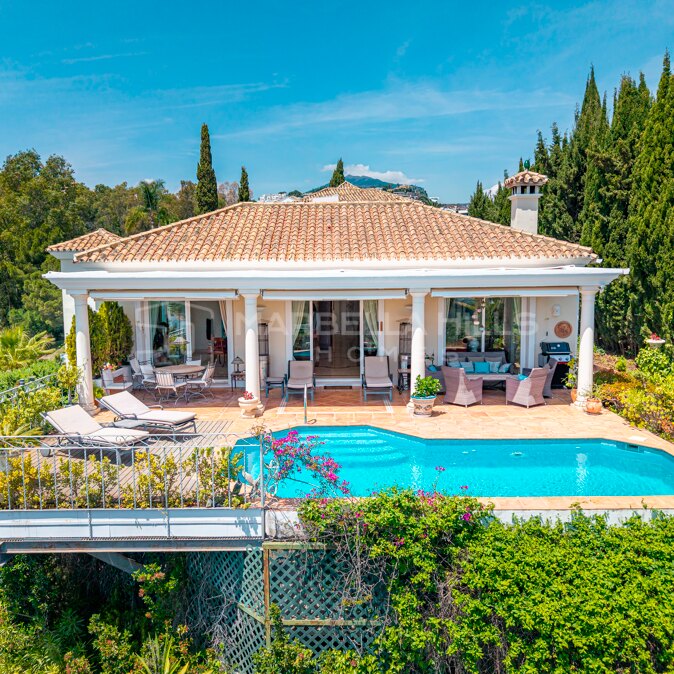
Classic Andalusian Villa for Sale in El Herrojo Alto, Benahavís
El Herrojo, Benahavis €3,495,000Set within the prestigious gated community of El Herrojo Alto in Benahavís, Casa Geco is a classic Andalusian villa offering…
- View Property
Contemporary Villa for Sale in El Herrojo, Benahavís
El Herrojo, Benahavis €7,450,000This five bedroom villa for sale in El Herrojo combines the established residential setting of La Quinta with a comprehensive…
- View Property
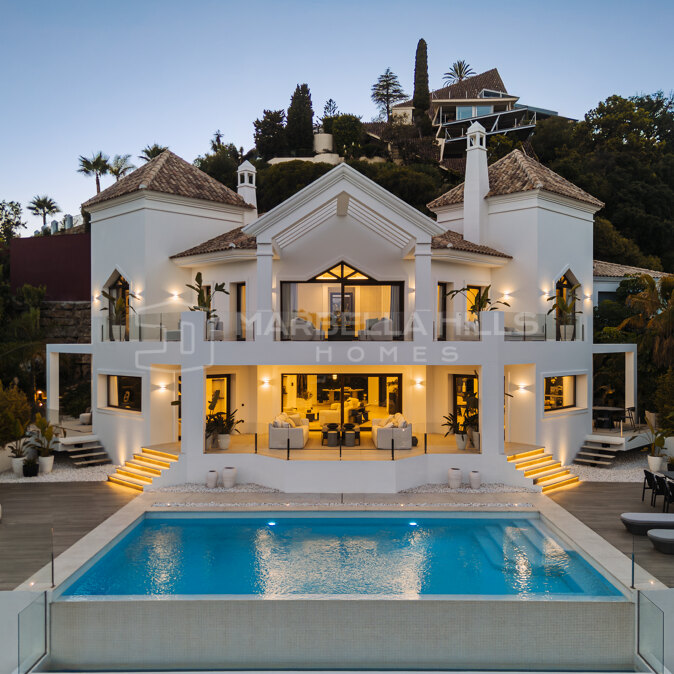
Contemporary Luxury Villa with Panoramic Sea Views for Sale in The Hills - El Herrojo, Benahavís
The Hills, Benahavis €10,495,000Set within the prestigious gated community of The Hills in El Herrojo, Benahavís, Villa Mare is a striking contemporary residence…
- View Property
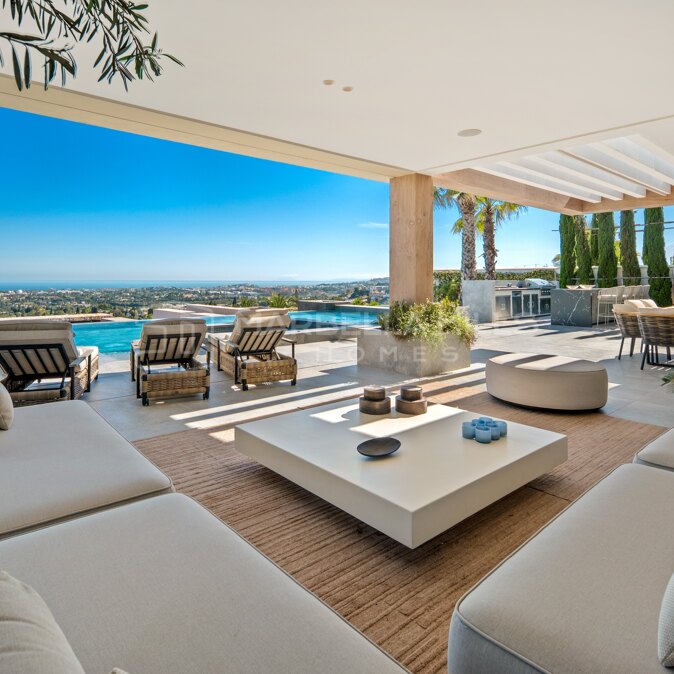
Contemporary Luxury Villa for Sale in The Hills, La Quinta, Benahavís with Panoramic Sea Views
The Hills, Benahavis €9,950,000Perched within the prestigious gated community of The Hills in La Quinta, Benahavís, this extraordinary contemporary villa redefines modern luxury…
- View Property
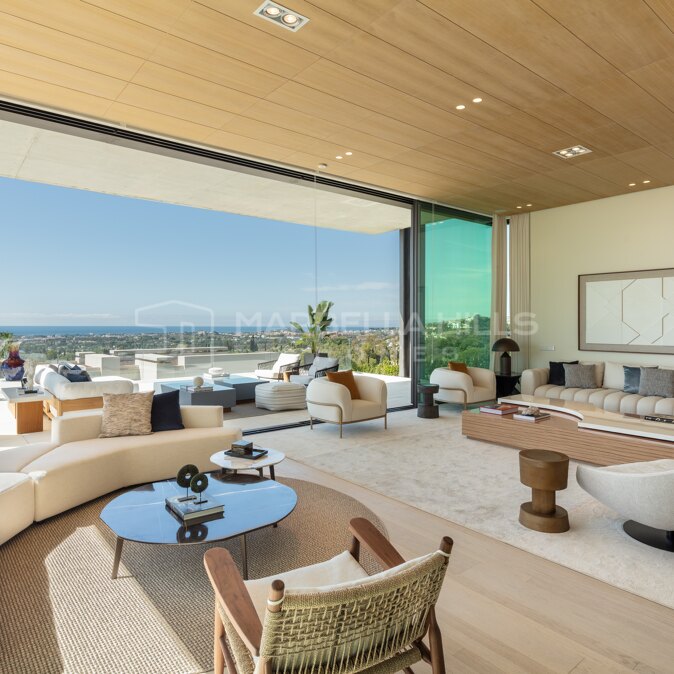
Luxury Golf-Front Villa for Sale in El Herrojo, Benahavís with Mountain Views, Spa and Entertainment Level
El Herrojo, Benahavis €2,850,000Set within the prestigious gated community of El Herrojo in Benahavís, this impressive luxury villa combines timeless elegance, exceptional privacy…
- View Property
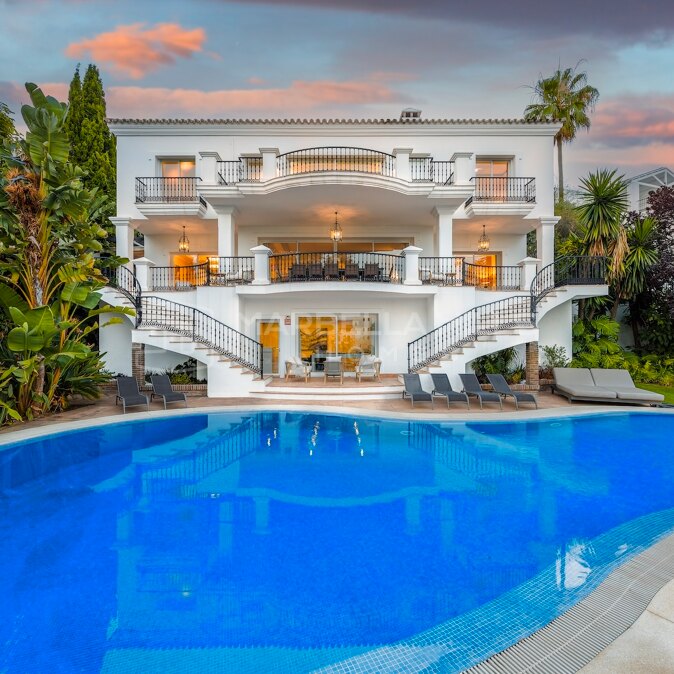
Casa Calma | 6-Bed Luxury Villa for Sale, El Herrojo Benahavís
El Herrojo, Benahavis €7,470,000Casa Calma is a six-bedroom luxury villa for sale in El Herrojo, one of the most private and sought-after addresses…
- View Property
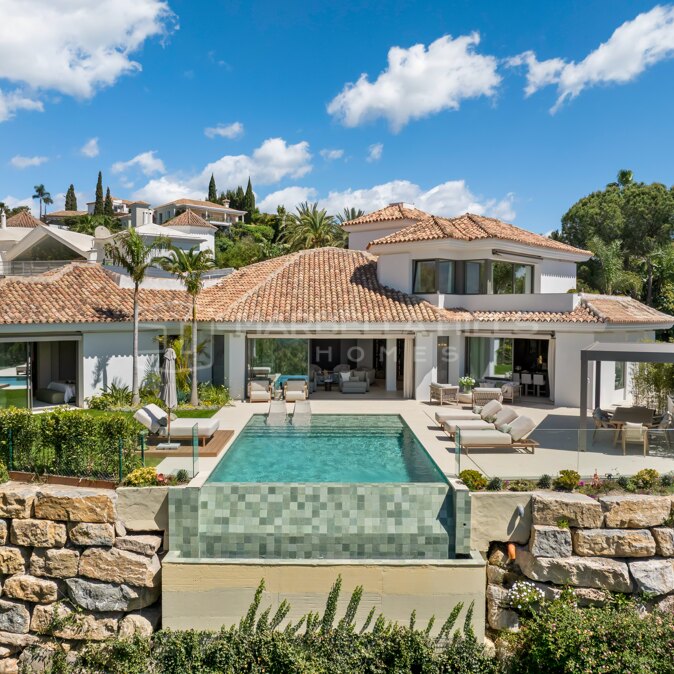
Contemporary Luxury Villa for Sale in El Herrojo, Benahavís – Panoramic Sea Views and Iconic Modern Architecture in La Quinta
El Herrojo, Benahavis €6,900,000Located in the exclusive gated community of El Herrojo in La Quinta, Benahavís, Villa Mika is an extraordinary contemporary luxury…
- View Property
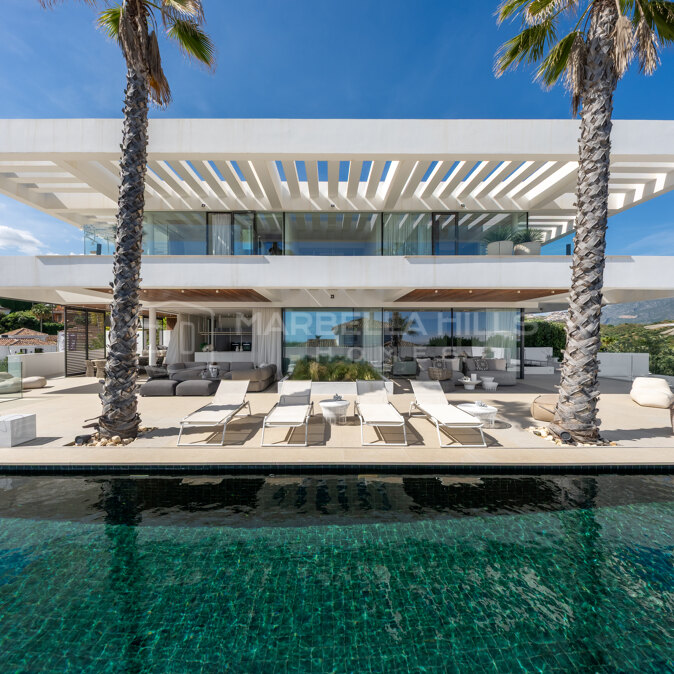
Luxury frontline-golf villa with sea views for sale in La Quinta, Benahavis
El Herrojo, Benahavis Reduced from €7,395,000€6,995,000This exceptional contemporary villa for sale in La Quinta, Benahavís, enjoys a privileged frontline golf position with open views over…
- View Property