Cortijo Blanco, San Pedro de Alcántara: a buyer’s guide to the beachside that reinvented itself
Summary
Cortijo Blanco offers rare flat beachside land in San Pedro de Alcántara, ideal for walking to the beach and town. This buyer’s guide covers properties, location, and what to check before committing to this reinvented area.
Key Takeaways
- Cortijo Blanco is a flat, beachside residential area in San Pedro de Alcántara, known for its walkability to the beach and town center.
- Properties range from original 1960s/70s villas to contemporary homes, townhouses, and apartments, with significant rebuilding occurring.
- Key considerations include flood risk, the absence of a gated community structure, and the need for due diligence on plots, planning permissions, and rebuild costs.
Most of Marbella’s best-known residential addresses sit on the hillsides and depend on the car. Cortijo Blanco offers something quite different. Turn off the coast road at the eastern edge of San Pedro de Alcántara and the landscape quickly changes. The streets become flatter, the plots more generous, and within a few hundred metres you can be walking towards the beach past whitewashed walls and mature gardens that have shaped the character of the neighbourhood for decades.
That simple combination is the essence of Cortijo Blanco, and it is becoming increasingly difficult to find along this part of the Costa del Sol. Flat residential land within walking distance of the sea has been largely developed for decades. What remains is either closely held or being redeveloped, and Cortijo Blanco is currently experiencing a noticeable transition as older villas and plots make way for a new generation of contemporary homes.
This guide is for anyone considering buying a property in Cortijo Blanco, or comparing the area with Guadalmina, Nueva Alcántara or the established beachside communities further east towards Marbella.
We look at how Cortijo Blanco developed, the different types of villas and plots available, what living close to the beach is actually like, schools and everyday amenities, current property prices, ownership costs and the practical checks worth making before committing to a purchase.
And if, by the end, you decide Cortijo Blanco is not quite the right fit, that is useful information too. The point is not simply to find a property for sale, but to understand whether the location and the way of life that comes with it are right for you.

What is Cortijo Blanco?
Cortijo Blanco is an established beachside residential area at the eastern end of San Pedro de Alcántara, within the municipality of Marbella. It extends from the coast road towards the sea, with Guadalmina to the west, San Pedro’s beach and promenade along the coast, and Nueva Alcántara and the approach to Puerto Banús to the east.
Three characteristics explain much of its appeal.
The first is the terrain. Unlike many of Marbella’s best-known residential areas, Cortijo Blanco is predominantly flat. Villas sit naturally on level plots, gardens can extend uninterrupted around the houses, and pools and terraces are not dictated by a steep hillside. It also makes genuine single-level living possible, something that can become increasingly important for buyers thinking about how a property will work not just today, but ten or twenty years from now.
The second is walkability. The beach is somewhere you can walk to rather than drive to, with the promenade at the end of the neighbourhood. From much of Cortijo Blanco, San Pedro’s boulevard, town centre, restaurants and everyday amenities can also be reached on foot. On a coastline where many prime residential areas remain heavily car-dependent, that makes a noticeable difference to daily life.
The third is the way the neighbourhood itself is organised. Cortijo Blanco is not one large gated development. It is an established residential quarter made up primarily of individual villas on private plots along quiet streets, alongside some smaller gated enclaves and apartment communities. There is no single entrance, barrier or 24-hour security point controlling access to the entire area.
That distinction is worth understanding. Buyers familiar with Marbella’s hillside communities sometimes assume that a prime address will automatically mean a gated estate. Cortijo Blanco offers a different proposition: a low-rise, established beachside neighbourhood where the attraction comes from privacy within individual properties, mature surroundings, flat terrain and the ability to walk to the sea.

The location of Cortijo Blanco: beachside living between San Pedro and Puerto Banús
Cortijo Blanco sits on the beachside of San Pedro de Alcántara, roughly between the town centre and Puerto Banús, with the Mediterranean immediately to the south and the main coast road behind it. That position is one of the neighbourhood’s strongest practical advantages: you are close to two very different centres of daily life without having to live in either of them.
Approximate journey times are useful as a guide, although they are worth testing at the times you would normally travel, particularly during the summer months when traffic along the coast can be considerably heavier:
- The beach and promenade: within walking distance
- San Pedro town centre and boulevard: around 5 minutes by car, and walkable from much of Cortijo Blanco
- Puerto Banús: around 5 to 10 minutes
- Marbella Old Town and the Alameda: around 15 minutes
- Guadalmina Golf and the Nueva Andalucía Golf Valley: around 5 to 10 minutes
- La Cañada Shopping Centre: around 15 minutes
- Málaga Airport: approximately 45 to 55 minutes via the AP-7
The trade-off is almost the reverse of buying on Marbella’s hillsides. In Cortijo Blanco, you give up elevation, panoramic sea views and the greater sense of separation associated with areas such as Sierra Blanca or Cascada de Camoján.
What you gain is something quite different: flat terrain, the ability to walk to the beach and promenade, easy access to a functioning Spanish town, and a location that remains only minutes from Puerto Banús. For buyers comparing it with the Golden Mile, Cortijo Blanco can also offer considerably more property for the same budget, particularly when plot size and proximity to the beach are part of the equation.

Cortijo Blanco occupies the flat beachside quarter at the eastern end of San Pedro de Alcántara, with Guadalmina to the west, Nueva Alcántara and the mouth of the Guadaiza to the east, and the beach and promenade at the end of the street. Schematic map, not to scale.
The history of Cortijo Blanco: a hotel and the neighbourhood that grew around it
Cortijo Blanco takes its name from the Hotel Cortijo Blanco, which opened in 1961, during the early years of Marbella’s transformation from a small coastal town into an international resort destination. The residential neighbourhood developed around it, and over time the area stretching from the hotel towards the beach became known by the same name.
That history helps explain much of the property stock buyers see in Cortijo Blanco today. Many of the original villas were built during the 1960s and 1970s, when land close to the coast was more readily available and houses could be positioned on generous, flat plots. The architecture reflected the Andalusian style of the period: whitewashed façades, tiled roofs, arches, courtyards and gardens designed as an integral part of the home.
A significant number of these older villas remain. Some have been carefully renovated while retaining their original character, others are largely unchanged, and an increasing number are being demolished or comprehensively redeveloped to create contemporary villas. This mixture of original houses, renovated properties and new construction is one of the defining features of the current Cortijo Blanco property market.
The other important legacy is less obvious on a property specification sheet: the landscaping. Six decades of established gardens have created mature trees, substantial hedging and a depth of greenery that newly built residential areas simply cannot reproduce immediately.
It is a similar quality to the one that gives some of the older beachfront communities along the New Golden Mile their particular character. In Cortijo Blanco, mature planting does more than make the streets attractive. It provides privacy between properties, softens the architecture and gives the neighbourhood the settled feel of somewhere that has evolved over generations rather than being created as a single development.

The properties and architecture of Cortijo Blanco
Cortijo Blanco offers a broader mix of property types than many of Marbella’s established residential addresses. That variety is part of its appeal, but it also explains why price comparisons based on the neighbourhood alone can be misleading.
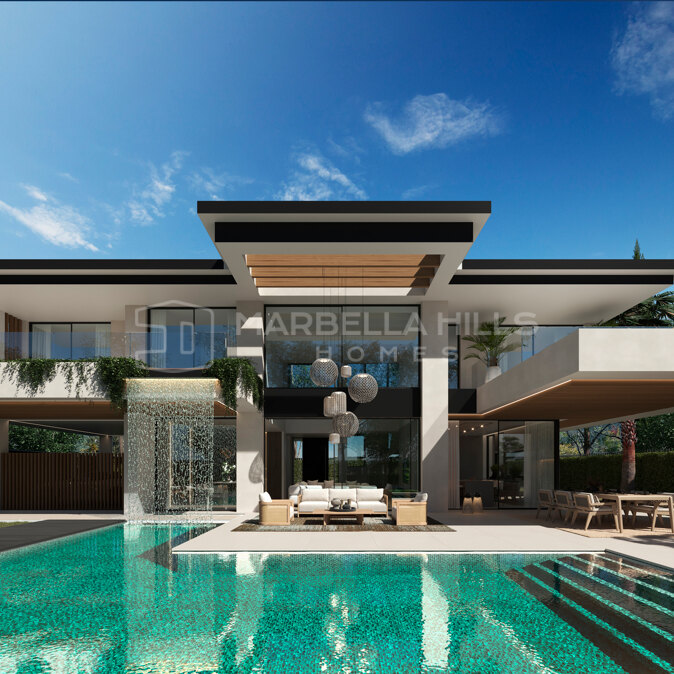
Detached villas form the core of the area and are the main reason many buyers focus their search here. The plots are generally generous and, importantly, flat. The housing stock ranges from original villas dating from the 1960s and 1970s, some beautifully maintained and others requiring comprehensive renovation, to contemporary homes built in recent years with open-plan interiors, floor-to-ceiling glazing, substantial basements and modern pool areas. A number of new villa projects have also been completed or are currently under construction, reflecting the gradual transformation of the neighbourhood.
Townhouses and semi-detached houses can be found within some of Cortijo Blanco’s smaller gated enclaves. They offer a considerably lower entry point than a detached villa while retaining the principal advantage of the location: proximity to the beach, San Pedro and Puerto Banús.
Apartments are available both within Cortijo Blanco itself and in the neighbouring beachside developments between the boulevard and the sea. The choice ranges from established Andalusian-style communities with mature communal gardens and swimming pools to more recent contemporary developments. For buyers who want the location without the budget or maintenance associated with a private villa, apartments provide a more accessible route into the area.
The architectural divide is one of the most important things to understand before beginning a property search in Cortijo Blanco. An original Andalusian villa on a well-positioned flat plot and a newly built contemporary home two streets away may share the same postcode and neighbourhood, but they represent very different purchases.
The acquisition price is only part of that distinction. Renovation requirements, energy efficiency, maintenance, landscaping, construction quality and the potential for future works can all differ substantially. Deciding whether you want original character, a renovation project or a turnkey contemporary villa before you start viewing will make the search considerably more focused.

The streets and micro-locations of Cortijo Blanco
Cortijo Blanco is compact enough to cross on foot, yet varied enough that two properties only a few hundred metres apart can represent very different purchases. Position within the neighbourhood matters here just as much as elevation and orientation do in Marbella’s hillside communities, and it is one of the things property portals rarely communicate well.
Calle Pablo Ruiz Picasso is one of the main reference points. It runs through the area and broadly separates Cortijo Blanco from Las Petunias to the east. Saint George’s School is located along this axis. Properties here are centrally positioned and convenient, although it is worth remembering that a through road will generally carry more movement than the smaller residential streets branching away from it.
The beach end commands the premium. As you move closer to the promenade and Playa de Cortijo Blanco, values generally increase. The distinction is practical rather than simply something that looks good on a listing: there is a noticeable difference in everyday life between being four hundred metres from the beach and twice that distance away. When a property here is genuinely described as second line to the beach, it can mean exactly that.
The coast-road end involves a different compromise. Properties towards the northern edge sit closer to the A-7, and the amount of traffic noise can vary significantly from one street and even one property to another. Boundary walls, mature planting, neighbouring buildings and the orientation of the house can all make a difference. This is something worth checking early in the morning and again in the evening rather than judging from a single midday viewing.
The named communities within and around Cortijo Blanco are worth understanding. Las Petunias and Las Petunias del Mar, Castiglione and Linda Vista Playa are all names you will encounter in listings in or immediately around this beachside area. Each has its own character, age, layout and community structure. More recently, smaller gated developments of contemporary villas have added another layer to the local property market. Before comparing two homes, establish exactly which community, if any, each property belongs to and what that means for community fees, regulations, security and access.
Individual streets matter too. Calle Vázquez Díaz is among the residential streets buyers are likely to encounter when searching the area, alongside the roads and avenues leading towards the beachfront. When viewing a property, look beyond the villa itself. What sits beside it, behind it and across the street can be just as important as the architecture, plot or interior specification.
There is also a practical issue with online searches. Property portals frequently group Linda Vista, Nueva Alcántara and Cortijo Blanco together, creating a search area considerably larger and more varied than Cortijo Blanco itself. A villa advertised under a combined location label may therefore be further from the beach, San Pedro or the part of Cortijo Blanco you have in mind than the listing initially suggests.
For serious comparisons, rely on the actual location of the property rather than the neighbourhood name used in the advertisement. In Cortijo Blanco, a few hundred metres can make a meaningful difference.

The beach and promenade at Cortijo Blanco
Playa de Cortijo Blanco occupies the eastern end of the long San Pedro beachfront, forming a small headland in front of the residential area. The beach itself is a mixture of sand and gravel rather than the finer sand found on some stretches of the Marbella coastline, something worth knowing if direct beach access is an important part of the purchase.
What makes the location particularly attractive, however, is not simply the beach in front of the neighbourhood but the continuity of the coastline. From Cortijo Blanco, you can join the promenade and walk west along San Pedro’s beachfront towards Guadalmina or head east in the direction of Puerto Banús. It is not merely a summer amenity. The promenade is used throughout the year for walking, running, cycling and simply getting around without taking the car.
That changes the way the location works on a daily basis. A morning walk along the sea, lunch on the beachfront or an evening stroll towards San Pedro can become part of the routine rather than something that requires planning and parking.
There is no large dedicated beach car park specifically serving Cortijo Blanco, although street parking is available in parts of the area and larger parking areas can be found around the main San Pedro beachfront. For an owner living here, this is unlikely to matter much because the beach is reached on foot. For anyone considering summer rentals, however, parking arrangements for guests are worth checking.
Ventura del Mar is also nearby and includes one of the designated dog-friendly beach areas on this stretch of the coast. For buyers who regularly walk their dogs by the sea, that can be a surprisingly important advantage of the location.

Living in Cortijo Blanco
The daily reality of living in Cortijo Blanco
This is where Cortijo Blanco differs most from many of the Marbella addresses it is usually compared with. Daily life here can happen on foot in a way that is difficult to replicate in the hillside communities. The beach and promenade are close by, as are beachfront restaurants and chiringuitos, while from much of the neighbourhood the shops, cafés, pharmacies, banks and restaurants of San Pedro are also within walking distance.
San Pedro de Alcántara is an important part of that appeal. It is a genuine year-round Spanish town rather than a seasonal resort, with its traditional centre, church square, local market, independent businesses and restaurants that remain part of everyday life throughout the winter. Our guide to living in Marbella looks in more detail at what year-round life on this part of the Costa del Sol is actually like.
The creation of the San Pedro boulevard above the tunnelled section of the A-7 changed the relationship between the town and the beach considerably. What had previously been a major physical divide became a large landscaped public space, making it easier and more pleasant to move between the centre of San Pedro and its beachside neighbourhoods.
For Cortijo Blanco residents, that matters. You can live in a quiet villa neighbourhood close to the sea while still having a functioning town on your doorstep and Puerto Banús only a few minutes away. It is this combination of residential calm, beach access and everyday convenience that increasingly distinguishes Cortijo Blanco from more isolated parts of the Marbella market.
Eating out and the chiringuitos
One of the genuine pleasures of living in Cortijo Blanco is having a good choice of beach restaurants and chiringuitos within walking distance. These are not simply places for summer visitors. During the warmer months, they become part of everyday life for residents, whether for lunch by the sea, an afternoon drink or dinner after a walk along the promenade.
Kala Kalua sits towards the Cortijo Blanco end of the San Pedro promenade and is known for the kind of straightforward Mediterranean and Andalusian cooking that suits the setting: grilled fish, seafood and meat. Continue along the beachfront towards Linda Vista and the main San Pedro beach and there is a succession of other places to eat and drink, including Guayaba Beach, El Abrevadero, Hawai Kai, Macaao Beach Club and La Pesquera, alongside smaller chiringuitos dotted along the promenade.
The practical point to understand is seasonality. Some beachfront restaurants operate primarily during the warmer months, while others reduce their opening days or hours outside the main season. The promenade in February is inevitably a very different place from the same stretch in August.
What makes Cortijo Blanco work particularly well year-round is San Pedro itself. The town is close enough to walk to from much of the neighbourhood, and its restaurants, tapas bars and cafés serve a permanent local population rather than relying entirely on tourism. That gives you an appealing combination: seasonal beachfront life when you want it and a functioning town with places to eat throughout the year.
It is a distinction that matters if this is going to be a home rather than somewhere you use only in July and August. We cover the wider restaurant scene, including different areas of Marbella and what works outside the main season, in our guide to eating out in Marbella.
Schools and family life in Cortijo Blanco
Cortijo Blanco works particularly well for families, and access to schools is one of the reasons. Saint George’s School, a bilingual school for younger children, is located within the Cortijo Blanco area itself. Laude San Pedro International College is nearby in Nueva Alcántara, while Colegio San José has a campus in Guadalmina. The international schools of Nueva Andalucía are also only a short drive to the east.
That concentration of schools gives families access to a broad choice of educational options within a relatively small radius, with some close enough to reach on foot depending on where you live in the neighbourhood. This is unusual in Marbella, where choosing a school can have a significant impact on where it makes practical sense to buy.
Our guide to international schools in Marbella covers curricula, fees, admissions and waiting lists in more detail, while our Marbella healthcare guide explains the public and private healthcare options available to international residents.
As with any area, however, a ten-minute journey on a quiet afternoon may look very different during the morning school run. If a particular school is important to your decision, drive the route at around 8:30 on a weekday before committing to a property.
The flat terrain also has a more everyday advantage that is easy to underestimate. Children can cycle around the neighbourhood far more naturally than they can in Marbella’s steeper hillside communities. It sounds like a small detail, but for families living here year-round, it can make a meaningful difference to how independently children can move around their immediate surroundings.
Golf and outdoor life around Cortijo Blanco
For a beachside neighbourhood, Cortijo Blanco offers unusually convenient access to golf. Real Club de Golf Guadalmina is virtually on the doorstep, with two 18-hole courses and a par-three course. Its South Course dates from 1959 and is one of the longest-established courses on the Costa del Sol.
Drive east and within around five to ten minutes you reach the Nueva Andalucía Golf Valley, home to clubs including Las Brisas, Los Naranjos and Aloha. For buyers interested in the more residential side of the Golf Valley, our guide to La Cerquilla looks at the area in more detail. Having this concentration of courses so close while still being able to walk to the beach is one of Cortijo Blanco’s less obvious advantages.
Outdoor life here is not centred on golf alone. The promenade provides an easy, largely flat route for walking, running and cycling, while padel and tennis clubs are scattered throughout San Pedro and Nueva Andalucía.
And then there is the beach itself. For many residents, that combination is precisely the point: you do not have to choose between a beachside lifestyle and easy access to Marbella’s sporting facilities. Cortijo Blanco gives you both within a remarkably compact radius.
Security and privacy in Cortijo Blanco
This is one of the clearest differences between Cortijo Blanco and Marbella’s gated hillside communities. Cortijo Blanco is not a private estate with a single controlled entrance and a permanently manned security barrier. Some smaller enclaves are gated, and individual apartment communities may have their own controlled access and security measures, but the neighbourhood as a whole is open, with public streets and access to the beachfront.
Privacy therefore works differently here. It comes primarily from the individual property rather than from a perimeter around the wider neighbourhood. Many villas sit on generous, flat plots with high boundary walls, mature hedging and established planting, creating considerable privacy once you are inside the property.
That is a different proposition from areas such as Cascada de Camoján or Sierra Blanca, where controlled entrances and the wider security infrastructure of the urbanisation form part of what buyers are paying for.
For some buyers, that distinction will be important. If a manned entrance and controlled access to the entire neighbourhood are priorities, Cortijo Blanco may not offer the model you are looking for. If what matters more is privacy within your own home and garden, combined with a normal residential street outside and the freedom to walk directly to the beach and San Pedro, the arrangement can work extremely well.
The community and running costs in Cortijo Blanco
Because Cortijo Blanco is an established residential neighbourhood rather than a single urbanisation, there is no standard community fee. The costs depend entirely on the type of property and, where relevant, the community to which it belongs.
A detached villa on a private plot and public street may have no community fee at all, or only a relatively modest contribution if it forms part of a private road or smaller gated enclave. Apartments and townhouses within residential complexes will normally belong to a comunidad de propietarios, with fees covering items such as communal gardens, swimming pools, lifts and, in some cases, security.
Before buying, ask for the exact community fee for the property and what it includes. Your lawyer should also review recent community accounts and meeting minutes, check for approved or anticipated derramas, and confirm that the seller is up to date with all payments. This is particularly important in older communities where major works to façades, roofs, lifts or other shared infrastructure may eventually be required.
For a detached villa, however, the larger annual expense is usually the property itself. A substantial house on a generous plot carries meaningful running costs. Gardening, pool maintenance, air-conditioning and technical systems, irrigation, security and home automation all need to be maintained, and larger properties may also require regular domestic help.
On top of this come IBI, municipal rubbish charges, utilities and insurance. Non-resident owners should also budget for Spanish non-resident taxation, including the imputed income tax that can apply to a property even when it is not rented out.
There is one further consideration that comes with living this close to the Mediterranean: salt air. Metalwork, exterior fittings, glazing systems, outdoor equipment and pool installations can require more frequent attention than they would further inland. It is not a reason to avoid a beachside property, but it belongs in a realistic maintenance budget.
The useful question is therefore not simply whether a particular Cortijo Blanco property has a community fee. It is what the home will genuinely cost to own and maintain each year once the garden, pool, systems, taxes, insurance and proximity to the sea are all taken into account.

Drainage and flood risk in Cortijo Blanco: the question worth asking
This is the less glamorous counterpart to one of Cortijo Blanco’s greatest advantages: flat land close to the sea. It deserves to be addressed directly, particularly because flood exposure is not uniform across the neighbourhood.
The Guadaiza reaches the Mediterranean beside Cortijo Blanco, and parts of the area close to its mouth have experienced flooding. During Storm Laurence on 18 March 2025, the river overflowed in several places. Water left the channel around Calle Rafael Alberti, streets in the Cortijo Blanco area were flooded and water levels were reported to have reached approximately 40 centimetres. Homes close to the river mouth were evacuated as a precaution, with no personal injuries reported.
That does not mean Cortijo Blanco as a whole should be treated as a flood-risk location. Exposure can differ considerably from one street, plot and building to another. What it does mean is that drainage and flood risk deserve to be part of the due diligence on a specific property rather than something considered after purchase.
There are several practical checks worth making:
- Check the official flood mapping for the exact property. Spain’s Sistema Nacional de Cartografía de Zonas Inundables includes flood-hazard mapping based on different return periods, including 10, 100 and 500 years. Your lawyer or architect can establish how a particular plot relates to the mapped areas.
- Ask locally. Long-term neighbours and, where applicable, the community administrator can often tell you how a particular street or development has behaved during previous periods of exceptionally heavy rain.
- Look carefully at levels and drainage. Establish how the plot and ground floor sit relative to the street, nearby drainage routes and the river. Check where surface water is designed to go during intense rainfall.
- Pay particular attention to basements. Many newer villas have substantial lower levels. On a low-lying plot, ask how the basement is waterproofed, drained and protected, whether pumps are installed and what happens if the electricity supply fails.
- Check the insurance position before buying. Ask what cover is currently in place, whether there has been any previous flood claim and whether the property can be insured on normal terms. Your lawyer or insurance adviser can also explain how extraordinary flood events interact with Spain’s Consorcio de Compensación de Seguros.
The important point is not to generalise about the whole neighbourhood. Ask the questions, obtain clear answers for the specific property and understand its levels, drainage history and insurance position. In Cortijo Blanco, those checks are simply part of sensible beachside due diligence.ecific property, and the issue becomes a known factor rather than a nasty surprise in a wet winter.
How Cortijo Blanco compares with other Marbella residential areas
Most buyers considering Cortijo Blanco will also look at several nearby alternatives. The differences are not simply about price. They are about the type of property, the way you live day to day and what you are prepared to trade for proximity to the sea.
Against Guadalmina Baja, immediately to the west, the comparison is perhaps the closest. Guadalmina Baja is the more established address, characterised by substantial villas, larger plots and, in certain positions, proximity to golf as well as the beach. Cortijo Blanco is more compact, closer to the centre of San Pedro and has historically offered a lower entry point, although that difference has narrowed as older properties have been replaced by increasingly ambitious contemporary villas. Buyers frequently consider both areas. Guadalmina Baja generally offers more space and a more established residential setting; Cortijo Blanco places greater emphasis on walkability and immediate access to San Pedro.
Against Nueva Alcántara, immediately to the east, the distinction is more about housing stock. Nueva Alcántara is newer and more apartment-led, with modern residential developments close to the beach and boulevard. Cortijo Blanco is older, greener and more strongly associated with detached villas and private gardens. If the priority is a contemporary apartment within walking distance of the sea, Nueva Alcántara is likely to feature prominently in the search. If it is a detached house on its own plot, Cortijo Blanco offers considerably more choice.
Against the Golden Mile beachside, the difference is both location and pricing. The Golden Mile carries Marbella’s most internationally recognised beachfront addresses, landmark hotels and some of its highest residential values. Cortijo Blanco offers a different proposition: flat plots, detached villas, walking access to the beach and proximity to a functioning year-round town, generally at a lower entry point than comparable beachside property on the Golden Mile.
Against hillside communities such as Sierra Blanca and Cascada de Camoján, the comparison becomes a straightforward question of lifestyle priorities. The hillside offers elevation, panoramic views, greater separation from the coast and, in certain communities, controlled access and security. Cortijo Blanco offers almost the reverse: level terrain, the Mediterranean at the end of the street and the ability to walk into San Pedro.
Neither proposition replaces the other. The useful question is which advantages you are actually going to use. If panoramic views and a gated hillside setting matter most, Cortijo Blanco is unlikely to compete. If walking to the beach, having a private garden on level ground and reducing dependence on the car are higher priorities, its appeal becomes much easier to understand.
Cortijo Blanco property prices
Cortijo Blanco has changed considerably over the past decade. Demand for flat, beachside land close to both San Pedro and Puerto Banús has pushed values significantly higher, narrowing what was once a much clearer price gap with neighbouring Guadalmina Baja.
There is no single useful price per square metre for the area because the property stock is too varied. An older villa bought primarily for its plot, a newly built contemporary home and an apartment in an established beachside community are fundamentally different products. As a broad indication:
- Apartments in the beachside communities generally start from around €450,000 to €700,000, with renovated, larger and better-positioned properties moving above that range.
- Townhouses and semi-detached homes generally sit above the apartment entry point, although prices vary considerably according to size, condition, community and proximity to the beach.
- Original villas requiring substantial renovation or offering redevelopment potential are often valued as much for the underlying plot as for the existing house.
- Contemporary villas built to current specifications broadly occupy the €1.8 million to €2.5 million-plus range, with larger plots, stronger locations and more ambitious new homes moving considerably higher.
For detached villas, the plot is often the starting point for understanding value. Size, shape, orientation, distance from the beach, road position and development potential all matter. After that come the condition and specification of the house and, increasingly, whether the property is a completed contemporary villa or an older home that requires further investment.
For that reason, live inventory is more useful than a price range that can quickly become outdated. You can browse the current properties for sale in Cortijo Blanco or look specifically at villas for sale in Cortijo Blanco. For a serious purchase, we would rather compare the properties genuinely available at that moment than rely too heavily on an area-wide average.
Purchase costs also need to be included when comparing properties. On a resale in Andalucía, ITP is generally charged at 7%, with legal, notary and registration costs adding roughly another 1% to 2% as a working estimate. Budgeting approximately 8% to 9% above the purchase price is therefore a useful starting point.
A new-build property purchased directly from a developer is treated differently, with 10% VAT plus AJD and the other acquisition costs. As a practical working budget, around 12% to 13% above the purchase price is sensible until your lawyer has calculated the exact figures for the transaction.
That distinction is particularly relevant in Cortijo Blanco because buyers may find themselves comparing an older resale villa with a newly developed property only a few streets away. The headline prices may look similar, while the acquisition costs are not.
Our Marbella property buying guide explains the purchase process, taxes and due diligence in more detail.

The Cortijo Blanco property market
Two factors are particularly important in understanding the Cortijo Blanco property market.
The first is the redevelopment cycle. This has been one of the defining changes in the neighbourhood over the past decade. A significant part of the original housing stock dates from the 1960s and 1970s and occupies flat plots whose underlying land value has become increasingly important. As a result, buying an older villa to renovate comprehensively, or acquiring a property primarily for demolition and redevelopment, has become an established part of the market. It explains why original Andalusian houses now sit alongside a growing number of newly built contemporary villas.
For buyers considering this route, however, the existing house next door is not a reliable indication of what can be built on a particular plot. Development potential depends on the planning parameters applicable to that specific property, including edificability, permitted footprint, building height and setbacks. Older neighbouring houses may have been constructed under different planning rules.
Before committing to a property on the assumption that it can be substantially extended or replaced, have an architect confirm the applicable planning parameters in writing for the exact plot. A realistic feasibility study should also include demolition, professional fees, licences, taxes, construction, landscaping and an appropriate contingency rather than focusing only on the headline building cost.
The second factor is scarcity. Flat residential land within walking distance of the Mediterranean is inherently limited along this part of the Costa del Sol. Cortijo Blanco has defined boundaries and cannot simply expand, so additional development opportunities generally depend on existing owners deciding to sell and older properties returning to the market.
That scarcity helps explain why land values have risen and why redevelopment has become increasingly viable. It does not mean every plot or project represents the same opportunity. Street position, proximity to the beach, planning potential, plot shape, noise, drainage and the eventual cost of delivering the finished house can materially change the economics from one property to the next.
For the broader context, our Marbella property market report looks at the wider market, while our guide to new developments in Marbella covers the new-build side in more detail.

Rentals and investment in Cortijo Blanco
Cortijo Blanco has several characteristics that support rental demand: walking distance to the beach, proximity to a genuine year-round town, flat streets, easy access to golf and a strong supply of villas suited to families. The combination is particularly attractive during the summer season, while proximity to San Pedro helps the area remain relevant beyond July and August.
For buyers considering short-term holiday rentals, however, potential income should never be assumed simply because a property is well located. Tourist accommodation in Andalucía is subject to registration and regulatory requirements, and properties belonging to a community of owners may also be affected by community statutes and applicable approvals. The legal position should therefore be confirmed for the specific property before rental income forms part of the purchase calculation.
The financial assessment should also be based on net rather than headline rental income. Management and booking costs, cleaning, utilities, insurance, maintenance, community fees where applicable, taxation and the additional wear associated with frequent guest turnover can materially change the return.
From an investment perspective, one of the principal characteristics of Cortijo Blanco is the limited supply of flat residential land within walking distance of the beach. San Pedro’s evolution as a residential destination in its own right has added another dimension to that demand.
The scarcity of prime beachfront and beachside land can be seen elsewhere along this stretch of the Costa del Sol. Established communities such as Dominion Beach, Cabo Bermejo and Torre Bermeja on the New Golden Mile occupy positions that would be extremely difficult to reproduce today. More recent developments such as Emare and UNO Marbella show a different side of the same market: contemporary homes in increasingly scarce frontline locations, where proximity and direct access to the Mediterranean form a substantial part of the value.
Cortijo Blanco is a different product. Rather than buying primarily into a beachfront apartment development, buyers here can still find individual villas and, occasionally, older houses on private plots with redevelopment potential. That combination of land, walkability and proximity to the beach is an important part of the investment argument.
Redevelopment has therefore played a significant role in the local market. Some of the most notable transformations have involved acquiring an older villa on a well-positioned plot and either comprehensively renovating it or replacing it with a contemporary home.
That does not mean every older property represents an investment opportunity. The economics depend on the acquisition price, the quality and position of the plot, its planning parameters and the true cost of demolition, construction, professional fees, licences, landscaping and financing. In Cortijo Blanco, understanding the value and potential of the underlying land can be just as important as assessing the house currently standing on it.

What to check before buying in Cortijo Blanco
Before committing to a property in Cortijo Blanco, there are several details worth investigating carefully. Some are relevant to any Marbella purchase, while others are particularly important in an established, low-lying beachside neighbourhood where individual properties can differ considerably.
- The plot itself. Check its exact size, orientation, frontage, shape and how much of it is genuinely usable. Cortijo Blanco’s flat terrain is an advantage, but a flat plot is not necessarily a straightforward one, and an irregular shape can affect both the existing garden and what could potentially be built in the future.
- The real walking distance to the beach. Do not rely solely on the distance shown on a property portal. Walk the route yourself, ideally at the time of day you would normally use it. A few hundred metres can make a meaningful difference to how beachside the property actually feels.
- Planning parameters in writing. If renovation, extension or redevelopment forms part of your plan, have an architect confirm the edificability, permitted footprint, height, setbacks and other applicable planning conditions for that exact plot before you buy. What has been built next door is not necessarily evidence of what you will be allowed to build.
- The legal status of the existing house. Your independent lawyer should verify the licences, Land Registry and cadastral information and establish whether the property as it stands corresponds with the legal documentation. This deserves particular attention with older villas that may have been extended or altered several times over the decades.
- Whether the property belongs to a community. There is no single arrangement across Cortijo Blanco. A standalone villa on a public street may have little or no community structure, while a villa in a gated enclave, townhouse or apartment can have community fees, statutes and specific rules. Establish exactly what applies to the property you are considering.
- The condition behind the finishes. With an older beachside house, a proper technical survey is worth having. Damp, waterproofing, salt-related corrosion, plumbing, electrics, roofing, drainage and the condition of external installations can matter considerably more than a recently renovated kitchen or bathroom.
- Noise and traffic at different times. Cortijo Blanco changes from street to street. Properties deeper within the neighbourhood can feel remarkably peaceful, while locations closer to the A-7 or busier connecting roads may experience more traffic noise. Visit more than once, including early morning and evening.
- Drainage and the flood history of the exact plot. Check official flood mapping, ask about previous incidents, look carefully at the level of the house relative to the street and surrounding land, and pay particular attention to basements and drainage systems. Confirm the insurance position before purchase rather than afterwards.
- The true annual running cost. Ask for actual bills rather than estimates wherever possible. Gardening, pool maintenance, utilities, insurance, security systems and any community fees can add up quickly on a substantial villa and plot.
- Your own independent lawyer. Use a lawyer acting solely in your interests to coordinate the legal due diligence, planning checks, contracts and completion. Our Marbella property buying guide explains the purchase process, taxes and principal checks in more detail.
Cortijo Blanco is a good example of why buying the right property requires looking beyond the address. Two villas a few streets apart may appear comparable online but have very different planning potential, noise exposure, drainage history, legal status and future running costs. Those details are often what separate a straightforward purchase from an expensive surprise.
Frequently asked questions about Cortijo Blanco
Where exactly is Cortijo Blanco?
On the beachside of San Pedro de Alcántara, at the eastern end of the town, running from the coast road down to the sand. Guadalmina lies to the west, Nueva Alcántara and Puerto Banús to the east. Puerto Banús is around five to ten minutes, Marbella centre around fifteen.
Is Cortijo Blanco a gated community?
No, not as a whole. It is an established residential area with public streets, though there are gated pockets and apartment communities with controlled access within it. Privacy here comes from the plots and the boundary walls rather than from a perimeter and a barrier.
What kinds of property are there?
Predominantly detached villas on flat plots, ranging from original 1960s and 1970s Andalusian houses to new contemporary villas, plus townhouses and apartments in the gated pockets and beachside complexes.
How much does property cost in Cortijo Blanco?
Broadly, apartments from around 450,000 to 700,000 euros, with contemporary villas in the region of 1.8 million to 2.5 million euros and upwards depending on the plot, and the largest houses well beyond that. Original villas are priced substantially on plot value.
Can you walk to the beach?
Yes. That is the defining characteristic of the area. The beach and the promenade are a walk rather than a drive from most of Cortijo Blanco, and much of San Pedro town is walkable too.
What is the beach like?
Playa de Cortijo Blanco runs around 500 to 600 metres and is a mix of sand and gravel rather than fine sand. It connects west into the main San Pedro beach and its Blue Flag promenade, which is where most residents actually walk.
Why is it called Cortijo Blanco?
After the Hotel Cortijo Blanco, which opened in 1961. The residential area grew around it and took its name.
Is it a good investment?
The fundamentals are sound: flat land within walking distance of the sea cannot be created, San Pedro has improved markedly as a town, and the rebuild dynamic has created real value for buyers who took it on with a realistic budget. It rewards buying the plot well rather than buying the finished house cheaply.
Our view on Cortijo Blanco
Cortijo Blanco is one of the relatively few locations in this part of Marbella where you can combine three things that are increasingly difficult to find together: flat land, a private garden and the ability to walk to the Mediterranean.
For families, the appeal is particularly easy to understand. The streets are flat enough for children to cycle, several schools are nearby, the beach and promenade are at the end of the neighbourhood, and San Pedro provides the shops, restaurants, services and everyday life of a genuine year-round town.
There are, however, two important considerations.
The first is security and access. Cortijo Blanco is not a gated residential estate, and buyers accustomed to areas such as Sierra Blanca or Cascada de Camoján should understand that distinction before beginning their search. Privacy here generally comes from the individual property, its walls, mature hedging and landscaping, rather than from a controlled entrance and security guard at the perimeter of the neighbourhood.
The second is the extraordinary variation in the housing stock. A newly built contemporary villa and an largely untouched house from the 1970s may sit only two streets apart, yet represent completely different purchases in terms of price, construction quality, energy efficiency, maintenance and the capital required after completion.
That variation is also where some of Cortijo Blanco’s most interesting opportunities can be found. An older house on an excellent plot may have considerable potential, but only when the planning parameters, legal position and true cost of renovation or redevelopment have been properly established before purchase.
Get those fundamentals right and Cortijo Blanco offers something Marbella’s hillside addresses simply cannot replicate: level land, mature gardens, a genuine neighbourhood around you and the Mediterranean at the end of the street.

Final thoughts on Cortijo Blanco
Cortijo Blanco has quietly evolved into one of the more interesting beachside addresses between San Pedro de Alcántara and Puerto Banús. Its appeal is straightforward but increasingly difficult to replicate: flat plots, mature gardens, the beach within walking distance, a genuine year-round town nearby, excellent access to golf and a strong choice of schools within a relatively small radius.
What it does not offer is equally important to understand. There are no elevated panoramic views, the neighbourhood as a whole is not gated, and it does not carry the international name recognition or pricing of the Golden Mile. For many buyers, however, those are reasonable compromises for a more relaxed, walkable way of living close to the sea.
The key is to buy the individual property rather than simply the Cortijo Blanco address. Plot position and shape, planning parameters, the legal status of an older villa, drainage, construction condition and the true cost of renovation or redevelopment can all have a substantial impact on whether a particular purchase makes sense.
Get those fundamentals right and you are buying into something genuinely scarce: a private home on level land, within an established neighbourhood, with the Mediterranean at the end of the street. And along this increasingly developed coastline, that combination is becoming harder to reproduce.
Discover Cortijo Blanco
If you are seriously considering buying in Cortijo Blanco, the useful conversation quickly moves beyond the neighbourhood itself and towards individual streets, plots and properties. Two villas only three streets apart can represent very different purchases. One may sit on a regular, level plot with privacy and an easy walk to the beach, while another may have a more difficult plot shape, greater road exposure or planning limitations that are not immediately obvious from the listing.
This is where local knowledge becomes particularly valuable. We know which parts of Cortijo Blanco tend to be quieter, how different streets compare, which older villas may offer realistic renovation or redevelopment potential and what that process can involve in practice. We can also compare Cortijo Blanco directly with Guadalmina Baja and Nueva Alcántara at the same budget, rather than treating each area in isolation.
Not every opportunity reaches the property portals immediately, either. Owners sometimes test the market privately before advertising publicly, particularly when an older villa or a well-positioned plot is involved.
If Cortijo Blanco is on your shortlist, we can help you compare the properties that are genuinely worth considering, including those that may not yet be widely marketed. The objective is not simply to find a house in Cortijo Blanco, but to find the right plot, the right position and the right property within it.
Villas, apartments and townhouses for sale in Cortijo Blanco
New Contemporary Beachfront Villa for Sale in Cortijo Blanco, San Pedro de Alcántara
Cortijo Blanco, San Pedro de Alcantara €10,000,000This exceptional newly built contemporary villa enjoys a privileged beachfront location in Cortijo Blanco, one of the most desirable residential…
- View Property
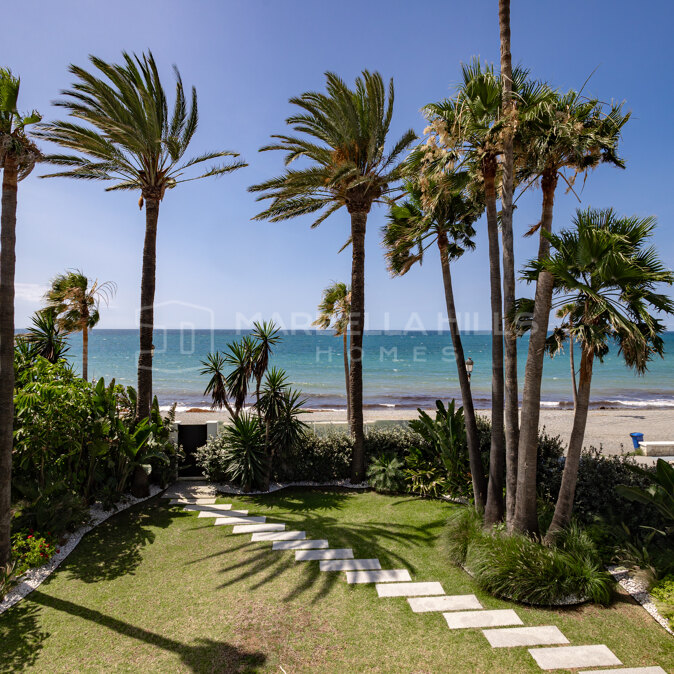
Contemporary Beachside Villa for Sale in Cortijo Blanco, San Pedro de Alcántara
Cortijo Blanco, San Pedro de Alcantara €5,900,000Perfectly positioned in the prestigious beachside neighbourhood of Cortijo Blanco, this exceptional new build villa combines striking contemporary architecture, generous…
- View Property
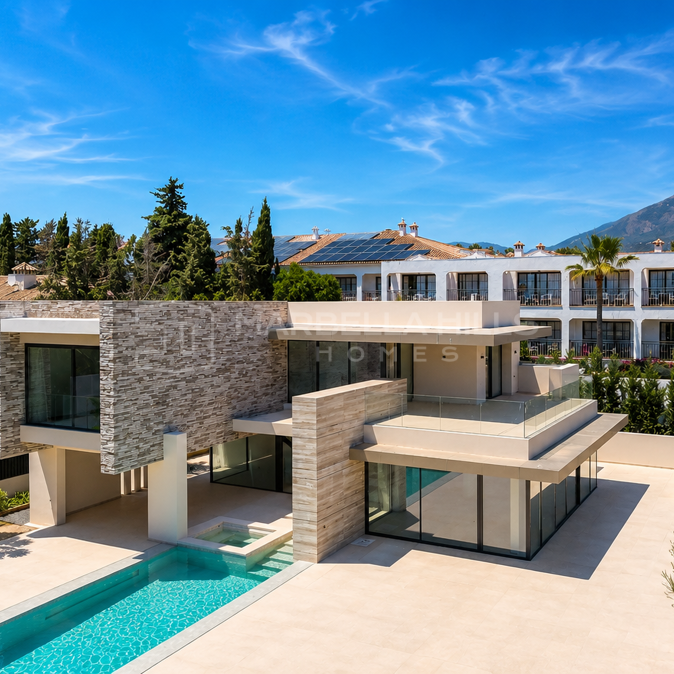
Contemporary New Build Villa for Sale in Cortijo Blanco, Marbella
Cortijo Blanco, San Pedro de Alcantara €4,290,000Discover an exclusive collection of just three contemporary villas in the highly desirable residential enclave of Cortijo Blanco, one of…
- View Property
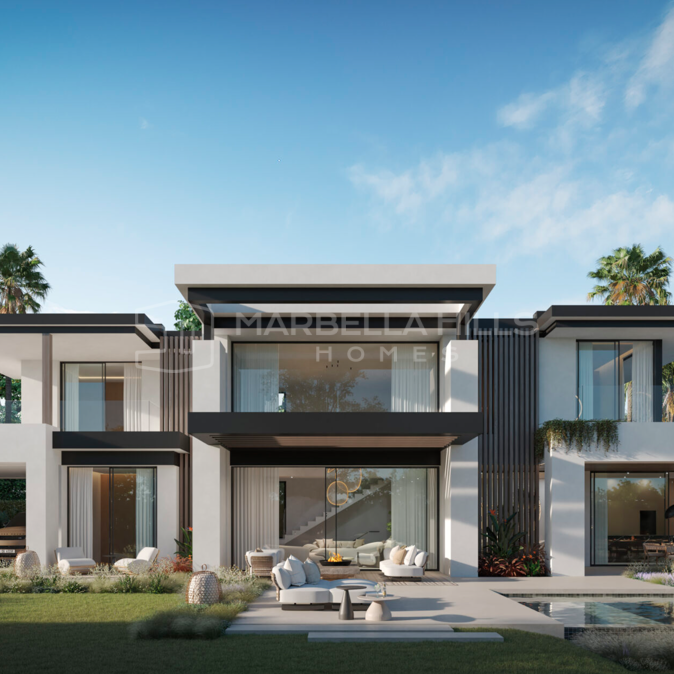
Villa for Sale in Cortijo Blanco, San Pedro de Alcántara – Contemporary Beachside Living
Cortijo Blanco, San Pedro de Alcantara Reduced from €3,500,000€3,295,000Villa Aria is an exceptional contemporary Mediterranean villa for sale in the highly sought-after Cortijo Blanco area of San Pedro…
- View Property
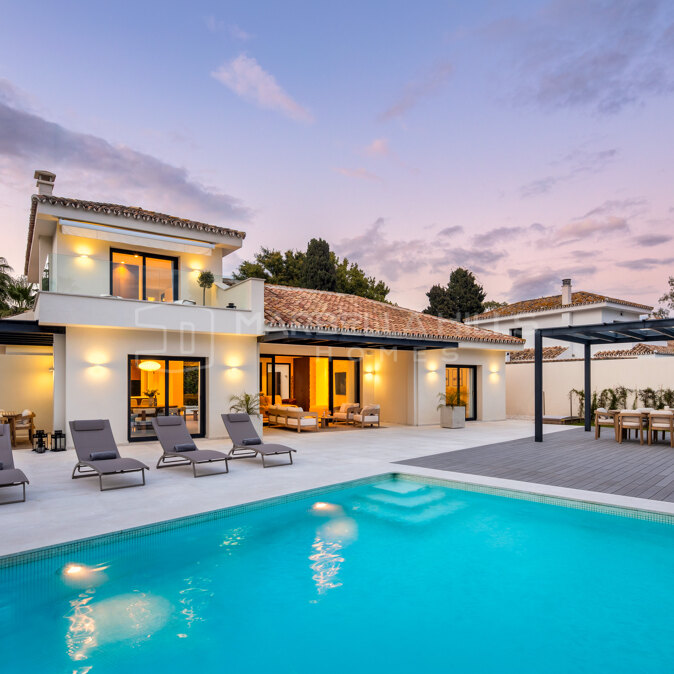
Newly Refurbished Townhouse in Cortijo Blanco, San Pedro – Walking Distance to the Beach
Cortijo Blanco, San Pedro de Alcantara Reduced from €1,195,000€1,050,000This is a beautifully refurbished townhouse situated in the desirable Cortijo Blanco area of San Pedro, within the peaceful and…
- View Property
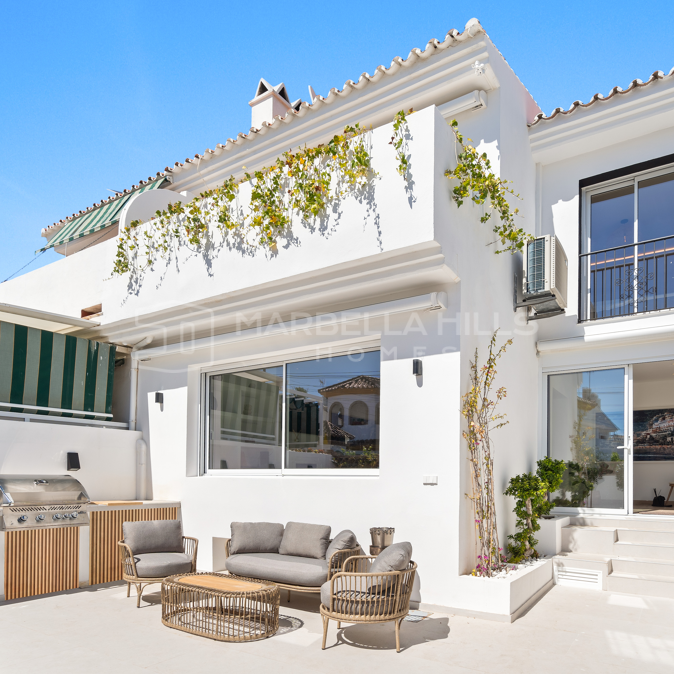
Outstanding contemporary 4 bedroom villa with Stunning Design in Cortijo Blanco - San Pedro de Alcántara
Cortijo Blanco, San Pedro de Alcantara €3,900,000This exceptional contemporary villa is available for sale in a private community located in the prestigious area of San Pedro…
- View Property
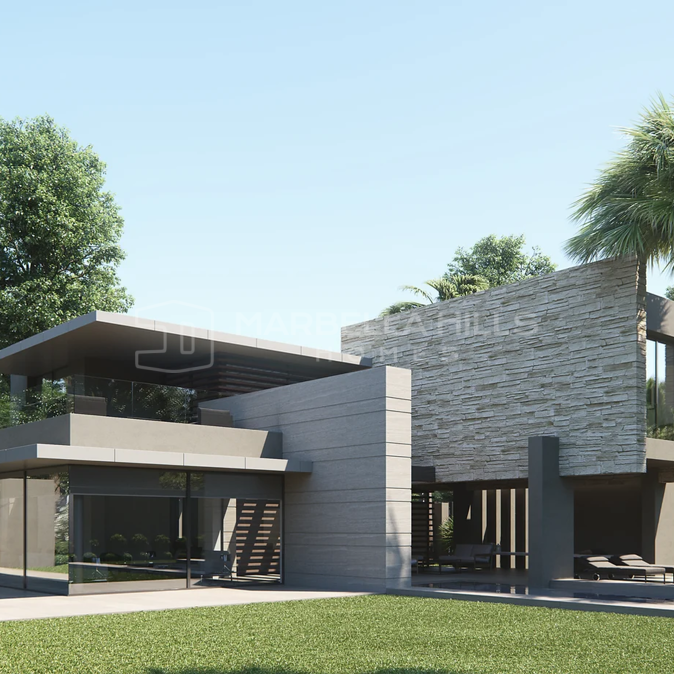
Brand new luxurious contemporary 8 bedroom beachside villa in Cortijo Blanco, San Pedro de Alcantara
Cortijo Blanco, San Pedro de Alcantara €5,950,000This exceptional contemporary grand villa is available for sale within a private community comprising only 3 villas, nestled in the…
- View Property
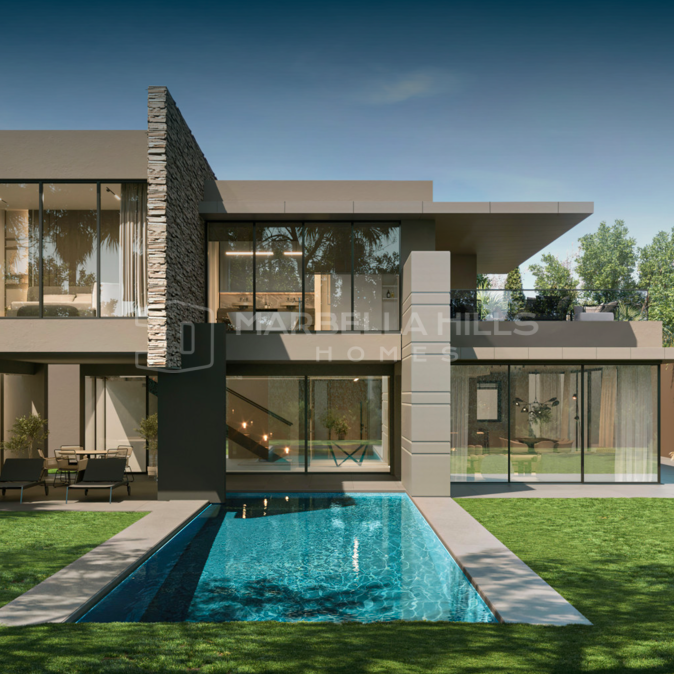
Exclusive 4 bedroom villas with luxury amenities in Cortijo Blanco - San Pedro de Alcantara
Cortijo Blanco, San Pedro de Alcantara €3,990,000We are pleased to present these exclusive new villas, a development of 7 residences within a gated complex offering 24-hour…
- View Property