Aloha, Nueva Andalucía: a buyer’s guide to the Golf Valley’s most liveable address
Summary
Discover Aloha, Nueva Andalucía’s practical heart. This guide explores its diverse properties, from townhouses to villas, highlighting its walkability, amenities, and suitability for year-round living.
Key Takeaways
- Aloha offers practical living with walkability and nearby amenities, unlike more elevation-focused areas.
- Property variety is vast, with significant differences in price and quality between communities and individual homes.
- Understanding community fees, renovation costs, and specific property details is crucial for a wise purchase in Aloha.
Most people arrive in Nueva Andalucía looking for a view. Aloha is often where they end up once they start thinking about the other 360 days of the year.
This is the flatter, more practical heart of the Golf Valley, set between Aloha and Las Brisas golf courses, where everyday life is noticeably easier than in many of the hillside communities above. Streets are more walkable, supermarkets and cafés can be minutes rather than a drive away, and school runs are simpler. Aloha may not have the dramatic elevation or sweeping panoramas of the higher parts of Nueva Andalucía, but it offers something arguably more important for anyone planning to spend real time here: it works just as well on a wet Tuesday in February as it does in August.
That practicality has helped make Aloha one of the most consistently active residential markets in Marbella, but also one of the hardest to generalise about. The name covers dozens of individual communities developed over more than five decades, ranging from established 1970s townhouses behind a simple gate to extensively rebuilt frontline golf villas, contemporary homes and substantial garden apartments with private pools. Two properties only a few hundred metres apart can differ by several million euros, and just as importantly, by decades in construction quality, renovation history and community maintenance.
For a buyer, that variety is both Aloha’s strength and its complication. There is no single “Aloha product” and no meaningful average property that represents the area. The community, street, orientation, condition and proximity to golf, schools and amenities can matter every bit as much as the number of bedrooms or square metres.
This guide is intended for buyers who have already narrowed their search to Aloha, or who are comparing it with the hillside communities of Nueva Andalucía and the Golden Mile. We look at what Aloha actually encompasses, how its different property types and micro locations compare, what golf club membership means in practice, the reality of the school run, typical running costs, current price levels and the due diligence that matters most when buying here.
The objective is not simply to explain why Aloha is popular. It is to help you understand which part of Aloha works for you, and ultimately to buy the right street, the right community and the right property.

What is Aloha?
Aloha is a well established residential district at the heart of Nueva Andalucía, developed from the mid 1970s around Aloha Golf and expanded gradually over the decades that followed. It is not a single urbanisation, has no common entrance and was never conceived by one developer. Instead, it is a collection of individual communities and villa streets held together by the golf course at its centre, mature landscaping and a network of quiet residential roads.
Within Aloha you will find a remarkably broad range of individual urbanisations, including Aloha Gardens, Aloha Pueblo, Aloha Hill Club, Aloha Park, Aloha Royal, Los Pinos de Aloha, Aloha Lake Village, Las Tortugas de Aloha, Vistas de Aloha, Fuente Aloha, Aloha Sur, Señorío de Aloha, Los Altos de Aloha, La Rinconada and Los Jarales, alongside established villa areas such as Parcelas del Golf and La Retranca del Ángel. Each operates as its own community of owners, with its own budget, rules, security arrangements, communal facilities and standard of maintenance.
For a buyer, that distinction matters considerably more than the Aloha name itself. In a single development such as Los Arrayanes, understanding the community gives you much of the information you need. In Aloha, knowing the district is only the beginning. The individual urbanisation you choose will determine the community fees you pay, the level of security, the condition of the gardens and swimming pools, the rules governing matters such as tourist rentals and, importantly, whether significant maintenance projects or special assessments are on the horizon. Two neighbouring complexes can look similar on a map and be managed very differently in practice.
The different periods of construction are equally important. Some of the earliest properties date from the 1970s and early 1980s and reflect the traditional Andalusian pueblo style of the period, with whitewashed façades, tiled roofs, courtyards and relatively small windows. The 1990s and 2000s introduced larger apartments, more generous terraces and increasingly resort oriented communities with extensive gardens, pools and additional facilities.
Over the past decade, the story has shifted increasingly from development to reinvention. There is very little undeveloped land left in established Aloha, so much of the best new product now comes from the renovation or complete reconstruction of existing homes. Older apartments have been comprehensively redesigned, traditional townhouses transformed into contemporary homes and villas rebuilt to standards far beyond those of the original properties.
That limited supply of land is one of the quieter forces behind Aloha’s resilience. The area can continue to improve, but it cannot expand indefinitely. For buyers, this makes the distinction between the district, the individual community and the specific property particularly important: in Aloha, you are never simply buying “Aloha”. You are buying a particular street, a particular community and, increasingly, the quality of what has been done to the property itself.

Where is Aloha?
Aloha occupies the centre of the Golf Valley, north of Puerto Banús and immediately inland from the coast road, bordered by the Aloha and Las Brisas courses with Los Naranjos to the north west.
Approximate drive times, worth testing yourself at school-run hour and in August, because the valley roads bear no resemblance in February and July:
- Centro Plaza and the main supermarkets: 3 to 5 minutes
- Aloha College, in neighbouring El Ángel: around 5 minutes
- Aloha, Las Brisas and Los Naranjos golf clubs: 2 to 8 minutes
- Puerto Banús, the marina and the beach: 7 to 10 minutes
- San Pedro Alcántara: around 10 minutes
- Marbella old town: 15 to 20 minutes
- Málaga airport: around 45 minutes on the AP-7
The distinguishing feature, though, is not distance but gradient. Most of Aloha sits on level or gently sloping ground, which is unusual in the Golf Valley and much of what makes it work as a permanent home. Several communities are within genuine walking distance of restaurants, a pharmacy and a supermarket. Children can cycle. Older residents are not dependent on the car for a loaf of bread.
The trade-off is equally clear. Level ground means fewer panoramic views. Aloha looks at fairways, gardens, La Concha and the mountain ridge behind, with sea views generally reserved for upper floors, rooftop solariums and the few communities on rising ground at the edges. If an uninterrupted Mediterranean panorama is your primary requirement, you will pay less for it higher up the valley.
Where Aloha ends
Because the Aloha name carries weight, its boundaries have a tendency to expand in property advertising. A meaningful number of homes marketed as being in Aloha are actually located in neighbouring areas such as Peñablanca, Puerto Golf, El Naranjal, Marbella River Garden, parts of El Ángel and the lower sections of Los Naranjos. Several of these are excellent residential addresses in their own right, and some may even suit a particular buyer better. The issue is not whether the neighbouring area is good or bad. It is whether you are buying what you think you are buying.
That distinction matters because many of the qualities that make Aloha attractive are highly local. Walkability, relatively level streets, proximity to shops and restaurants, the school run and the running costs and facilities of a particular community can change surprisingly quickly from one street to the next. Move even a short distance away and the practical experience of living there may be quite different, despite the property still being advertised under the broader Aloha label.
The simplest way to avoid confusion is to look beyond the listing description. Ask for the exact urbanisation and location recorded in the property documentation, then place the property on the map in relation to Aloha Golf, the amenities around Aloha and the places you expect to use regularly. Do not rely on the marketing name alone.
There is nothing wrong with buying just outside Aloha. In some cases it may be the better purchase. What matters is knowing precisely where you are buying and comparing the property on the merits of its actual location rather than paying for a name that has been borrowed from the neighbourhood next door.
The property in Aloha
Villas
Villas sit at the top of the Aloha market, with some of the most desirable concentrated in Parcelas del Golf, La Retranca del Ángel and along the streets bordering the fairways. Plot sizes are generous by Golf Valley standards, typically starting at around 1,000 m² and extending well beyond 3,000 m². Many also have something that cannot be created quickly: mature gardens, established trees and landscaping that provide a degree of privacy a newly planted property may take decades to achieve.
Architecturally, the range is unusually broad. Original Andalusian and Moorish influenced villas sit alongside extensively renovated homes and complete contemporary rebuilds. This means that two houses on similarly sized plots can represent entirely different products and price points. Condition, architecture, orientation and the quality of any previous renovation matter enormously.
Frontline golf occupies its own position within this market and commands a clear premium. The attraction is not simply the view across the fairway. A genuine frontline position provides a permanent sense of openness and separation from neighbouring development that is difficult to reproduce elsewhere. Mature landscaping can create privacy, but having the golf course immediately beyond your boundary gives the property a different relationship with its surroundings.
For many buyers considering an older Aloha villa, the central question is therefore whether to renovate, rebuild or pay the premium for a finished home. A significant proportion of the original stock was built in the 1980s and reflects the layouts, construction standards and expectations of that period. Bringing one of these houses up to the standard now expected at the top of the Marbella market can involve considerably more than cosmetic refurbishment.
The numbers should therefore be established before agreeing a purchase price. Compare the true cost of acquisition and a comprehensive renovation with the price of a turnkey alternative, and have the planning position checked for the specific plot before assuming what can be changed. Buildability, footprint, height, setbacks, extensions and alterations to the pool can all affect what is realistically achievable. With an older villa, the value is not simply in what stands on the plot today, but in what you are legally able to create there.

Townhouses
Townhouses are arguably Aloha’s signature property type and one of the main reasons so many families ultimately settle here. Communities such as Aloha Pueblo, Los Pinos de Aloha, La Retranca and a number of smaller gated enclaves typically offer three or four bedrooms arranged over two or three floors, often with a private patio or small garden, a roof terrace and access to a communal swimming pool.
They occupy a particularly useful middle ground in the Nueva Andalucía market. You gain considerably more space and privacy than in a typical apartment, but without the maintenance, staffing and running costs that come with a large detached villa. They also work extremely well as second homes. There is enough space for family and guests, yet the property can still be locked up and left with relatively little to manage while you are away.
The roof terraces are often one of their strongest features. While the lower floors may have limited outlooks because of neighbouring houses and mature landscaping, the upper terraces can open up views towards La Concha, the Mediterranean or across the Golf Valley. In some properties, this outdoor level becomes one of the most used parts of the house for much of the year.
The older pueblo style townhouses do, however, require an honest assessment. Many were designed for a very different way of living, with smaller rooms, compartmentalised layouts, enclosed kitchens and less natural light than buyers expect today. Much of the value created in Aloha over the past decade has come from addressing precisely those weaknesses.
The best renovations have opened kitchens into the main living areas, improved the connection to terraces and gardens, introduced larger openings and transformed previously underused roof terraces into proper outdoor living spaces. As a result, the difference between an original townhouse and a comprehensively renovated one can be substantial, both in how the property feels and in what the market is prepared to pay for it.
For buyers, the comparison should therefore go beyond the asking price. An original house bought cheaply but requiring structural reconfiguration, new services, windows, kitchen and bathrooms can quickly close the gap to a finished property. In Aloha’s townhouse market, understanding the quality and extent of the renovation is often just as important as choosing the right community.

Apartments and penthouses
The apartment market is the most varied part of Aloha, ranging from relatively accessible homes in established communities to substantial residences that feel much closer to villas than conventional apartments.
At one end are long established developments such as Aloha Gardens, where a two bedroom apartment remains one of the more approachable ways to buy into Nueva Andalucía and enjoy the convenience of the Aloha location. These communities appeal particularly to buyers who value walkability, established gardens and an easy second home without the responsibilities of a villa.
The middle of the market includes the larger resort style developments, with Aloha Hill Club perhaps the best known example. Here the proposition is different: multiple swimming pools, gym and spa facilities, an onsite restaurant and 24 hour security create a more serviced residential experience. That additional infrastructure brings greater convenience, but also higher community costs, so buyers should consider how much they will actually use the facilities they are paying to maintain.
At the upper end are lower density developments such as Aloha Park, where the scale and layout of the properties move well beyond the conventional apartment format. Large ground floor residences can have substantial private gardens and their own swimming pools, creating a lifestyle that feels much closer to a house while retaining the security and ease of ownership of an apartment community.
Penthouses and duplex penthouses occupy a particularly strong position across the Aloha market because they address one of the area's few natural limitations. Aloha is relatively flat, which makes it practical and walkable but means that open views are less common than in the elevated parts of Nueva Andalucía. Move to the top floor, however, and that can change considerably. A good penthouse with a large terrace or private solarium can combine views towards the Mediterranean, La Concha or the Golf Valley with the flatter streets, nearby amenities and everyday convenience that make Aloha so appealing in the first place.
For many buyers, that is the sweet spot: the views associated with the hillsides, without giving up the practicality of living in the heart of Aloha.

Aspect matters more than elevation in Aloha
In the hillside communities above Aloha, the floor and the position of the building can determine almost everything because they determine the view. On Aloha’s flatter terrain, the outlook is generally more predictable, so orientation becomes the factor that has the greatest influence on how a property actually feels and functions throughout the year.
South facing terraces are the dependable choice. They receive good midday sun during winter, when it is most valuable, while remaining relatively easy to manage through the summer with the right shade. West and south west facing terraces offer something different. They come into their own in the late afternoon and evening, with long hours of sun and excellent light, but can become intensely hot in the middle of an August afternoon. Whether that is an advantage or a drawback depends entirely on how and when you intend to use the outdoor space.
East facing gardens and terraces tend to be bright and pleasant in the morning before moving into shade during the afternoon. That can work particularly well for owners who spend much of the day away from home, and for families with young children who prefer cooler outdoor areas later in the day.
There are two practical consequences worth understanding. First, ground floor gardens on Aloha’s flatter plots tend to feel more enclosed than their equivalents on the hillside. Mature planting, privacy and the position of neighbouring buildings can therefore matter considerably more than the number of square metres shown on the floor plan. A smaller garden with good separation and established landscaping may be far more enjoyable than a larger one overlooked from several directions.
Second, a roof terrace can change the equation completely. In many Aloha properties, the solarium is the one place where the surrounding buildings and vegetation fall away and a more open aspect appears, sometimes with views towards La Concha, the Golf Valley or the Mediterranean. That additional outlook and outdoor living space helps explain why good roof terraces carry a genuine premium in both the sales and rental markets.
The simplest advice is also the most useful: stand on the terrace at the time of day you are actually likely to use it. Orientation on a floor plan tells you where the sun should be. Spending twenty minutes outside tells you whether you will enjoy living with it.
The communities of Aloha, one by one
The district reputation is uniform. The communities are not. What follows is a working guide to the main ones, though fees, rules and standards of upkeep change, so treat it as a starting point for questions rather than a substitute for the community accounts.
Aloha Pueblo. The pueblo-style village beside Aloha Golf: whitewashed townhouses on pedestrian lanes, gated with 24-hour security and a handful of restaurants inside the community itself. It is the most genuinely walkable address in Aloha and probably in the Golf Valley. Three-bedroom houses with rooftop solariums have recently traded in the low €800,000s, and a number carry tourist licences. Suits families and buyers who want to leave the car parked.

Aloha Gardens. An established garden apartment complex, pools and mature planting, two and three bedrooms. This is the most accessible entry point to the district, and the spread between an original and a renovated unit is wide: renovated duplexes with large terraces have sold around €900,000, while untouched two-bedroom flats have traded far lower. Suits first purchases, lock-up-and-leave use and rental investors.

Aloha Hill Club. The resort-style option, on slightly rising ground at the edge of the district, which is why it holds the best sea views in Aloha. Two communal pools including a large outdoor pool, gym, spa, kids' club, poolside restaurant and full security. Two-bedroom apartments through to duplex penthouses, with the better penthouses around €1.5 to €1.7 million. The fees are the highest in the area and the amenities are the reason. Suits buyers who want the facilities on site and will use them.

Aloha Park. Small, low-density and heavily gardened, with 24-hour security, pools, gym and spa. The ground-floor homes here are the outlier in Aloha: several hundred square metres with private gardens and private pools, closer to a villa than a flat, and priced accordingly at around €4 million for the best of them. Suits buyers who want villa living without the villa's maintenance.

Los Pinos de Aloha. A quieter townhouse community, contemporary duplexes with three bedrooms around €850,000 at the time of writing. Fewer amenities, correspondingly lower fees. Suits buyers prioritising space and value over facilities.

Aloha Royal, Señorío de Aloha, Aloha Lake Village, Las Tortugas de Aloha and Vistas de Aloha. The mid-market spine of the district: gated apartment communities of varying ages, mostly two and three bedrooms, pools and gardens, moderate fees. Quality varies more between individual communities here than anywhere else in Aloha, which makes the accounts and the state of the shared areas the whole assessment.

Parcelas del Golf. Villa plots rather than a community in the usual sense, generally 1,000 m² and upward, several frontline to the golf. Renovated houses run from around €2 million to €4 million, with the larger rebuilt properties higher. Suits buyers who want land, a private pool and no shared decisions.

La Retranca del Ángel. Frontline golf townhouses and houses at the El Ángel end, closest to Aloha College. Four-bedroom frontline golf townhouses have recently been asking around €995,000. Suits school-run families who want a garden and a guaranteed open aspect.

Aloha Forest. The new arrival, and the reason the "Aloha is finished" line needs qualifying. A gated development beside Aloha Golf and within walking distance of Aloha College, backed by pine forest on rising ground, with views towards La Concha and the sea. The first phase is deliberately small at sixteen residences across two low-rise buildings: two and three-bedroom apartments, penthouses and duplex penthouses, with private gardens on the ground floor, private pools on the penthouses, communal pools, an indoor pool and wellness area, and concierge. Launch pricing put a two-bedroom first-floor apartment at around €1,035,000, a two-bedroom garden apartment at around €1,115,000 and the three-bedroom premium duplex penthouse at around €2,477,000, with Phase I delivery indicated for 2026. Availability, phasing and the delivery date all move on a project like this, so confirm the current position rather than working from published launch figures. Suits buyers who want contemporary specification, a warranty and no renovation, inside a district that otherwise cannot offer it.

Living in Aloha
Golf in Aloha: what living here does and does not buy you
Start here, because this is one of the most common misunderstandings among buyers looking at property in Aloha.
Aloha Golf is an 18 hole, par 72 course designed by Javier Arana and opened in 1975. Generally regarded as the final course of his career, it has hosted major professional tournaments including the Open de Andalucía on the European Tour and the Ladies Spanish Open. The course is known for its narrow, tree lined fairways, strategic water hazards and greens that reward accuracy and positioning rather than simply distance. For a property overlooking it, the golf course is therefore much more than attractive landscaping. It provides a mature green setting and, for genuine frontline properties, a permanently open aspect that is difficult to reproduce elsewhere.
What buyers need to understand is that Aloha Golf is a private members’ club. Access has become more restricted in recent years, and buying a property beside the course does not automatically provide playing rights or membership. Historically, membership has involved acquiring a transferable share in the club, representing a significant initial investment, followed by an annual subscription.
Most importantly, none of this is attached to the title deeds of a property. Buying a frontline golf villa or apartment in Aloha gives you the view, the open outlook and the location, but it does not give you tee times.
If golf is an important part of your decision to buy here, establish the position directly with the club before committing to a property. Ask what membership currently costs, whether shares are available, whether there is a waiting list and precisely what playing rights would extend to your partner or family. Do not assume that proximity to the clubhouse, or even owning a property directly on the fairway, changes those rules.
The same principle applies to Las Brisas and Los Naranjos. One of the great advantages of living in Aloha is having three excellent golf courses within a few minutes of home, but they are three independent clubs with their own membership structures and access rules. In the Golf Valley, living beside the course and belonging to the course are two entirely separate things.
Daily life
Aloha functions as a genuine residential neighbourhood rather than a resort, and that is one of the main reasons people who initially buy here as second home owners often end up spending considerably more time in the area. Everyday life is easy. Centro Plaza and the surrounding commercial areas provide supermarkets, pharmacies, banks, dentists, gyms, hairdressers and a broad choice of restaurants, all within a few minutes and, from some parts of Aloha, comfortably reachable on foot. The Saturday market beside the former bullring remains a fixture of the local week and adds to the sense that this is a neighbourhood with a life of its own.
The restaurant scene across Nueva Andalucía has also changed considerably. There is now enough variety and quality locally that going out for dinner no longer automatically means driving to Puerto Banús, Marbella or the Golden Mile. For year round residents, that seemingly small detail makes a noticeable difference to daily life.
And when you do want everything the coast offers, it remains close. Puerto Banús, its marina and boutiques, El Corte Inglés, the beach and the beach clubs are roughly ten minutes down the hill. They are near enough for an unplanned dinner or an afternoon by the sea, but far enough away that the crowds, traffic and late night activity of August do not become part of everyday life at home.
That separation is one of Aloha’s understated strengths. You can use Puerto Banús whenever you want it without having to live in it.
Families and schools
Aloha's reputation with families is largely built on Aloha College, founded in 1982 by a group of teachers as a not-for-profit and now one of the largest and longest-established international schools on the coast, with over 900 pupils, a British curriculum from age three, IGCSEs, and a choice of A-Levels or the IB Diploma in the sixth form.
Two clarifications are worth having before you buy on the strength of it. First, the campus is in Urbanización El Ángel, adjoining Aloha rather than inside it. The drive is short, but it is a drive, and it deserves testing at 8.15am rather than at midday. Second, a place at the school is not a function of your postcode. Admissions run in defined windows and popular year groups fill, so if a specific school is central to the move, secure the school place and the completion date together. Our guide to international schools on the Costa del Sol sets out curricula, fees and admissions timelines, and our Marbella healthcare guide covers how the public and private systems work for international residents.
Beyond the school, the flat streets, low traffic volumes and gated communities with shared pools do most of the rest of the work. This is one of the few parts of Marbella where children have a degree of independence.
Community fees and running costs in Aloha
Because Aloha is a collection of independent communities rather than a single development, there is no meaningful “typical” community fee. Costs vary considerably from one urbanisation to another and, in most cases, reflect the level of services and facilities provided.
An established townhouse community with landscaped gardens, a controlled entrance and a single communal pool will generally sit towards the lower end of the range. At the other extreme, a resort style development with several swimming pools, a gym, spa, children’s facilities, restaurant, reception and permanent security can cost several times more to operate. Those facilities have to be staffed, serviced and maintained throughout the year, whether an individual owner uses them regularly or not. Neither model represents better value in itself. The relevant question is whether the services you are paying for match the way you intend to use the property.
For that reason, always ask for the current community fee applicable to the specific property rather than relying on a general figure for the development. Your lawyer should also review the community accounts and the minutes of recent owners’ meetings. In an area where a substantial proportion of the housing stock is now thirty, forty or even fifty years old, those documents can tell you far more than the appearance of the communal gardens. They reveal what has already been resurfaced, waterproofed, rewired or replaced, what major works are being discussed and, crucially, what has been approved but not yet fully paid for.
Pay particular attention to any extraordinary assessment, or derrama. Major works involving roofs, façades, lifts, swimming pools, underground garages or waterproofing can represent a significant additional cost for individual owners. It is far better to understand that liability while negotiating the purchase than to discover it after completion.
The community fee is also only one part of the true annual cost of ownership. Budget separately for IBI, refuse charges, utilities and insurance, together with private garden and pool maintenance where applicable. Non resident owners should also account for the relevant Spanish taxation, including the imputed non resident income tax that may apply to a property retained for personal use even when it is never rented.
The useful number, therefore, is not simply the monthly community fee. It is the total annual cost of owning the particular property you are considering.

How Aloha compares
Against the hillside view addresses of Nueva Andalucía, such as La Cerquilla, Les Belvederes and Los Arrayanes, the trade is the panorama against the gradient. Those communities offer elevation, open sightlines and a sense of remove that Aloha cannot match, at a price per square metre that reflects it. Aloha gives you flat streets, a five-minute supermarket run and a school you can walk a child to. Buyers who spend most of the year here tend to migrate downhill over time; buyers who visit for six weeks a year tend to want the view.
Against Los Naranjos and Las Brisas, the differences are finer, since all three sit in the same valley around courses of similar standing. Los Naranjos carries slightly more prestige in its frontline golf villas and rather less in the way of walkable amenities. Las Brisas is quieter and greener, with less variety of stock. Aloha has the deepest and most liquid market of the three, which matters when you come to sell.
Against La Quinta, El Paraíso and Benahavís for family buyers, you are trading community and convenience against space and price. Further west you get more square metres for the money and often better views, at the cost of longer drives to everything and a smaller resident community out of season. Aloha's advantage is density of useful things within five minutes.
Against the Golden Mile and central Marbella, Nueva Andalucía generally gives you more space per euro and a quieter, greener setting, while the Golden Mile gives you the beach, the hotels and the ability to walk into town. If your ideal day starts at the sea rather than at the first tee, buy on the coast side.
Against a new-build gated development on the slopes above, the comparison is honest to make and often uncomfortable. New schemes offer contemporary specification, warranties, clubhouses and concierge, and charge for all of it in both price and monthly fees. Aloha offers established gardens, mature communities, larger plots for the money and the flat ground, on the condition that you take on a building with a history. Which is the better purchase depends almost entirely on whether you want to manage a renovation.
Aloha property prices
Aloha spans a broad range because the district itself is broad. As a guide to current asking levels, based on what is actually on the market rather than on averages:
- Apartments, two and three bedrooms in the established garden complexes: broadly €500,000 to €950,000 depending on community, floor, terrace and condition
- Townhouses: broadly €800,000 to €1.1 million for good renovated three and four bedroom houses, rising towards €1.6 million for frontline golf positions and comprehensive contemporary reforms
- Penthouses and duplex penthouses: broadly €1.3 million to €1.8 million in the better resort communities, where the solarium and the views justify the premium
- Large low-density garden apartments with private pools, of the Aloha Park type: €3.5 million and upwards, a distinct segment of their own
- Villas: from around €2 million for houses requiring work, with renovated and frontline golf properties commonly €3.5 million to €4 million and the largest estates considerably higher
The drivers, in order: condition first, since a 1985 original and a full reform are different products at different prices; then position, meaning frontline golf, corner plots and top floors; then the community, its fees and its amenities; then the terrace and the view. Live listings remain the only reliable guide to what is being asked at any given moment.
Almost everything here is a resale, so budget the Andalusian transfer tax (ITP) of 7% plus roughly 1 to 2% for notary, registry and legal fees, giving around 8 to 9% on top of the purchase price. Our Marbella buying process guide sets out the sequence in detail.
The Aloha market
Two forces shape the Aloha property market more than anything else.
The first is the lack of meaningful new supply. Aloha is, for practical purposes, built out. There is very little undeveloped land left within the established district, so most of what appears to be new product today is actually older property that has been comprehensively renovated, extended or rebuilt. In a Golf Valley where new developments continue to emerge on the surrounding hillsides, that limited ability to add stock gives the established communities on the flatter ground a scarcity that is easy to underestimate.
Aloha Forest is the exception that makes the point rather than the one that breaks it. Sixteen homes in a first phase does not change the supply picture in a district of thousands. What it does do is establish a visible new-build benchmark inside Aloha for the first time in years, at roughly a million euros for a two-bedroom apartment. Set that against resale two-bedroom flats in the established garden complexes and the premium for contemporary specification, a warranty and no works becomes explicit rather than theoretical. That benchmark tends to pull the best renovated resale upwards while leaving untouched stock where it is.
The second is the renovation gap, and in Aloha it is particularly pronounced because so much of the housing stock dates from the 1970s, 1980s and 1990s. An original townhouse with a closed kitchen, smaller windows, dated services and a compartmentalised ground floor is not really competing with the neighbouring property that has been opened up, reglazed, rewired and redesigned for contemporary living. They may share the same community, orientation and number of bedrooms, but they are fundamentally different products, and the market prices them accordingly.
That difference is also where some of Aloha’s most interesting opportunities can be found. Buy the position rather than the finish and you can improve almost everything except the things that matter most and cannot be changed later: the plot, orientation, privacy, level terrain, proximity to amenities and, where relevant, the relationship with the golf course.
The key is to do the arithmetic before you buy. Establish a realistic renovation budget, understand what the community will permit and have the planning position confirmed for any works requiring municipal approval. Then assess the purchase price against the total cost of creating the finished property, rather than against the asking price of an already renovated neighbour.
Renovation can create genuine value in Aloha when the underlying property is bought at the right price. The mistake is not taking on an older house. It is discovering the true cost and limitations of transforming it only after the purchase has been completed.
What renovation actually costs
Since so much of the value here turns on renovation, it is worth putting numbers on it. These are indicative Marbella ranges for planning purposes only, and every project needs quoting on the specific property:
- Cosmetic refresh (kitchen, bathrooms, flooring, paint, lighting, no layout changes): commonly €700 to €1,200 per m²
- Full interior reform of an apartment or townhouse, including new services and reconfigured layout: commonly €1,200 to €2,000 per m²
- Integral villa renovation to current prime specification: substantially higher, with published Marbella ranges running from roughly €1,800 to €5,500 per m² depending on finish, systems and how much of the shell is retained
Then add professional fees, licences, taxes and contingency, which realistically account for another 12% to 22% on top of the build cost. Two further points that catch people out. Construction costs on this coast have risen sharply since 2020, so any quote or rule of thumb from a few years ago understates the position badly; re-quote at signing rather than relying on the figure you were given when you made the offer. And Marbella's town hall is not the fastest licensing authority on the coast, so if the works require an obra mayor licence rather than the lighter obra menor route, build the timeline into your plans and start the application as early as the process allows rather than after completion.
The practical test for an Aloha purchase is whether the discount on the untouched property is larger than the fully loaded cost of the works. Often it is. Frequently it is not, particularly on smaller apartments where fixed costs dominate. Do that sum before you agree a price, not after.
For the wider picture, see our Marbella property market report.

Rentals and investment in Aloha
Aloha performs well as a rental market for reasons that are structural rather than seasonal. Three golf courses within a few minutes, Puerto Banús roughly ten minutes away, a major international school close by and a relatively flat, family friendly residential layout create demand from two distinct groups. The first is the familiar holiday market, particularly during the golf season and the summer months. The second, and often more interesting, is the long term market of international families who want to live close to school and may be looking for a home for several years rather than several weeks.
That second group is easy to underestimate. For families relocating to Marbella, practical considerations such as the school run, security, outdoor space, nearby amenities and the ability for older children to move around more independently can matter more than panoramic views. A well positioned townhouse, apartment or villa in Aloha can therefore appeal to a stable year round tenant base rather than relying entirely on seasonal demand.
Short term rental potential, however, should never be assumed. Tourist accommodation in Andalucía is subject to the applicable registration and regulatory requirements, and the rules of the individual comunidad de propietarios can be equally important. Because Aloha is made up of many independent communities, one urbanisation may permit tourist rentals while another nearby may restrict or prohibit them.
Some properties are marketed with an existing tourist registration or licence, which can be valuable, but its current status and applicability to the property should be verified rather than taken at face value. If rental income forms part of your investment case, have your lawyer confirm both the current regulatory position and the rules of the specific community before you buy.
For many investors, Aloha’s strongest rental argument may therefore be broader than holiday letting alone. The combination of golf, schools, amenities and proximity to Puerto Banús gives it something many purely resort driven locations lack: genuine rental demand throughout the year.
What Aloha actually rents for
Broad current levels for long lets in and around Aloha, which move with season, condition and furnishing:
- Two-bedroom apartments: roughly €1,800 to €2,500 a month
- Three-bedroom apartments: roughly €2,500 to €3,500 a month
- Three and four-bedroom townhouses: roughly €3,000 to €4,500 a month, with renovated houses at the upper end
- Villas: from around €6,000 a month, rising steeply with size and specification
On typical Aloha purchase prices that puts gross yields in the region of 3.5% to 5% before community fees, IBI, management, maintenance and tax. Net figures are materially lower, and anyone quoting you a headline yield without deducting those is quoting you a number rather than a return.
The school-year let, which is Aloha's own product
One of the more distinctive rental patterns in Aloha is the September to June academic year let. International families arriving for a school year, testing a relocation to Marbella or looking for a temporary home while they search for a property to buy often want a furnished house close to Aloha College from the beginning of term until the summer. As a result, properties in Aloha are regularly marketed specifically for this period, creating a depth of school year demand that is less concentrated in many other parts of Marbella.
For an owner, the model can make considerable sense. The property is occupied during the nine or ten months when a second home owner may be least likely to use it, while July and August remain available either for personal use or, where permitted, for the peak holiday rental season. Instead of managing a succession of short stays throughout the year, you deal with a single tenant or family for most of the calendar.
The monthly income will naturally be lower than the equivalent peak summer rate, but that is only part of the calculation. Longer occupancy provides greater predictability, there are fewer changeovers and less intensive use, and the tenant profile is often particularly attractive because families are choosing the location around school and everyday life rather than purely for a holiday.
For owners who want to spend the summer in Marbella themselves, this can be one of the most practical rental strategies in Aloha. Before buying with that model in mind, ask whether the specific property has previously been rented on an academic year basis and what demand and achieved rents have looked like. A property with an established history among the international school community can have an advantage, particularly when its location, layout and furnishings already suit the needs of relocating families.
What to check before you commit
- Which community, specifically. Not "Aloha". The fee, the security, the rules and the standard of maintenance are set at community level and vary enormously across the district.
- The community accounts and minutes. Current fee, recent works, approved or discussed derramas, and written confirmation that the seller is up to date.
- Condition, assessed by someone independent. Much of this stock is thirty to fifty years old. Plumbing, wiring, damp, roofs and glazing are the usual finds.
- The golf question, answered by the club. If you intend to play Aloha, Las Brisas or Los Naranjos, confirm cost and access directly rather than inferring it from your address.
- The school run, driven at school-run time. And the admissions window, checked with the school before you exchange.
- What renovation is permitted. Community rules and municipal licensing both apply, particularly for anything affecting the exterior, the roof or the footprint.
- The tourist licence position, if letting matters, at both community and regional level.
- Your own independent lawyer, acting for you alone and not introduced by the seller or the agent.
Frequently asked questions about Aloha
Where exactly is Aloha?
In the centre of Nueva Andalucía's Golf Valley, around the Aloha Golf course, between Las Brisas and Los Naranjos, north of Puerto Banús. Centro Plaza is around five minutes away, Puerto Banús around ten and Marbella around fifteen to twenty.
Is Aloha a gated community?
No. Aloha is a district containing many separate gated communities alongside streets of privately owned villas. Security arrangements are set community by community.
Can I play Aloha Golf if I live there?
Not automatically. Aloha is a private members' club and public green-fee play was reportedly withdrawn in 2023, with membership historically structured around the purchase of a share. Owning a house beside the course confers no playing rights, so check current terms with the club directly.
Is Aloha good for families?
It is one of the better addresses in Marbella for family life: flat, walkable, quiet streets, gated communities with pools, and Aloha College a few minutes away in neighbouring El Ángel. Confirm school places separately, as they are not tied to where you live.
Are there sea views in Aloha?
Some, but they are not the default. The district sits on largely level ground and most homes look at golf, gardens and the mountains. Sea views tend to come from upper floors, penthouses, rooftop solariums and the communities on the rising ground at the edges.
What does a property in Aloha cost?
Broadly €500,000 to €950,000 for apartments, €800,000 to €1.6 million for townhouses, €1.3 million to €1.8 million for penthouses in the better resort communities, and from around €2 million to €4 million and beyond for villas, with the largest estates higher again.
How old are the properties?
The district was developed from the mid-1970s onwards, so most stock dates from between 1975 and the mid-2000s. Condition therefore varies more here than in single-phase developments, and renovation status is the biggest single factor in price.
Is Aloha quiet?
Yes, residentially. The streets carry local traffic rather than through traffic, and the district is far enough from Puerto Banús to be unaffected by its summer nightlife while remaining ten minutes from it.
Is there any new-build property in Aloha?
Very little, because the district is essentially built out. The main current exception is Aloha Forest, a small gated development beside the golf course, with a first phase of sixteen apartments and penthouses and launch pricing from around €1,035,000 for a two-bedroom. Everything else in Aloha is resale, which is why renovation condition dominates pricing here.
What does it cost to renovate a property in Aloha?
As a planning guide, roughly €700 to €1,200 per m² for a cosmetic refresh, €1,200 to €2,000 per m² for a full interior reform of an apartment or townhouse, and considerably more for an integral villa renovation to prime specification. Add 12% to 22% for fees, licences, taxes and contingency, and re-quote at signing rather than relying on older figures.
Can I rent out a property in Aloha?
Usually yes for long lets, subject to the community statutes. Two-bedroom apartments broadly achieve €1,800 to €2,500 a month and townhouses €3,000 to €4,500, giving gross yields of roughly 3.5% to 5% before costs. The September to June academic-year let to families at Aloha College is the area's most reliable model. Short-term tourist letting requires regional registration and is restricted by some communities, so check both before buying on that basis.
Our honest take on Aloha
Aloha is the part of Nueva Andalucía that many buyers ultimately choose when they are planning to live in Marbella rather than simply spend a few weeks here each year. That is very much a compliment. It offers two qualities that the more dramatic hillside addresses cannot always provide: relatively level ground and genuine everyday convenience. You can walk to places. The school run takes minutes rather than becoming a journey across the valley, and reaching the supermarket does not require navigating steep roads every time you leave the house.
The trade off is that the views are generally less spectacular and the buying process requires more homework than Aloha’s easy reputation might suggest. Seeing “Aloha” in a property listing tells you the general location, but surprisingly little about the property you are actually buying. The individual community, its fees and finances, the age and condition of the building, upcoming maintenance, the state of roofs and communal areas and the quality of any previous renovation can vary enormously from one urbanisation to the next. In practical and financial terms, those differences can matter far more than moving a few streets into another part of Nueva Andalucía.
Get those details right, however, and Aloha has many of the characteristics that support long term value in the Golf Valley. There is virtually no new land to develop, family demand remains strong, an established international school provides a year round anchor, three excellent golf courses are within minutes and the relatively flat layout makes the neighbourhood comfortable at almost every stage of life.
That last point is easy to underestimate. A property that works for a family with children can still work decades later when steep driveways, multiple car journeys and hillside access become less appealing. Marbella’s property fashions may move up and down the hills over time, but Aloha has something more durable than fashion: people consistently want to live there. Properties are bought, rented and occupied throughout the year, and that everyday demand is ultimately one of the strongest arguments for the area.

Final thoughts on Aloha
Aloha rewards buyers who think in years rather than seasons. Its apartment communities provide a realistic entry point into one of Nueva Andalucía’s most established residential areas, while its townhouses remain among the most practical family homes in the Golf Valley, particularly when they have been properly renovated and include a good roof terrace. At the upper end of the market, frontline golf villas and large, low density garden apartments can compete with almost anything in Nueva Andalucía for space, privacy and setting.
What connects these very different properties is the strength of the location. Aloha provides the fundamentals that are difficult to change or recreate: established surroundings, proximity to schools and amenities, relatively level streets, golf on the doorstep and easy access to Puerto Banús and the coast. From there, however, the individual property determines whether you have bought well.
That distinction matters more in Aloha than in many newer developments. This is a district assembled gradually over roughly five decades, not a master planned community built to a single standard. Age, construction quality, community finances, orientation, maintenance history and the standard of any previous renovation can vary considerably, even between neighbouring properties.
That variation is not a weakness of Aloha. It is the key to buying there. Understand the community first, assess the individual property on its merits and pay for the qualities that cannot easily be added later. In Aloha, the address provides the foundation, but the details determine the value.
Discover Aloha
If you are considering Aloha seriously, the useful conversation is about specific communities and specific houses, because that is where the differences live. We know which townhouse complexes are well run and which have works coming, which apartments hold a real sea view from the solarium, how the fees compare between the resort communities and the garden complexes, and which properties carry a valid tourist licence.
Browse the current properties for sale in Aloha, including frontline golf homes, read our Marbella buying process guide, and when you are ready, get in touch and tell us how you actually intend to use the house.
Villas, townhouses and apartments for sale in Aloha
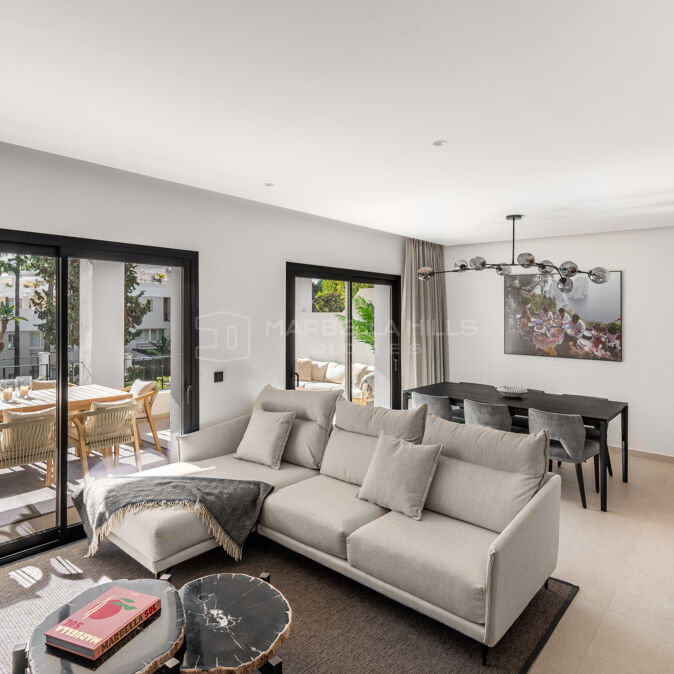
Renovated 4-Bedroom Townhouse for Sale in Aloha Golf, Nueva Andalucía
Aloha, Nueva Andalucia €895,000This fully renovated four-bedroom townhouse for sale in Aloha Golf is set within an established residential community in the heart…
- View Property
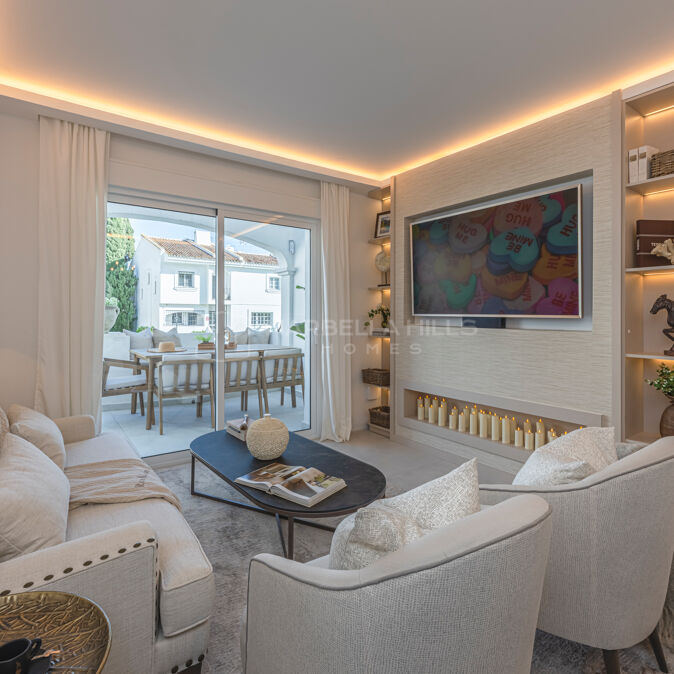
Contemporary villa for sale in Parcelas del Golf, Nueva Andalucía
Parcelas del Golf, Nueva Andalucia Reduced from €3,495,000€3,350,000Set within Parcelas del Golf, one of the most established gated communities in Nueva Andalucía, this contemporary villa combines generous…
- View Property
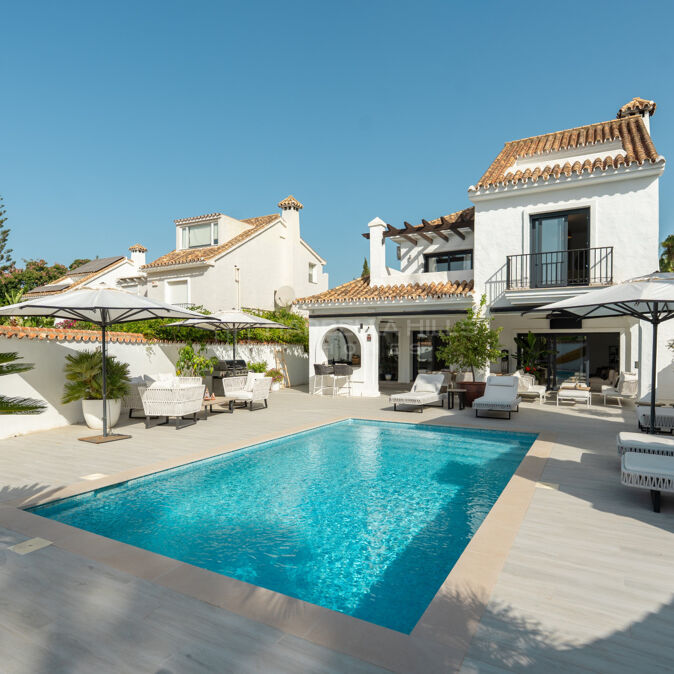
Frontline Golf Townhouse for Sale in La Retranca, Nueva Andalucía
Aloha, Nueva Andalucia €995,000Set directly alongside Aloha Golf in the established community of La Retranca, this beautifully renovated four-bedroom townhouse combines contemporary comfort…
- View Property
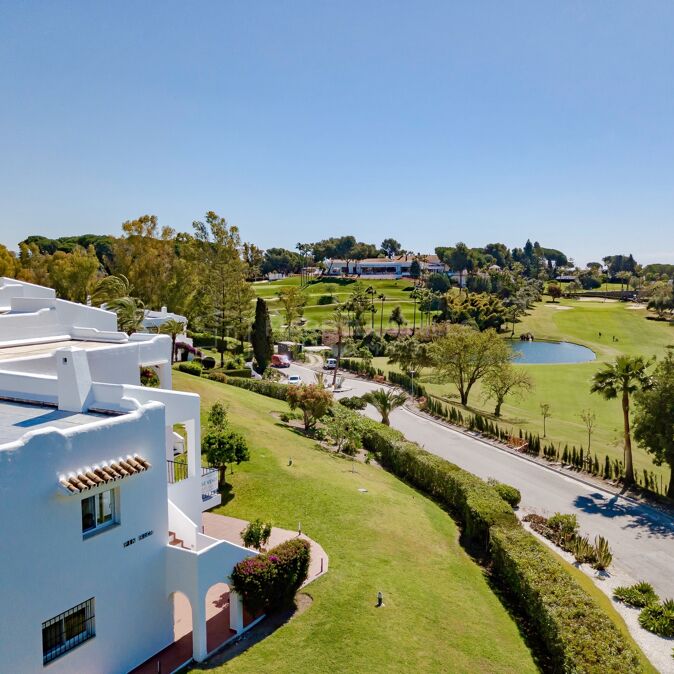
Luxury Duplex Penthouse for Sale in Aloha Hill Club, Nueva Andalucía | Sea Views & Resort Lifestyle
Aloha Hill Club, Nueva Andalucia €1,695,000Perched on the top floor of the prestigious Aloha Hill Club in Nueva Andalucía, this exceptional south-facing duplex penthouse combines…
- View Property
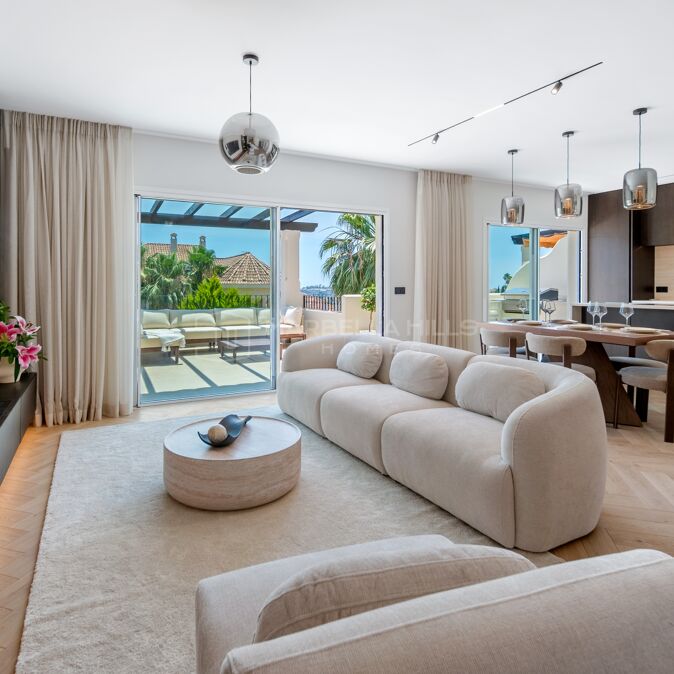
Charming Townhouse for Sale in Aloha Pueblo, Nueva Andalucía | Panoramic Views & Rooftop Solarium
Aloha Pueblo, Nueva Andalucia €826,000Nestled within the picturesque Andalusian village of Aloha Pueblo in the heart of Nueva Andalucía's renowned Golf Valley, this charming…
- View Property
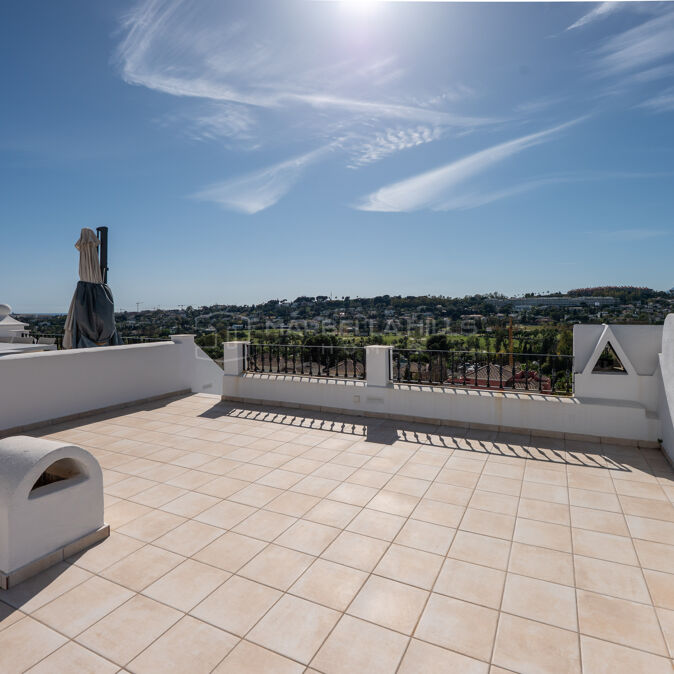
Rontline Golf Townhouse for Sale in Nueva Andalucía with Tourist Licence | Fully Renovated in Peñablanca
Peñablanca, Nueva Andalucia €1,595,000Situated within the prestigious gated community of Peñablanca in Nueva Andalucía, this beautifully renovated frontline golf townhouse perfectly combines contemporary…
- View Property
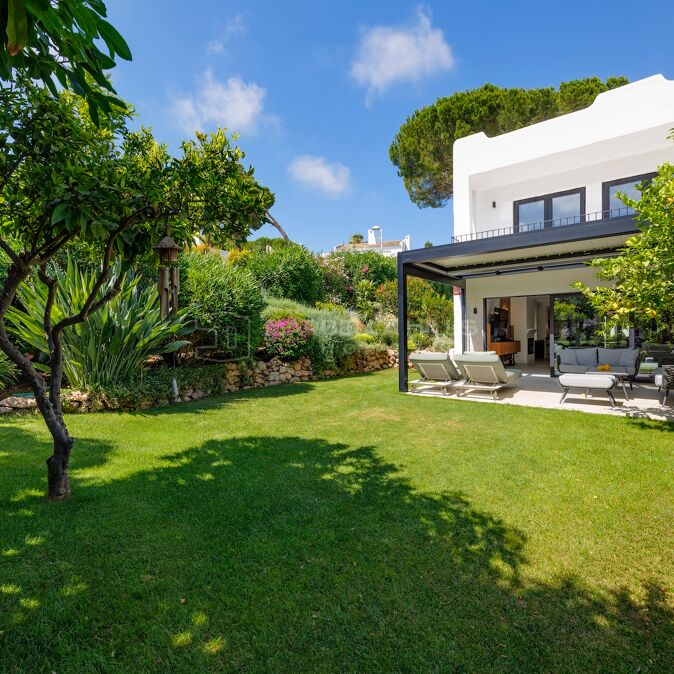
Luxury Villa for Sale in Parcelas del Golf, Nueva Andalucía | Infinity Pool and Guest Apartment
Parcelas del Golf, Nueva Andalucia €3,950,000Located within the prestigious gated community of Parcelas del Golf in the heart of Nueva Andalucía’s Golf Valley, Villa Splash…
- View Property
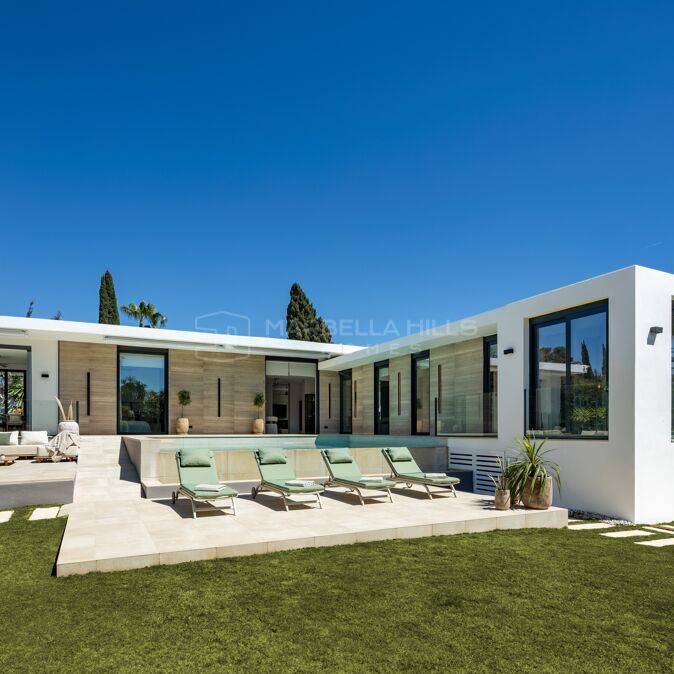
Renovated Townhouse with Tourist Licence for Sale in Aloha Pueblo, Nueva Andalucía – Panoramic Rooftop Terrace and Mediterranean Lifestyle
Aloha Pueblo, Nueva Andalucia Reduced from €825,000€780,000Located in the heart of the charming Andalusian village-style community of Aloha Pueblo in Nueva Andalucía, this beautifully renovated townhouse…
- View Property
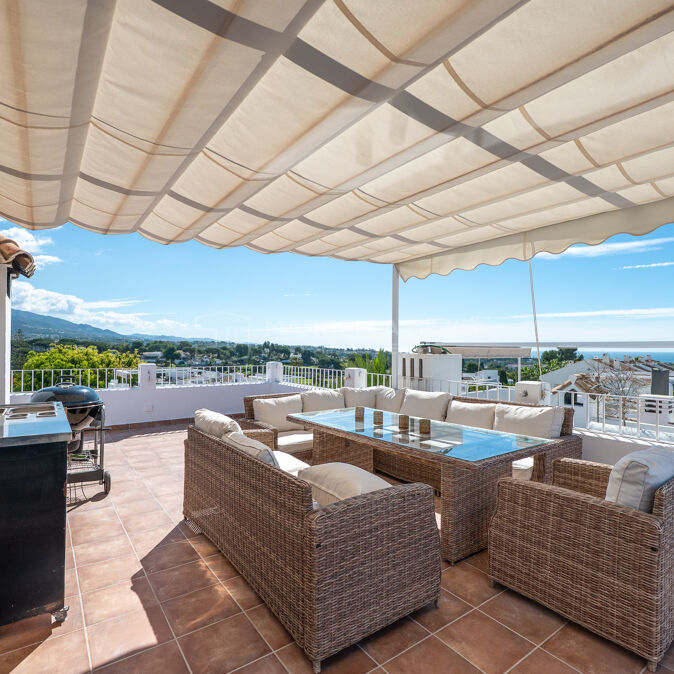
Contemporary Duplex Townhouse for Sale in Nueva Andalucía – Refined Living Near Aloha Golf and Puerto Banús
Los Pinos de Aloha, Nueva Andalucia €850,000Welcome to Los Pinos de Aloha, an elegant fully renovated duplex townhouse located in the heart of Nueva Andalucía, one…
- View Property
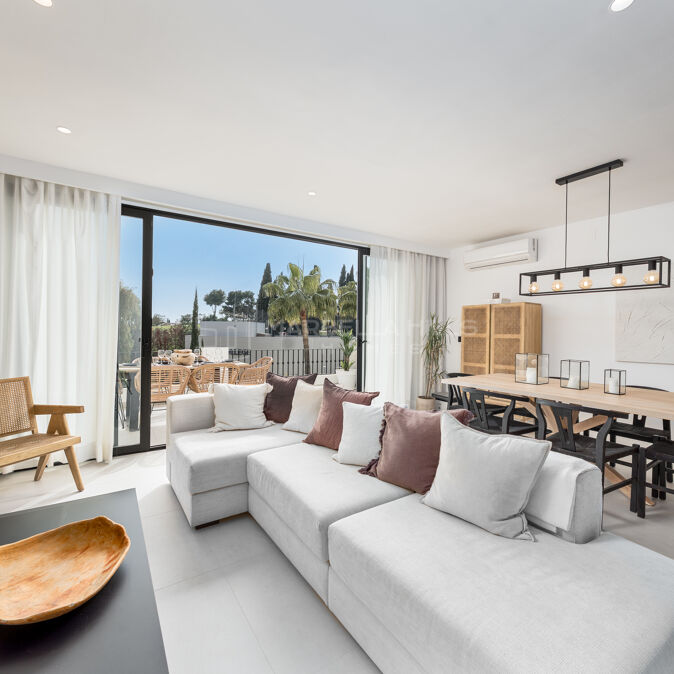
Luxury 3-Bedroom Apartment for Sale in Nueva Andalucía, Marbella with Garden and Modern Design
Aloha, Nueva Andalucia €1,350,000Discover this luxury apartment for sale in Nueva Andalucía, Marbella, ideally located in the highly sought-after residential area of Aloha.…
- View Property
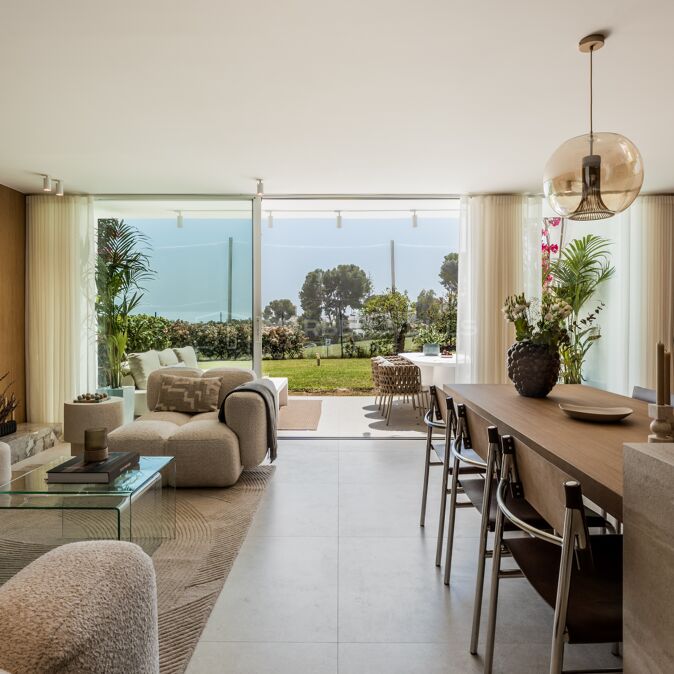
Apartment for Sale Walking Distance to Puerto Banús | Nueva Andalucía Marbella
Puerto Golf, Nueva Andalucia €695,000Located in one of the most sought-after areas of Nueva Andalucía, this recently modernised middle-floor apartment for sale is within…
- View Property
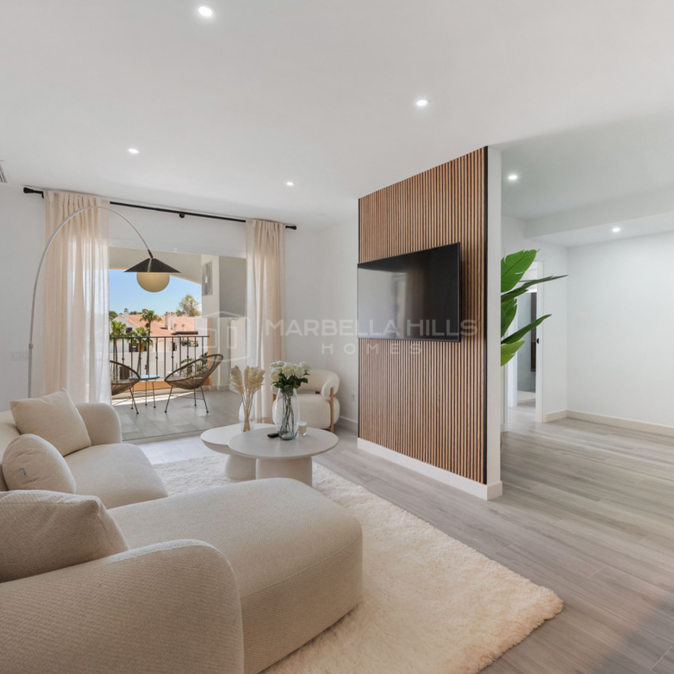
Luxury 4-Bedroom Duplex Apartment for Sale in Nueva Andalucía, Marbella
Aloha Hill Club, Nueva Andalucia €1,495,000Located in the prestigious residential community of Aloha Hill Club in Nueva Andalucía, this elegant duplex apartment offers an exceptional…
- View Property
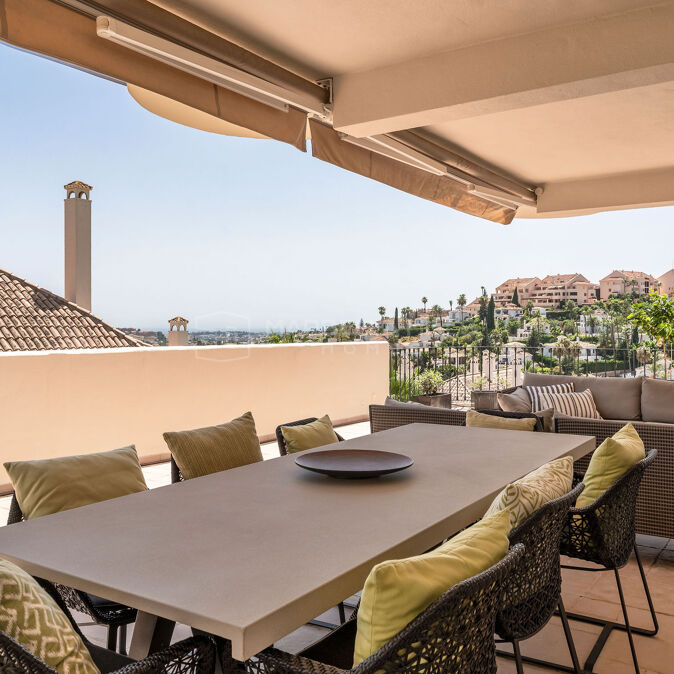
Renovated 3-Bedroom Duplex for Sale in Aloha Gardens, Nueva Andalucía, Marbella
Aloha Gardens, Nueva Andalucia €925,000This stylish renovated duplex apartment for sale in Nueva Andalucía is located in the prestigious Aloha Gardens, one of the…
- View Property
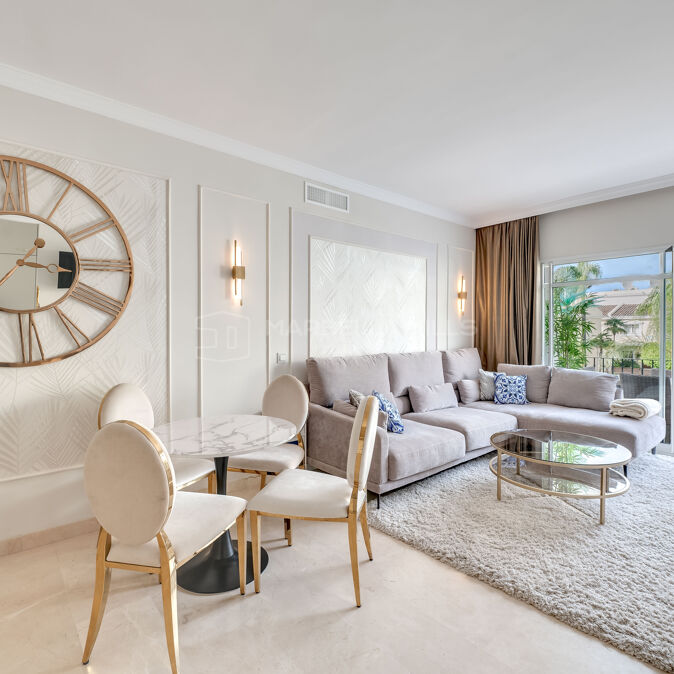
Luxury Garden Apartment with Private Pool in Aloha Park, Nueva Andalucía
Aloha Park, Nueva Andalucia €3,995,000This exceptional ground floor apartment is located in the prestigious Aloha Park community, in the heart of Nueva Andalucía’s renowned…
- View Property
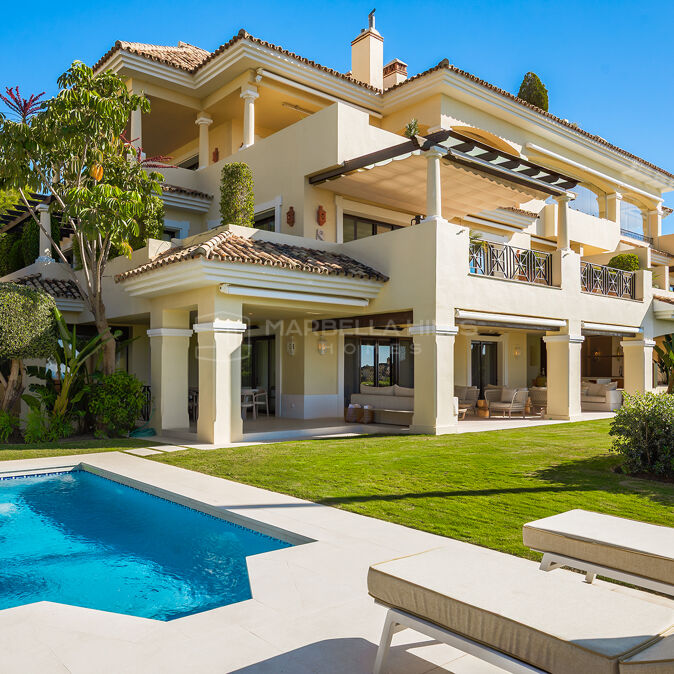
Elegant Renovated Townhouse with Sea Views and Rooftop Terrace in Aloha, Nueva Andalucía
Aloha, Nueva Andalucia Reduced from €1,550,000€1,395,000Luxury renovated townhouse in Aloha, Nueva Andalucía, located in Marbella’s prestigious Golf Valley just minutes from Puerto Banús. This contemporary…
- View Property
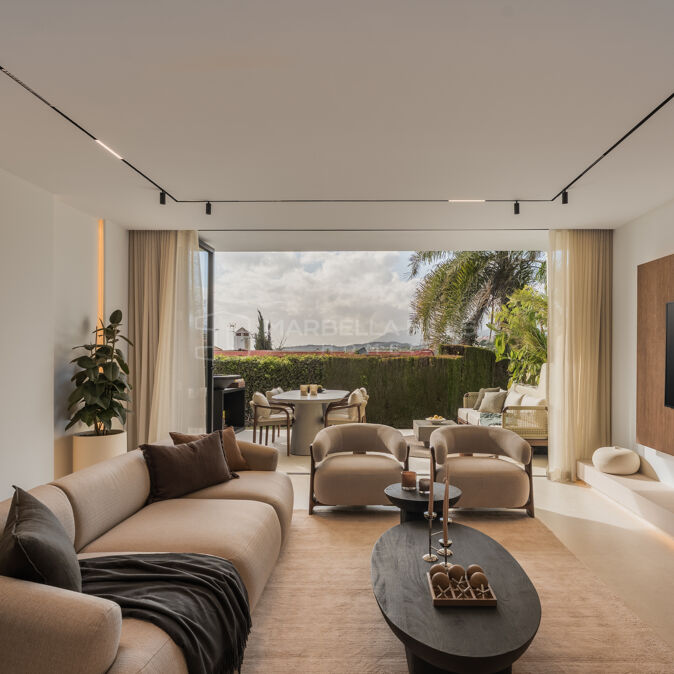
Stylish Renovated 4 bedroom Townhouse in Aloha, Nueva Andalucía
Aloha, Nueva Andalucia Reduced from €1,595,000€1,495,000Located in the highly desirable area of Aloha in Nueva Andalucía, this beautifully renovated townhouse offers a refined blend of…
- View Property
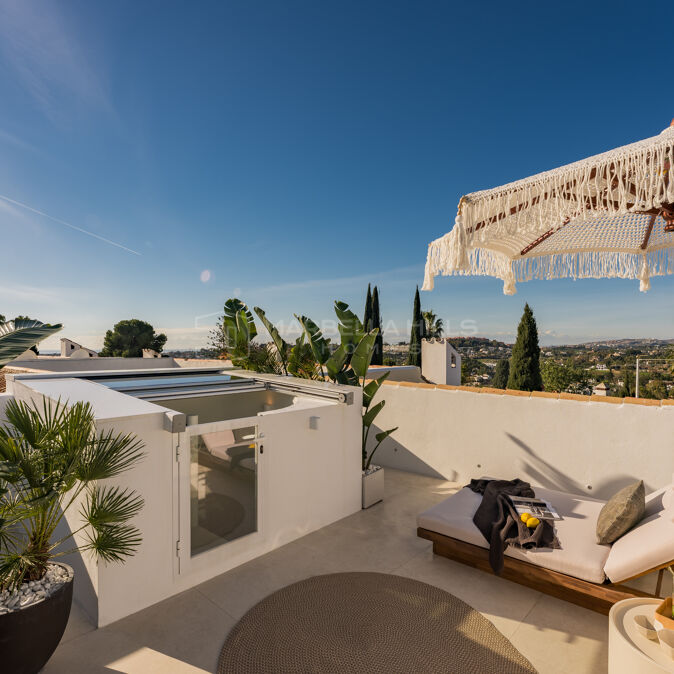
Renovated 3-Bedroom Duplex Penthouse with Rooftop Terrace and Mountain Views in Aloha Gardens, Nueva Andalucía
Aloha Gardens, Nueva Andalucia Reduced from €790,000€750,000Located in the highly sought-after community of Aloha Gardens in Nueva Andalucía, this fully renovated 3-bedroom, 2-bathroom duplex penthouse combines…
- View Property
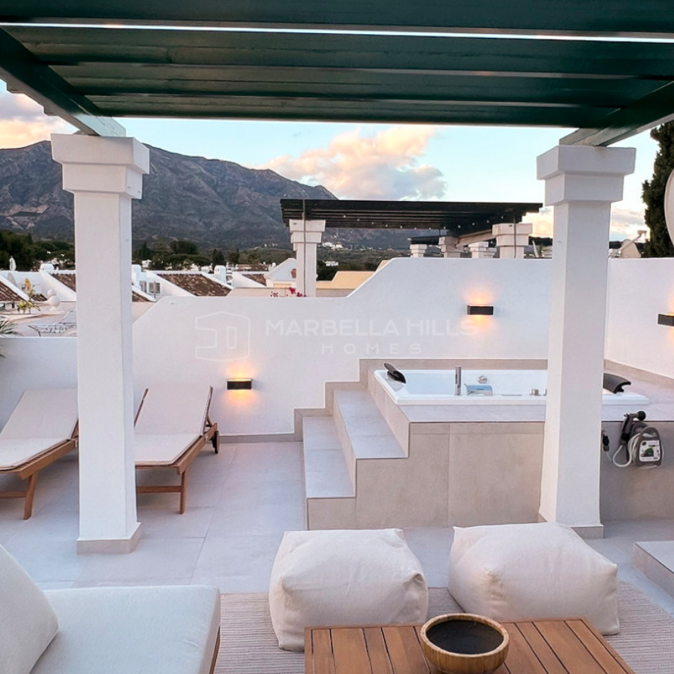
Fully Reformed Semi-Detached House in Aloha Gardens, Nueva Andalucía - Panoramic Sea Views and Modern Luxury
Aloha Gardens, Nueva Andalucia €1,395,000Discover one of the finest homes in Aloha Gardens, a beautifully reformed semi-detached house situated in the heart of Nueva…
- View Property
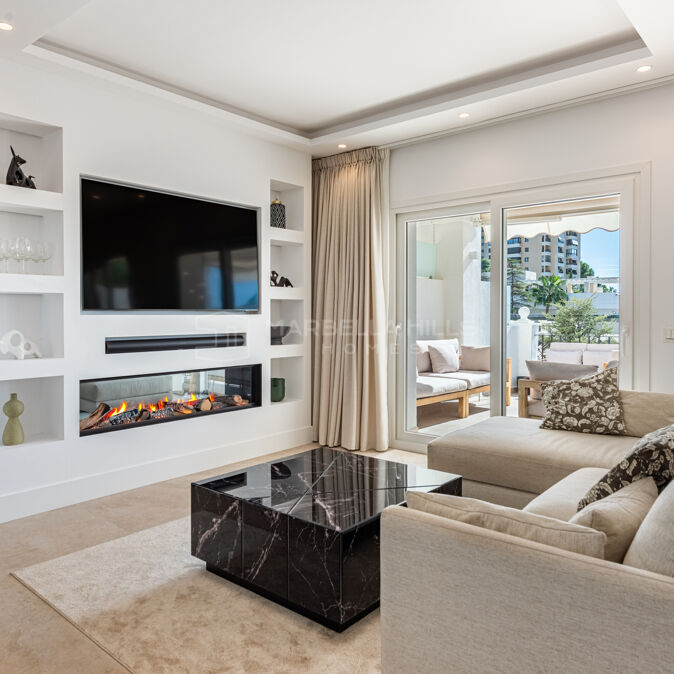
Modern Duplex Apartment with Rooftop Terrace in Los Pinos de Aloha – Nueva Andalucía, Marbella
Los Pinos de Aloha, Nueva Andalucia €765,000Located in the heart of Marbella’s prestigious Golf Valley, this beautifully renovated duplex apartment combines Andalusian charm with contemporary Nordic…
- View Property
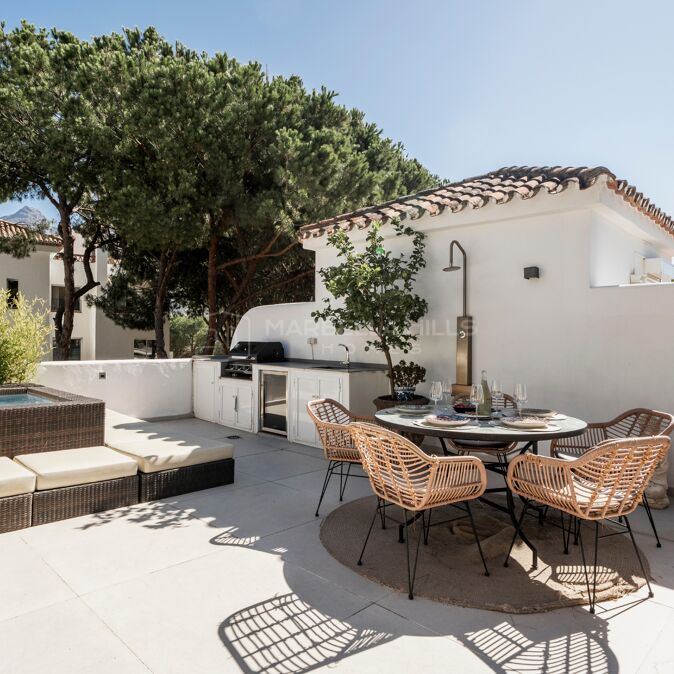
Renovated Duplex Penthouse with Solarium for Sale in Aloha Gardens, Nueva Andalucía – Marbella’s Golf Valley
Aloha Gardens, Nueva Andalucia €1,250,000This stunning duplex penthouse in the prestigious gated community of Aloha Gardens, Nueva Andalucía, offers a rare chance to acquire…
- View Property